Skip to content
WAnimals
  • Map
  • Species
  • Parks
  • Diving
Log inCreate account
WAnimals

The guide for travellers and animal lovers: discover, plan and share your wild adventures around the world.

Discover wildlife

  • Species
  • Ecosystems
  • Glossary
  • Tags

Explore places

  • Map
  • Countries
  • Parks
  • Diving

Plan experiences

  • Guides

Learn

  • Blog

Resources

  • About us
  • How we build our profiles
  • Help centre
  • Contact
  • Install the app

Follow us

Account

  • Log in
  • Create account

© 2026 WAnimals. All rights reserved.

Terms of servicePrivacyCookiesLegal notice
MapSpeciesParksDiving
  1. Home
  2. Species
  3. Tsetse Fly

One of the 13 flies on WAnimals
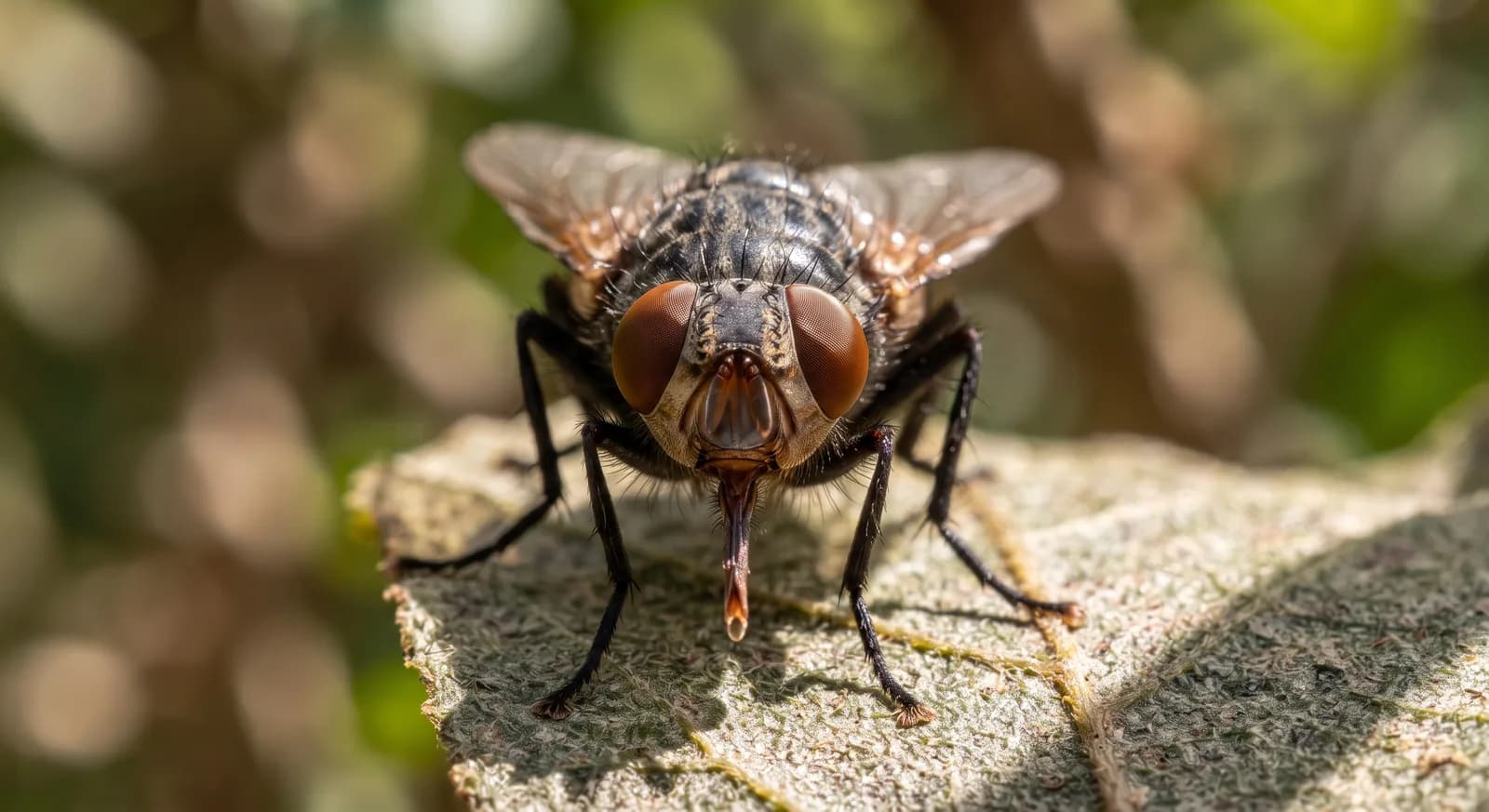
Tsetse Fly (Glossina morsitans)

Insects · Diptera · Glossinidae

Tsetse Fly

Glossina morsitans

Not Evaluated

It has not yet been assessed against the IUCN criteria.

Spotted something wrong?

Glossina morsitans is a tsetse fly of the genus Glossina. It is one of the main vectors of Trypanosoma brucei rhodesiense in the savannahs of Africa.

Size

0.8 cm – 1.4 cm

Diet

Carnivore

Feeds mainly on other animals.

Activity

Diurnal

Active mainly during the day.
Social structure

Solitary

Lives and hunts alone, joining others only to breed.

SavannaGrassland
43countries69parks

AI-generated images: illustrations, not photographs.

Fun facts

  • GeneralIt carries sleeping sickness; the female gives birth to fully developed larvae, one at a time.
  • It is viviparous: it lays no eggs but gestates a single larva inside the uterus and feeds it on a milky secretion produced by a specialised gland, with proteins analogous to those of mammalian milk.
  • That strategy gives it a very low fecundity — between eight and ten offspring in a lifetime, compared with a mosquito's hundreds — and that is precisely what makes it vulnerable to population control.
  • It is the only vector of the African trypanosomes, which cause sleeping sickness in people and nagana in livestock.
  • The larva is born already mature and burrows immediately to pupate; the female chooses the site with great care, because her whole output for that cycle depends on the decision.

Life cycle and biology

Skeleton type
Invertebrate - chitin exoskeleton (insect)
Habitat and environment
Wooded savannah and gallery forest
Size at birth
The larva is deposited already developed onto loose soil and burrows to pupate within 60-90 minutes; the puparial phase lasts about 35 days on average, with a range of 3 to 13 weeks
Sexual maturity
The female can mate one day after emerging from the puparium; a single copulation leaves her fertile for life
Gestation / incubation
Each larva develops in the uterus for about 9 or 10 days
Litter / clutch size
A single larva per cycle, between 8 and 10 over the female's lifetime

Sources consulted: Wikipedia (es): Glossina morsitans · Parasitipedia, ficha Glossina spp · icipe (Centro Internacional de Fisiologia y Ecologia de Insectos) · Animal Diversity Web, Glossina morsitans · Animal Diversity Web · Merck Veterinary Manual · Parasitipedia · Merck Veterinary Manual, ficha Tsetse flies

Where to find it

Best time: Active all year, but only between 18 and 32 °C; below 18 °C it becomes inactive and it does not leave the lowlands

Loading map…

Where to see it

Parks and dive sites where this species has been documented — showing 10 of 69.

Related species

Other species in the catalogue with the most in common with Tsetse Fly — same habitat, park, country, tags or family.

Shares a park
Shares a park
Shares a park
Shares a park
Shares a park
Shares a park

Keep exploring

Based on what we already know about tsetse fly.

Share an experience, a fun fact or a tip for seeing the tsetse fly.
See full glossary
This page in other languages: Español · Deutsch · Français · Português · Italiano

The pins mark the parks where its presence is documented.

See its range on the interactive map→
Serengeti National ParkTanzania
Maasai Mara National ReserveKenya
NgorongoroTanzania
AmboseliKenya
TsavoKenya
Lake NakuruKenya
BwindiUganda
VirungaDemocratic Republic of the Congo
HwangeZimbabwe
South LuangwaZambia
See all 69 parks
CheetahVulnerable

Cheetah

Acinonyx jubatus

Near Threatened

Kori Bustard

Ardeotis kori

Vulnerable

Southern Ground-Hornbill

Bucorvus leadbeateri

Least Concern

Helmeted Turtle

Pelomedusa subrufa

Puff AdderLeast Concern

Puff Adder

Bitis arietans

Least Concern

Black-necked Spitting Cobra

Naja nigricollis

CountriesTanzania
ParksSerengeti National ParkTanzania
TagsCarnivore
Carnivore
Diurnal
Solitary
Insect
Savanna
Grassland
Tanzania
Uganda
Kenya
Cameroon
Democratic Republic of the Congo
Gabon
Angola
Benin
Botswana
Burkina Faso
Burundi
Cameroon
Central African Republic
Chad
Côte d’Ivoire
Democratic Republic of the Congo
Djibouti
Equatorial Guinea
Eritrea
Eswatini
Ethiopia
Gabon
Gambia
Ghana
Guinea
Guinea-Bissau
Kenya
Lesotho
Liberia
Malawi
Mali
Mauritania
Mozambique
Namibia
Niger
Nigeria
Republic of the Congo
Rwanda
Senegal
Sierra Leone
Somalia
South Africa
South Sudan
Sudan
Tanzania
Togo
Uganda
Zambia
Zimbabwe