 Least Concern
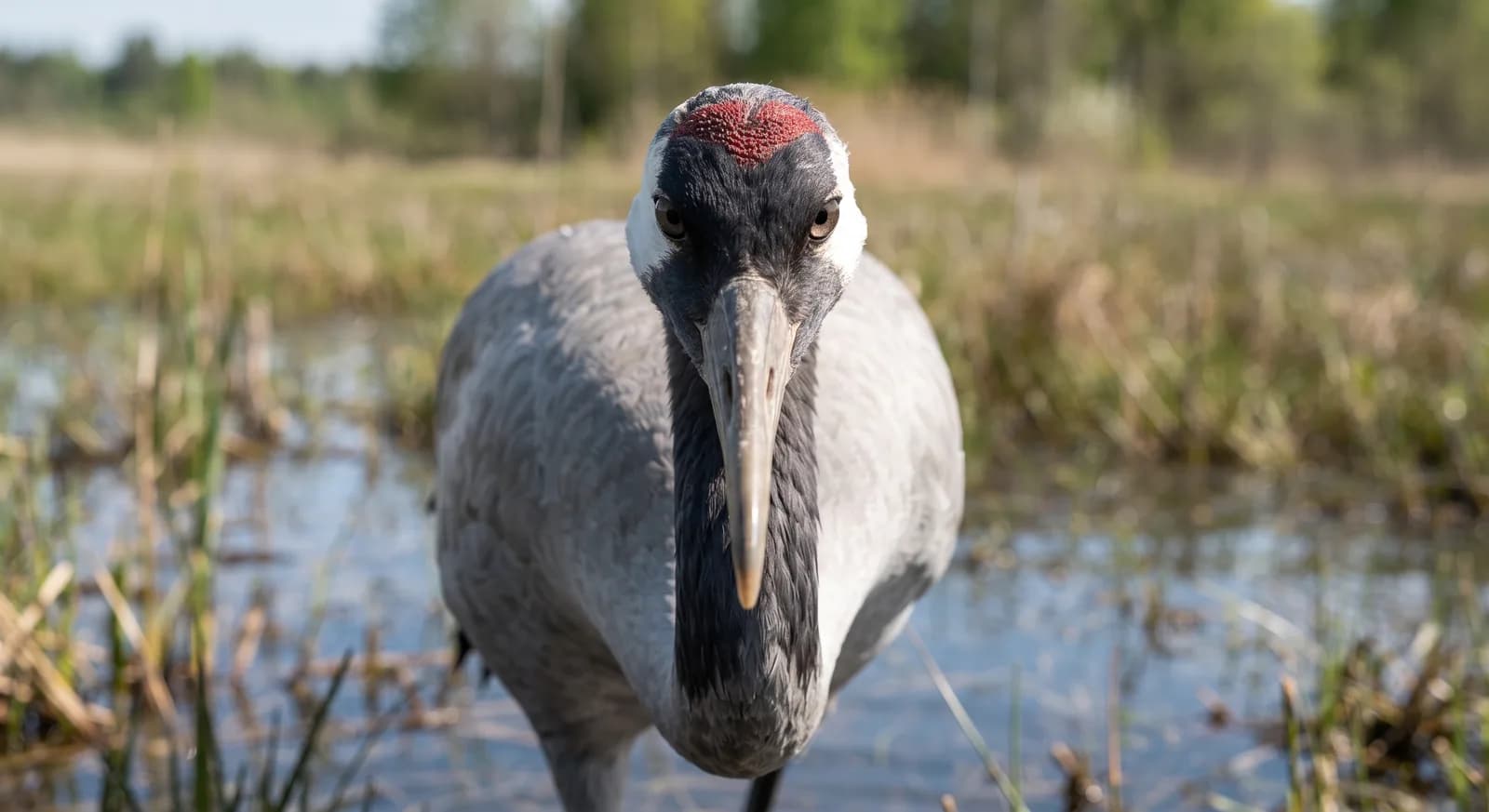
Common Crane
Grus grus
A massif of reddish conglomerate with La Mola crowned by a Romanesque monastery, the first nature park in Spain protected through planning law.
Area
135 km²
Designated in
1972
Region
Southern Europe
Cliffs and monoliths of reddish conglomerate
Sant Llorenç del Munt i l'Obac Natural Park is formed by the massif of Sant Llorenç del Munt and the l'Obac range, two alignments of the Catalan Pre-Coastal Range that meet at the Estenalles pass, between the Llobregat and Ripoll rivers. It protects 13,694 hectares spread across twelve municipalities in the districts of Bages, Vallès Occidental and Moianès, and is managed by the Provincial Council of Barcelona within its Network of Natural Parks.
The landscape is rugged and highly characteristic: crags and monoliths of reddish conglomerate, the rock known locally as pinyolenc, formed by the deposition of pebbles and other material carried down by rivers during the Palaeogene, between 33.7 and 23.6 million years ago. That red contrasts with the green of the holm oak and pine woods that colonise the slopes, the ledges and the gullies of the mountain. The main summits are La Mola (1,104 m) and Montcau (1,057 m).
On top of La Mola stands the monumental complex of the Benedictine monastery of Sant Llorenç del Munt, of the eleventh century, which gives the massif its name and which was declared a Historic-Artistic Monument in 1931 and an Asset of National Cultural Interest; beside it lies an archaeological site, and across the rest of the park are scattered chapels, farmhouses, lime kilns and the remains of many centuries of occupation. Its history of protection is a pioneering one: on 24 July 1972 a resolution of the Ministry of Housing approved the Special Plan promoted by the Provincial Council of Barcelona over 2,655 hectares, making it the first Spanish natural park protected through planning legislation and the first promoted and managed by a local government body. The plan was revised in 1982, extending the area to 9,638 hectares; in 1987 the Generalitat formally declared it a Natural Park, and a final extension in 1998 gave it its present 13,694 hectares. At every one of those milestones the pressure of citizens' organisations was decisive.
4 dive sites within 300 km are also shown.
Ecosystems found in Spain, where Sant Llorenç del Munt i l'Obac lies.
Where can I dive near here?
105 km away
107 km away
128 km away
What is worth looking out for this month in Spain?
Now is a good time: Common crane wintering at Gallocanta Lagoon (October to March (passage peaks in November and February))
Now is a good time: Soaring bird migration across the Strait of Gibraltar (Spring passage February to May and autumn passage July to November)
Now is a good time: Soaring bird migration across the Strait of Gibraltar (Spring passage February to May and autumn passage July to November)
Which other parks are like this one?
Same country: Spain
Same country: Spain
Same country: Spain
Same country: Spain
Based on what we already know about this park.
Share your experience visiting Sant Llorenç del Munt i l'Obac, or a tip for other travellers.
Be the first to comment.
Climate
Arid / desert, Temperate, Mediterranean, Mountain
Best season
All year round
Threatened:,
228 km away
Now is a good time: Soaring bird migration across the Strait of Gibraltar (Spring passage February to May and autumn passage July to November)
 Spain