 Least Concern
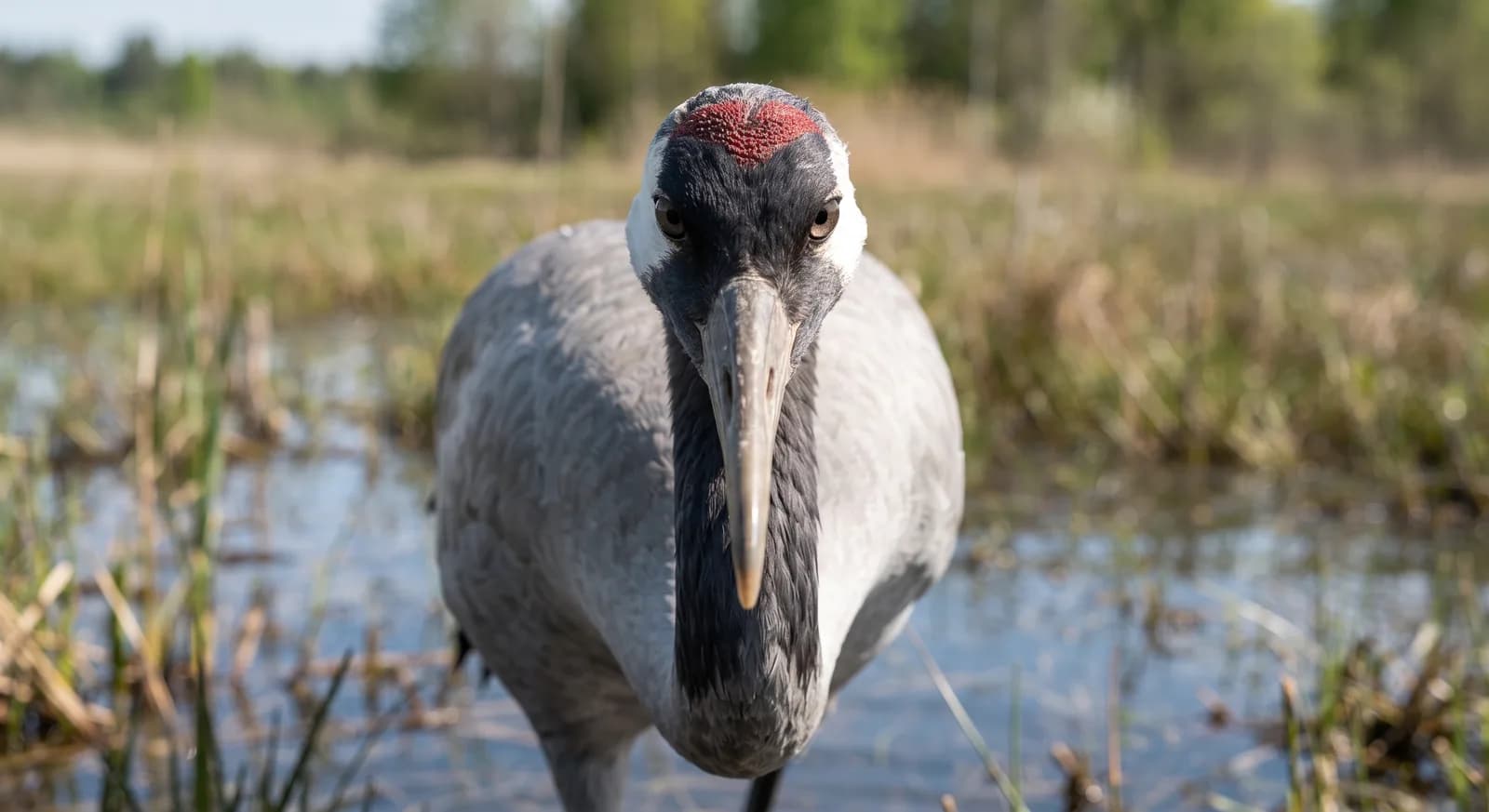
Common Crane
Grus grus
A semi-desert badlands landscape carved into gypsum and clay, with isolated buttes and gullies in south-eastern Navarre.
Area
415 km²
Designated in
1999
Region
Southern Europe
Semi-desert badlands and erosional buttes
The Bardenas Reales occupy the south-east of Navarre, in the middle of the Ebro depression, with maximum axes of 45 km north to south and 24 east to west. It is a landscape without equal in northern Spain: bare clays, gypsum and sandstone that torrential water and wind have shaped over millennia into ravines, table-top plateaux and isolated buttes such as Castildetierra, the most photographed silhouette in the park. The territory is traditionally divided into three sectors: El Plano, the great cultivated plateau of the north; the Bardena Blanca, the low central area where erosion has bitten hardest and where the lunar look is concentrated; and the Bardena Negra, to the south, crowned by Aleppo pinewoods.
Its legal regime is as distinctive as its landscape: the Bardenas belong to no municipality; instead, nineteen towns, two Pyrenean valleys and a monastery share the right of use over these lands, a commons of use with centuries of history bound up with transhumance. Drove roads and livestock trails cross the whole area and remain the mark of that pastoral tradition.
They were declared a Natural Park on 6 April 1999 by Regional Act 10/1999 — with several enclaves excluded, among them the firing range — and a Biosphere Reserve by UNESCO on 7 November 2000, Spain's seventeenth and Navarre's first. Within them lie three earlier nature reserves: the Vedado de Eguaras, a basin of some 500 hectares with the ruins of Peñaflor castle; the Rincón del Bu, which takes its name from the eagle owl that breeds on its cliffs; and the Caídas de la Negra, of deeply incised ravines. They also have two Special Protection Areas for Birds, a reflection of their importance for steppe birdlife, and were declared a Special Area of Conservation under Natura 2000. Their appearance has made them a recurrent set for film and advertising.
Ecosystems found in Spain, where Bardenas Reales lies.
What is worth looking out for this month in Spain?
Now is a good time: Common crane wintering at Gallocanta Lagoon (October to March (passage peaks in November and February))
Now is a good time: Soaring bird migration across the Strait of Gibraltar (Spring passage February to May and autumn passage July to November)
Now is a good time: Soaring bird migration across the Strait of Gibraltar (Spring passage February to May and autumn passage July to November)
Which other parks are like this one?
Same country: Spain
Same country: Spain
Same country: Spain
Same country: Spain
Based on what we already know about this park.
Share your experience visiting Bardenas Reales, or a tip for other travellers.
Be the first to comment.
Climate
Arid / desert, Temperate, Mediterranean, Mountain
Best season
All year round
Threatened:,,,
Now is a good time: Soaring bird migration across the Strait of Gibraltar (Spring passage February to May and autumn passage July to November)
 Spain