Skip to content
WAnimals
  • Map
  • Species
  • Parks
  • Diving
Log inCreate account
WAnimals

The guide for travellers and animal lovers: discover, plan and share your wild adventures around the world.

Discover wildlife

  • Species
  • Ecosystems
  • Glossary
  • Tags

Explore places

  • Map
  • Countries
  • Parks
  • Diving

Plan experiences

  • Guides

Learn

  • Blog

Resources

  • About us
  • How we build our profiles
  • Help centre
  • Contact
  • Install the app

Follow us

Account

  • Log in
  • Create account

© 2026 WAnimals. All rights reserved.

Terms of servicePrivacyCookiesLegal notice
MapSpeciesParksDiving
  1. Home
  2. Species
  3. Schreiber's Bent-winged Bat

One of the 29 bats on WAnimals
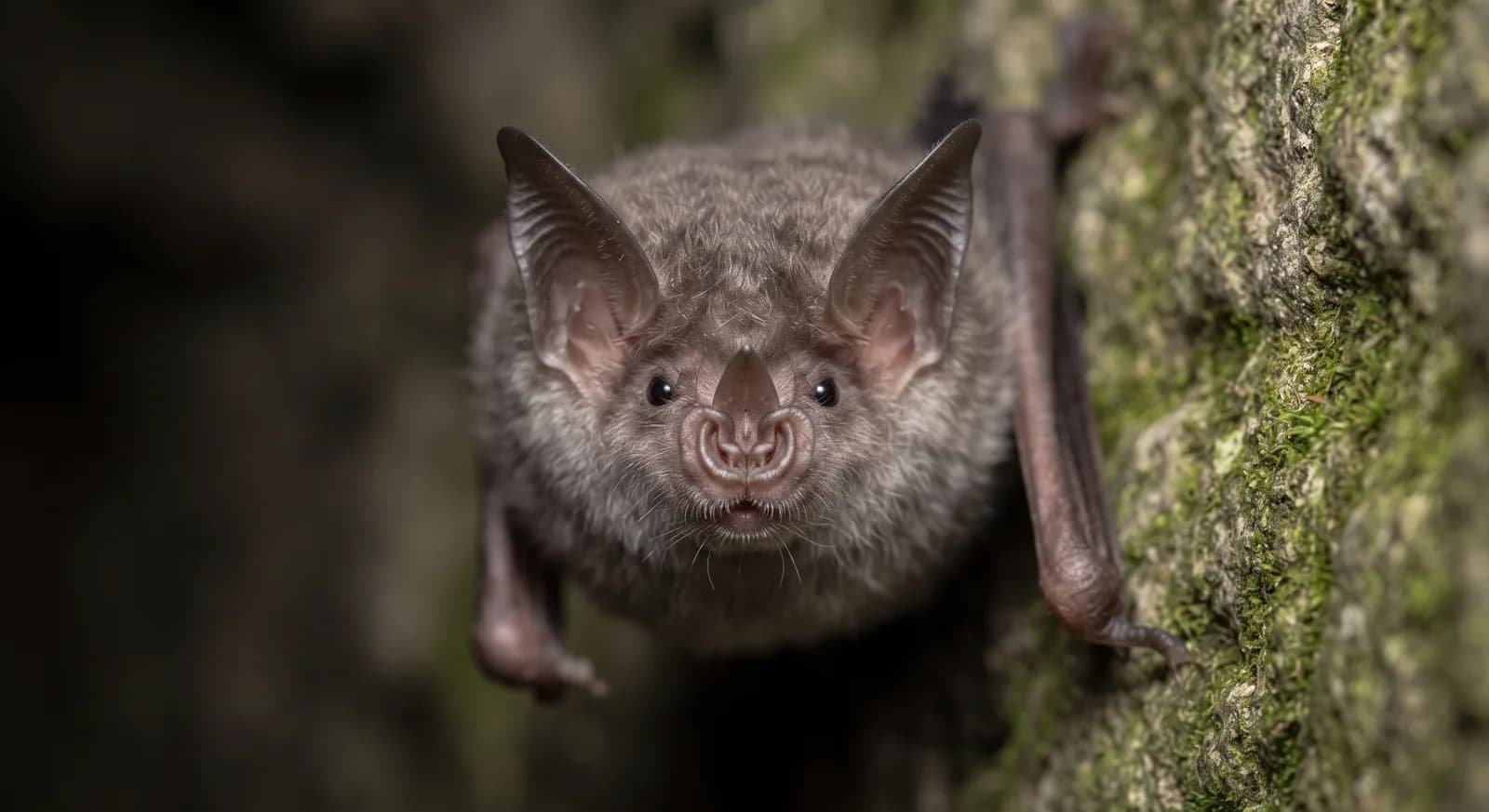
Schreiber's Bent-winged Bat (Miniopterus schreibersii)

Mammals · Chiroptera · Miniopteridae

Schreiber's Bent-winged Bat

Miniopterus schreibersii

Vulnerable

At high risk of extinction in the wild over the medium term.

Spotted something wrong?

It has extraordinarily long finger bones in the wing that fold back at rest. Genetic analysis has revealed a complex of cryptic species within what was thought to be one.

Weight

10 g – 14 g

Size

5.2 cm – 6.3 cm

Life expectancy

20 years
Diet

Insectivore

Feeds mainly on insects and other invertebrates.

Activity

Nocturnal

Active mainly at night.

Social structure

Colony

Lives in large concentrations, often for breeding reasons.

Mountain
22countries105parks

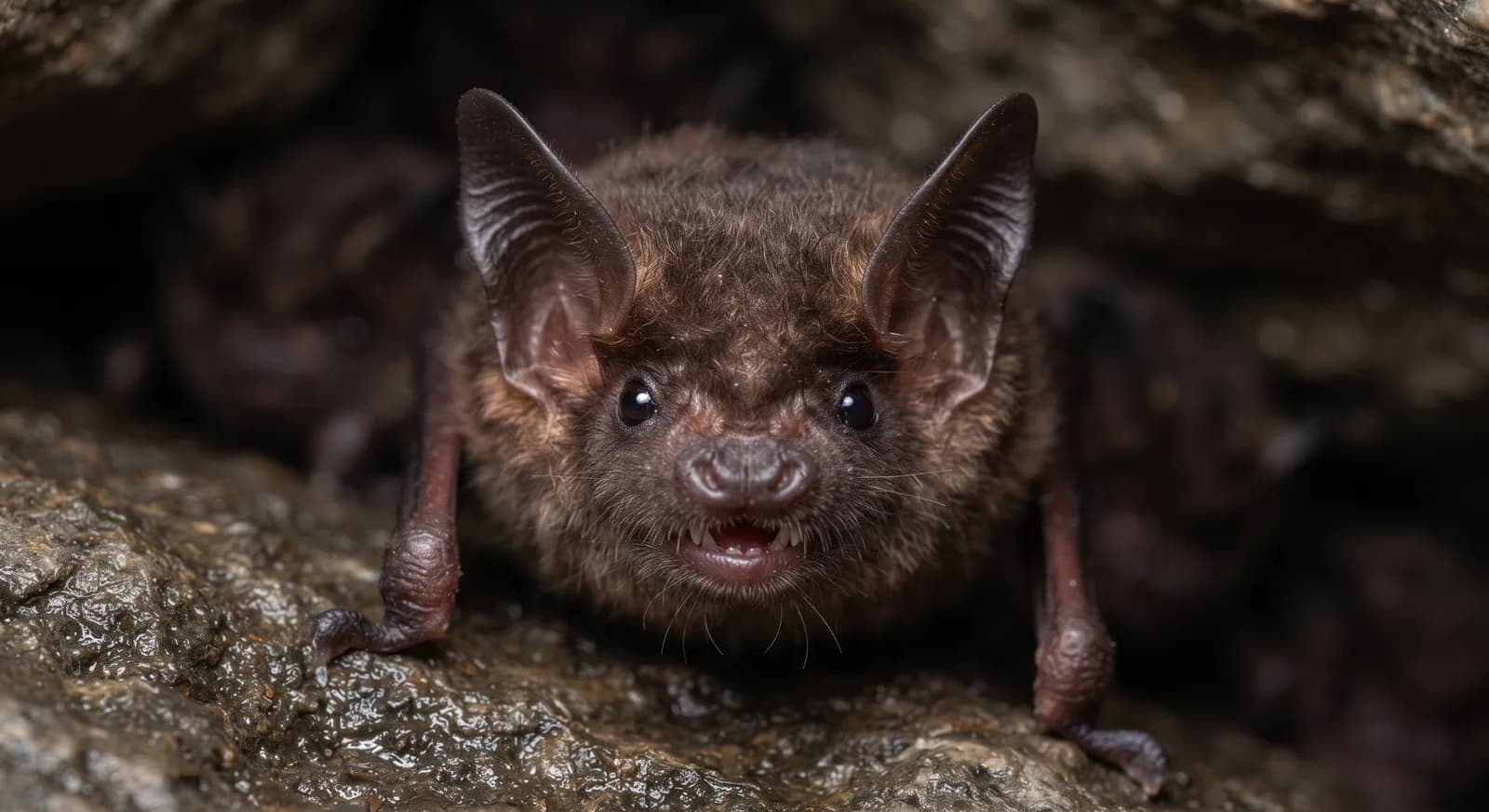
AI-generated images: illustrations, not photographs.

Fun facts

  • Genetic studies revealed that it is in fact a complex of distinct cryptic species.
  • It lives in karst caves of Mediterranean influence, and its numbers are falling sharply.
  • Its extraordinarily long wing fingers fold back at rest, which is where its English name, bent-winged bat, comes from.

Life cycle and biology

Skeleton type
Vertebrate - internal bony skeleton (mammal)
Habitat and environment
Karst caves across much of Europe, especially in Mediterranean-influenced regions, and North Africa
Birth weight
2.8 grams
Size at birth
The young naked at birth
Sexual maturity
Female: 19 months | Male: 2 years
Gestation / incubation
100 days (embryonic development held at the blastocyst stage after autumn mating)
Litter / clutch size
1 young per litter

Sources consulted: Animal Diversity Web · AnAge (genomics.senescence.info) · BatsLife · Encyclopedia of Life · PMC (cryptic diversity Asia Minor study) · Ratpenats.org

Where to find it

Loading map…

Where to see it

Parks and dive sites where this species has been documented — showing 10 of 105.

Related species

Other species in the catalogue with the most in common with Schreiber's Bent-winged Bat — same habitat, park, country, tags or family.

Shares a park
Shares a park
Shares a park
Shares a park
Shares a park
Shares a park

How to help

The schreiber's bent-winged bat is classified as vulnerable. Organisations such as the IUCN, WWF and the Wildlife Conservation Society work specifically on its conservation and that of its habitat; looking into their programmes is a good starting point if you want to get involved.

It's documented in 10 protected areas — one reason why protecting these places matters for its conservation.

Keep exploring

Based on what we already know about schreiber's bent-winged bat.

Share an experience, a fun fact or a tip for seeing the schreiber's bent-winged bat.
See full glossary
This page in other languages: Español · Deutsch · Français · Português · Italiano

The pins mark the parks where its presence is documented.

See its range on the interactive map→
Doñana National ParkSpain
Gran ParadisoItaly
VanoiseFrance
Stelvio (Stilfserjoch)Italy
EcrinsFrance
MercantourFrance
TriglavSlovenia
Picos de EuropaSpain
Ordesa y Monte PerdidoSpain
Aiguestortes i Estany de Sant MauriciSpain
See all 105 parks
Golden-striped SalamanderVulnerable

Golden-striped Salamander

Chioglossa lusitanica

Iberian DesmanVulnerable

Iberian Desman

Galemys pyrenaicus

Vulnerable

Betic Midwife Toad

Alytes dickhilleni

Greater Horseshoe BatLeast Concern

Greater Horseshoe Bat

Rhinolophus ferrumequinum

Vulnerable

Iberian Frog

Rana iberica

Least Concern

Greater Mouse-eared Bat

Myotis myotis

CountriesSpain
ParksDoñana National ParkSpain
TagsInsectivore
Insectivore
Nocturnal
Colonial
Vulnerable
Mountain
Mammal

Europe13

Africa5

Asia4

Spain
Italy
France
Portugal
Morocco
Greece
Albania
Bosnia and Herzegovina
Croatia
Cyprus
France
Greece
Italy
Malta
Monaco
Montenegro
Portugal
Slovenia
Spain
Algeria
Egypt
Libya
Morocco
Tunisia
Israel
Lebanon
Syria
Türkiye