One of the 29 bats on WAnimals
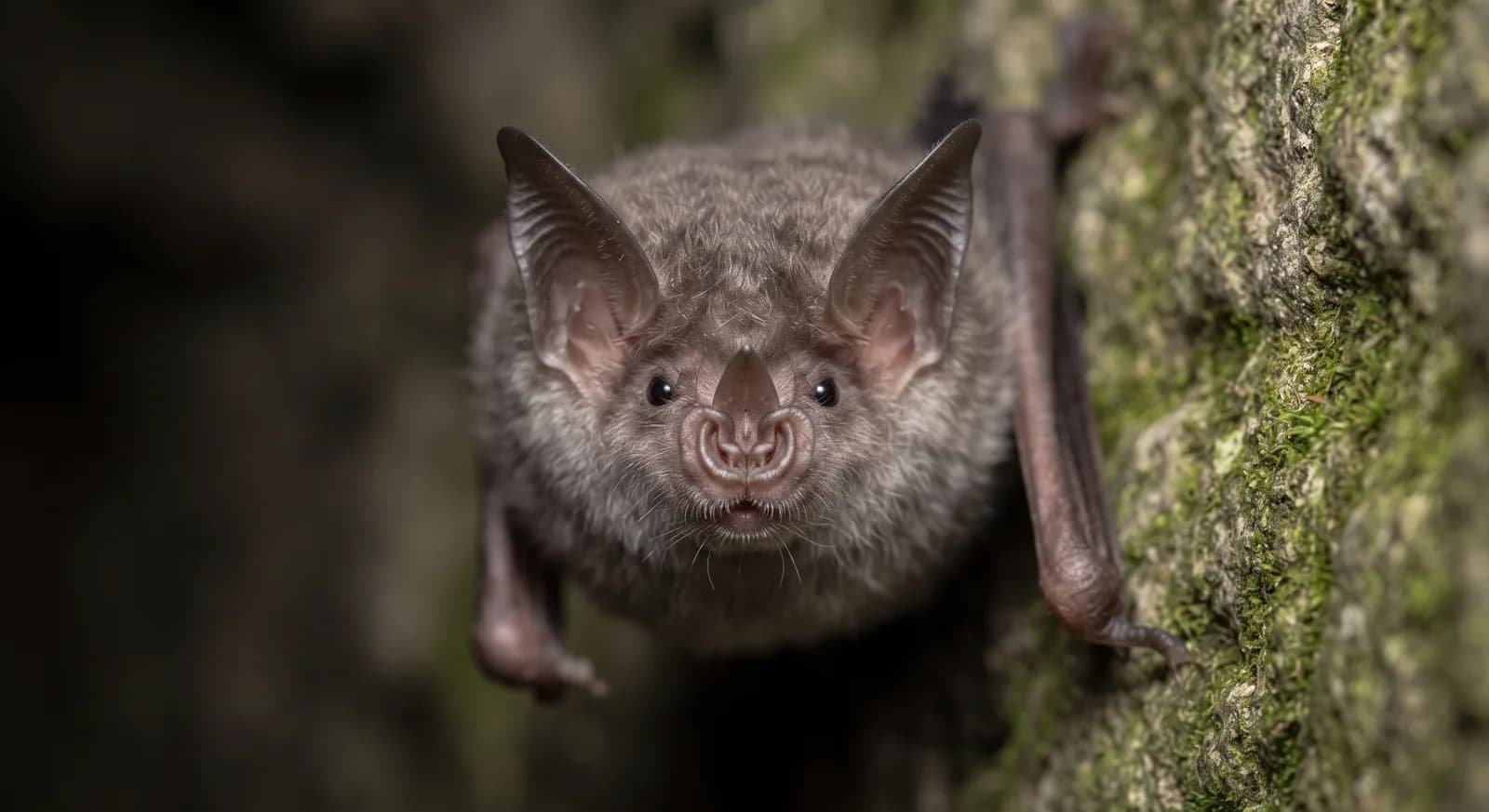
Mammals · Chiroptera · Rhinolophidae
Rhinolophus ferrumequinum
The species is abundant and widely distributed; it faces no significant short-term risk.
It is the largest horseshoe bat in Europe, told apart by the horseshoe-shaped nose-leaf it uses to focus the ultrasound it emits through its nostrils. It hibernates wrapped in its own wing membranes.
Weight
17 g – 34 g
Size
5.7 cm – 7.1 cm
Life expectancy
15 years
Diet
Insectivore
Feeds mainly on insects and other invertebrates.
Activity
Nocturnal
Active mainly at night.
Social structure
Colony
Lives in large concentrations, often for breeding reasons.
AI-generated images: illustrations, not photographs.
Sources consulted: AnAge (genomics.senescence.info) · The Wildlife Trusts · Dimensions.com · Animal Diversity Web · Britannica · Animalia.bio · PMC (hibernation telomere dynamics study) · PMC (reproductive success determinants study)
Parks and dive sites where this species has been documented — showing 10 of 98.
Other species in the catalogue with the most in common with Greater Horseshoe Bat — same habitat, park, country, tags or family.
Based on what we already know about greater horseshoe bat.
The pins mark the parks where its presence is documented.