Skip to content
WAnimals
  • Map
  • Species
  • Parks
  • Diving
Log inCreate account
WAnimals

The guide for travellers and animal lovers: discover, plan and share your wild adventures around the world.

Discover wildlife

  • Species
  • Ecosystems
  • Glossary
  • Tags

Explore places

  • Map
  • Countries
  • Parks
  • Diving

Plan experiences

  • Guides

Learn

  • Blog

Resources

  • About us
  • How we build our profiles
  • Help centre
  • Contact
  • Install the app

Follow us

Account

  • Log in
  • Create account

© 2026 WAnimals. All rights reserved.

Terms of servicePrivacyCookiesLegal notice
MapSpeciesParksDiving
  1. Home
  2. Species
  3. Greater Blue-ringed Octopus

One of the 7 octopuses on WAnimals

Greater Blue-ringed Octopus (Hapalochlaena lunulata)

Cephalopods · Octopoda · Octopodidae

Greater Blue-ringed Octopus

Hapalochlaena lunulata

Least Concern

The species is abundant and widely distributed; it faces no significant short-term risk.

Spotted something wrong?

The greater blue-ringed octopus is one of the four species of venomous blue-ringed octopus belonging to the family Octopodidae.

Weight

up to 80 g

Size

up to 10 cm

Life expectancy

2 years
Diet

Carnivore

Feeds mainly on other animals.

Social structure

Solitary

Lives and hunts alone, joining others only to breed.

24countries14parks129dive sites4same family

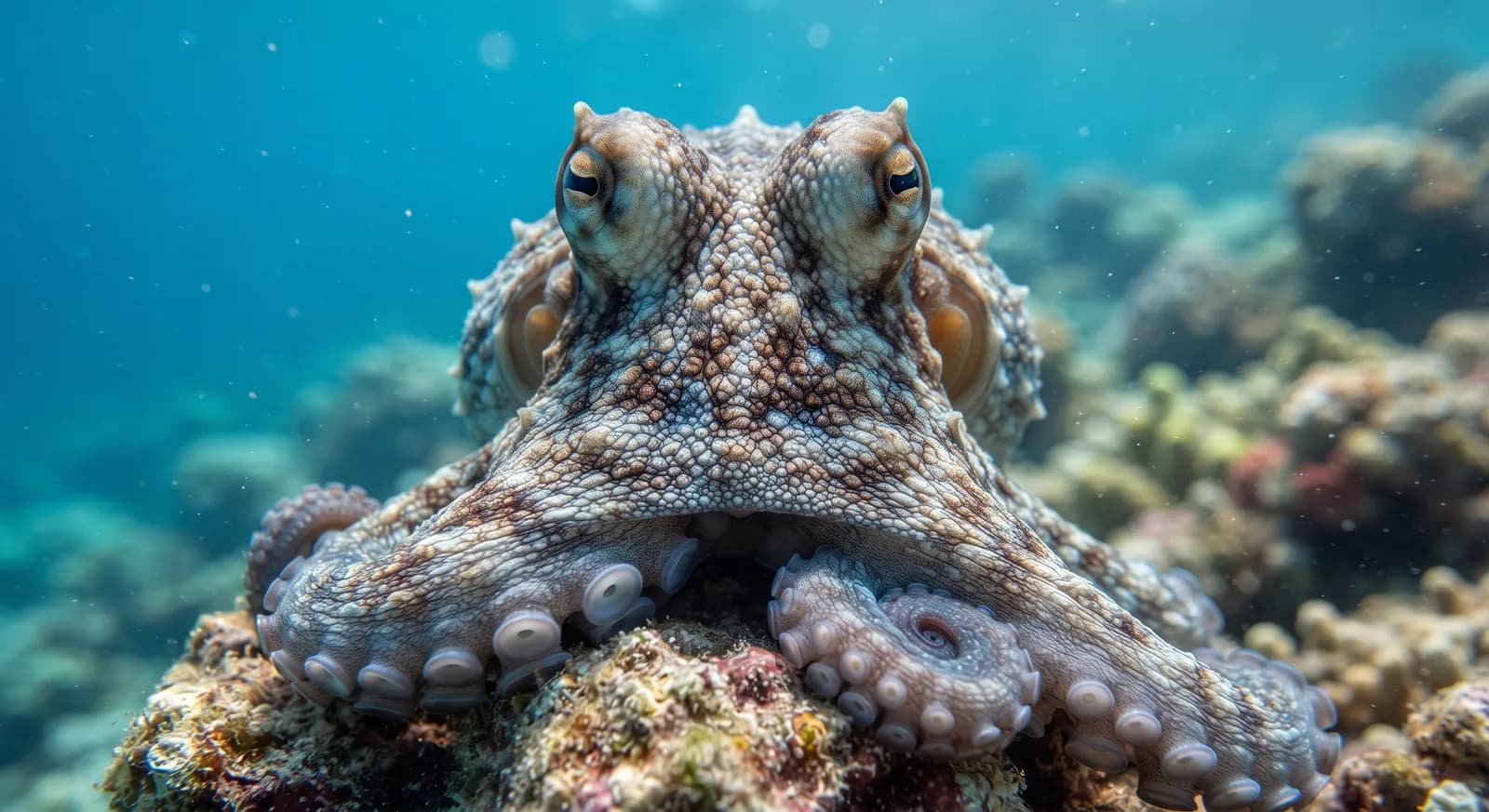
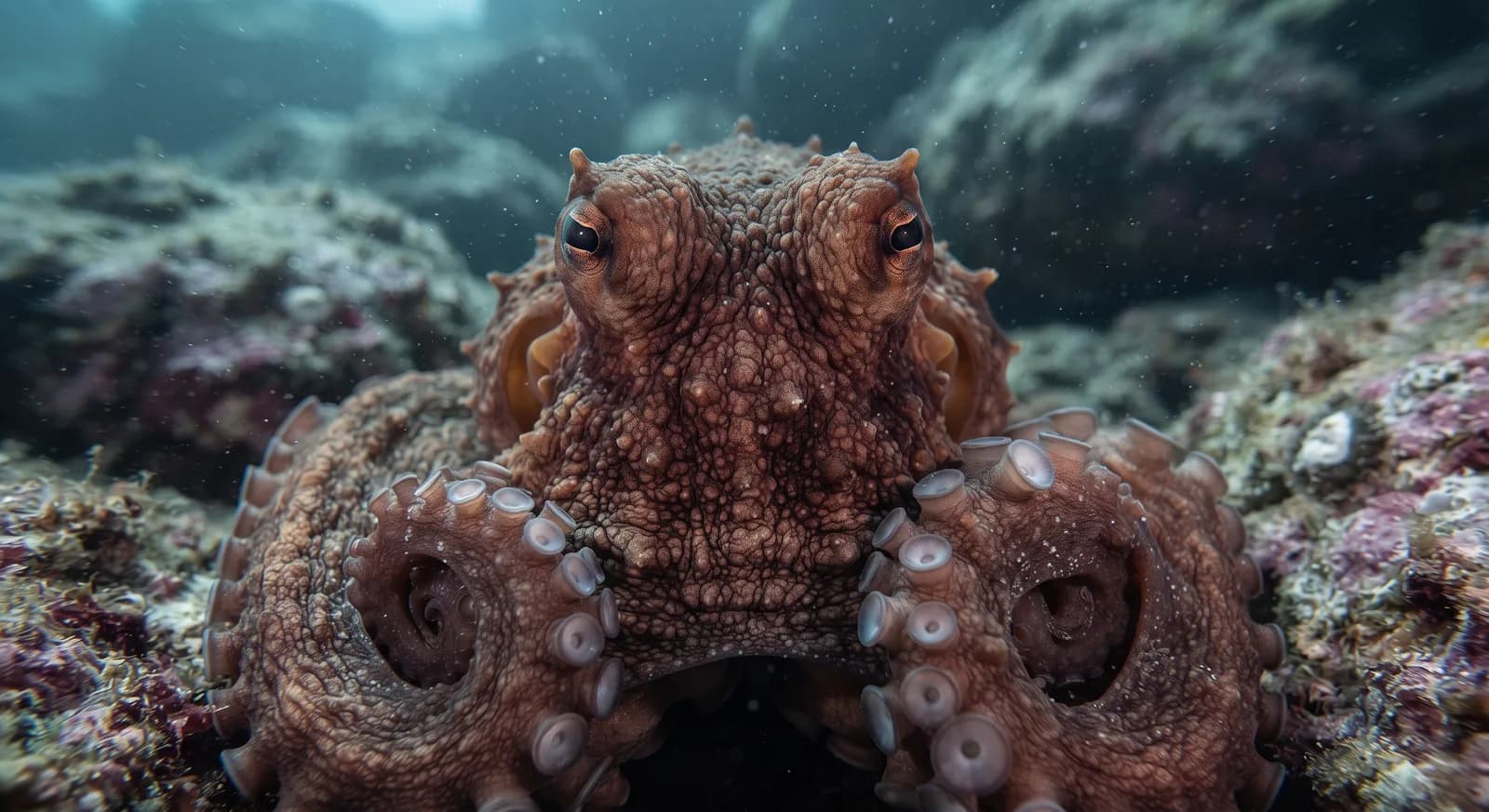
AI-generated images: illustrations, not photographs.

Fun facts

  • fisiologíaFor all its small size it produces one of the most potent toxins known in the animal kingdom, able to cause respiratory paralysis in people, and there is no specific antidote.
  • It is one of the most toxic marine animals in the world, and it fits in the palm of a hand: it does not exceed 10 cm including the arms and weighs about 80 grams. A single individual carries enough tetrodotoxin to kill several adults.
  • Tetrodotoxin is the same neurotoxin found in pufferfish, and it blocks the action potentials of nerves and muscles. There is no antidote.
  • It does not make the toxin itself: it is produced by symbiotic bacteria housed in its posterior salivary glands.
  • Its sixty blue rings appear only when it is disturbed, and then they pulse. At rest it is an unremarkable brown octopus.
  • In exchange for that chemical defence it lost another: its ink sac has shrunk and it barely uses it.
  • The female broods the eggs among her arms and dies when they hatch.

Life cycle and biology

Skeleton type
Invertebrate - no rigid skeleton (mollusc)
Habitat and environment
Intertidal pools and coral reefs of the Indo-Pacific, from Japan to Australia; it hides in crevices, empty shells and tins

Sources consulted: Wikipedia (es): Hapalochlaena lunulata · Anatomia de Cephalopoda · Wikipedia (Cuttlebone, Gladius) · FAO, terminos tecnicos de cefalopodos

Where to find it

Loading map…

Where to see it

Parks and dive sites where this species has been documented — showing 20 of 143.

Related species

Other species in the catalogue with the most in common with Greater Blue-ringed Octopus — same habitat, park, country, tags or family.

Same taxonomic family
Shares a park
Shares a park
Shares a park

Related guides

Keep exploring

Based on what we already know about greater blue-ringed octopus.

Share an experience, a fun fact or a tip for seeing the greater blue-ringed octopus.
See full glossary
This page in other languages: Español · Deutsch · Français · Português · Italiano

The pins mark the parks and dive sites where its presence is documented.

See its range on the interactive map→
KomodoIndonesia
Great Barrier ReefAustralia
NingalooAustralia
Shark BayAustralia
Royal National ParkAustralia
Cape RangeAustralia
BoodereeAustralia
SetonaikaiJapan
Tubbataha ReefsPhilippines
Bali BaratIndonesia
Raja AmpatIndonesia
Komodo National ParkIndonesia
Bunaken Marine ParkIndonesia
USAT Liberty (Tulamben)Indonesia
Amed and Jemeluk BayIndonesia
Menjangan Island (Bali Barat)Indonesia
Nusa Penida (Manta Point / Crystal Bay)Indonesia
Lembeh StraitIndonesia
Wakatobi National ParkIndonesia
Banda IslandsIndonesia
See all 14 parks
See all 129 dive sites
Giant Pacific OctopusLeast Concern

Giant Pacific Octopus

Enteroctopus dofleini

Mimic OctopusLeast Concern

Mimic Octopus

Thaumoctopus mimicus

Day OctopusLeast Concern

Day Octopus

Octopus cyanea

Geography ConeLeast Concern

Geography Cone

Conus geographus

Greater ArgonautLeast Concern

Greater Argonaut

Argonauta argo

Humpback WhaleLeast Concern

Humpback Whale

Megaptera novaeangliae

Where to dive with Greater Blue-ringed Octopus7 places
CountriesIndonesia
ParksKomodoIndonesia
TagsCarnivore
Carnivore
Solitary
Mollusc

Asia13

Oceania11

Indonesia
Australia
Philippines
Thailand
Malaysia
Japan
Brunei
Cambodia
China
Indonesia
Japan
Malaysia
Myanmar
Philippines
Singapore
Taiwan
Thailand
Timor-Leste
Vietnam
Australia
Fiji
Guam
Marshall Islands
Micronesia
New Caledonia
Northern Mariana Islands
Palau
Papua New Guinea
Solomon Islands
Vanuatu