 Not Evaluated
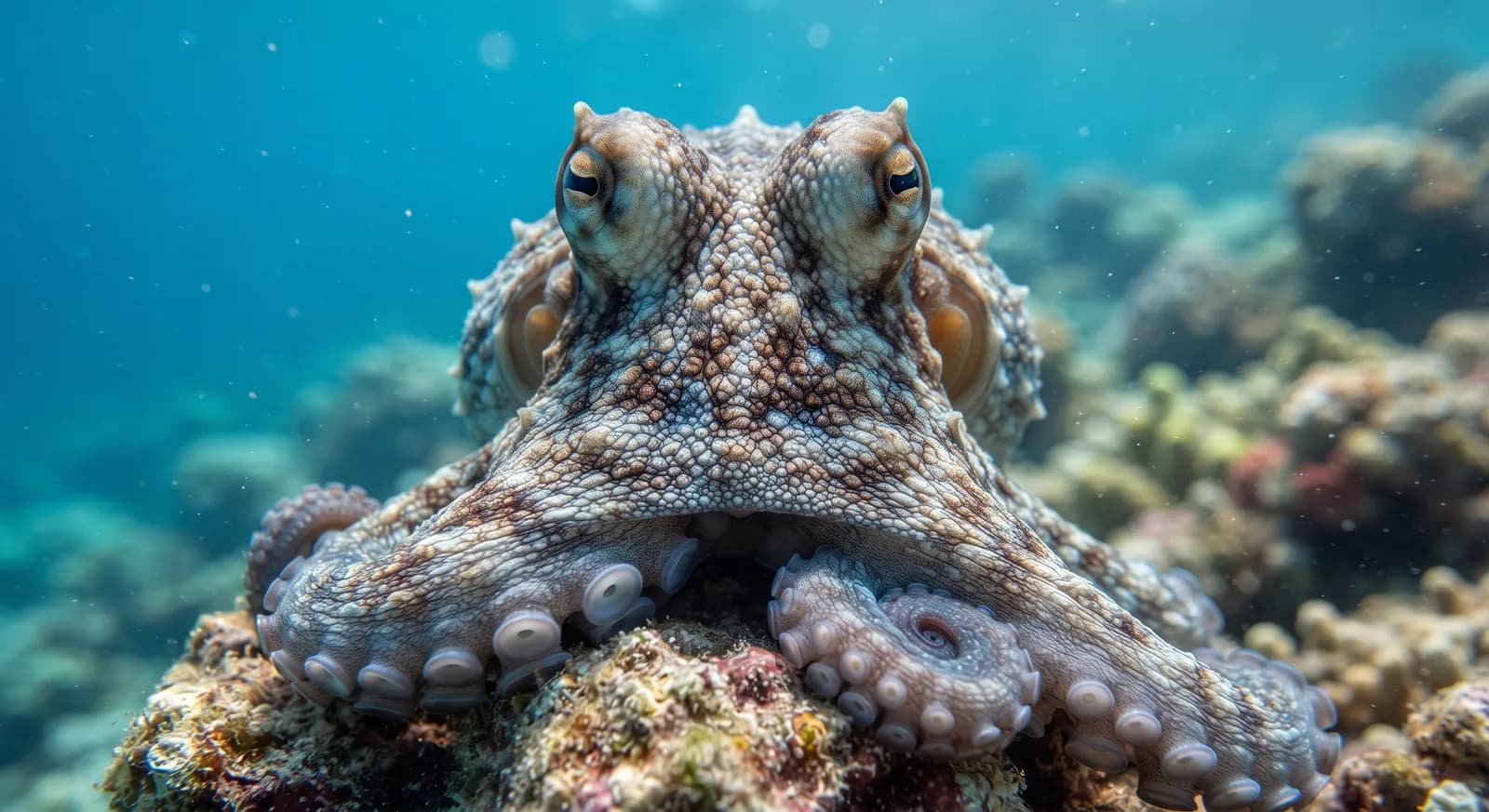
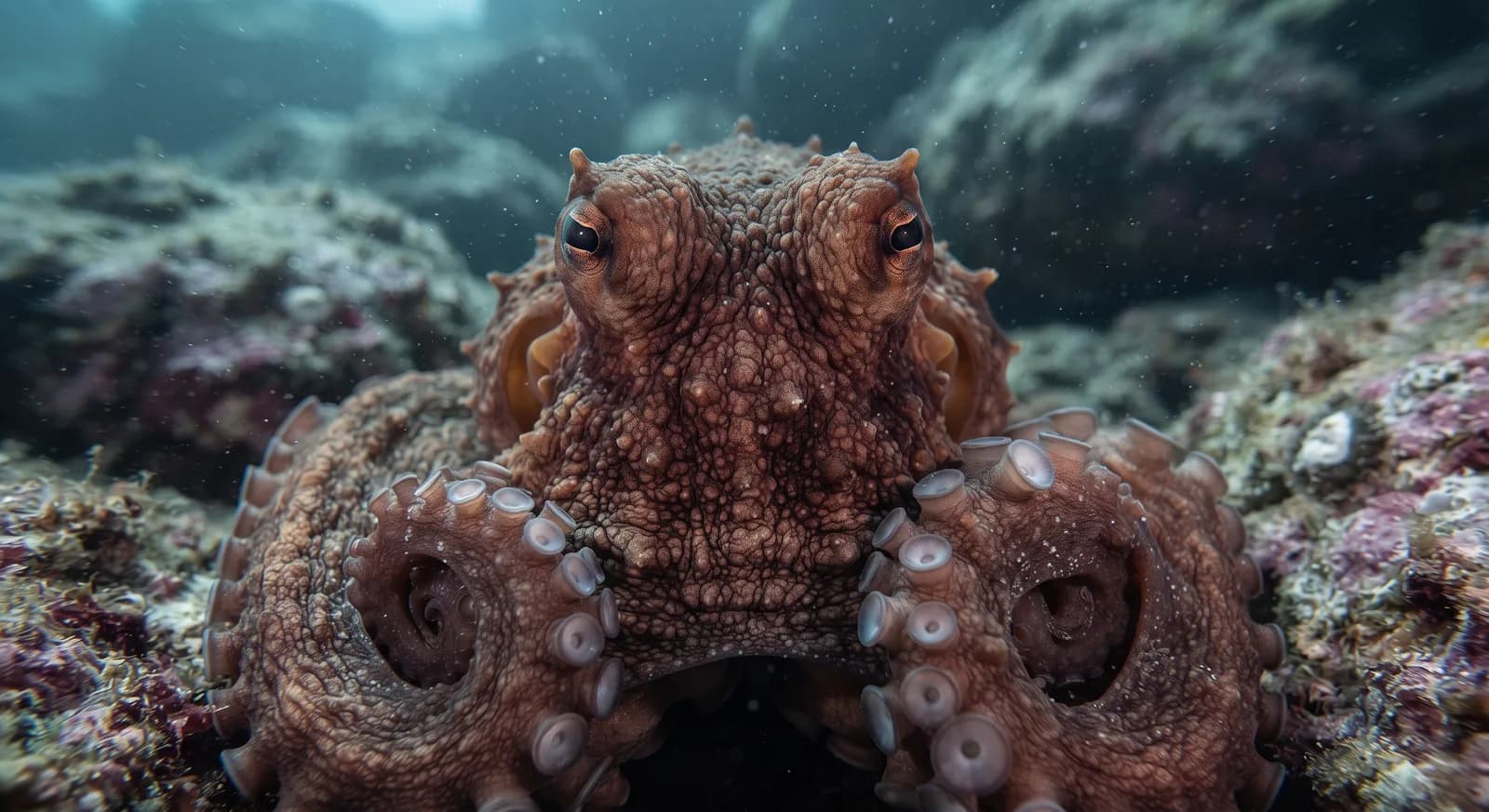
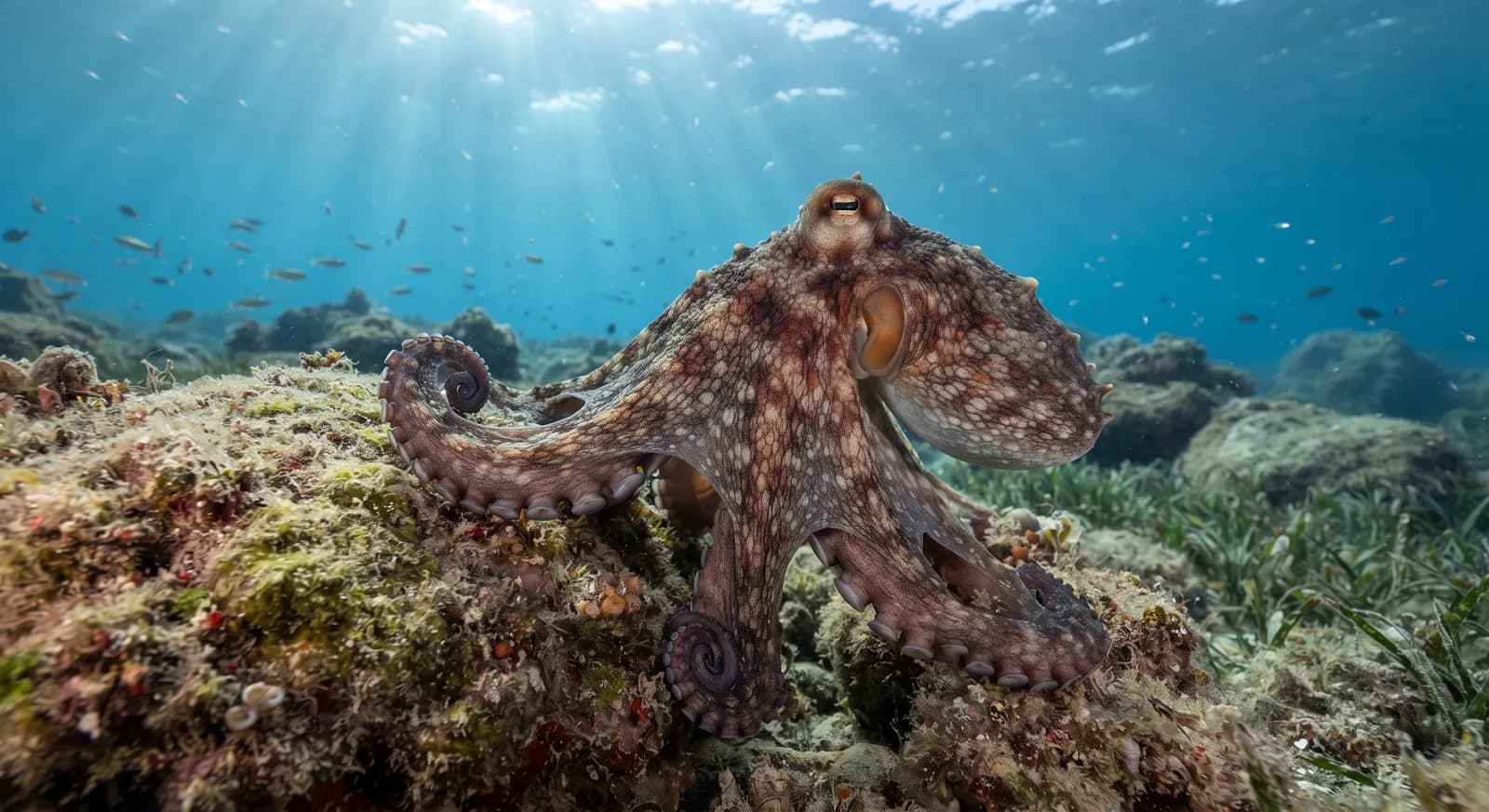
Common Octopus
Octopus vulgaris
80 countries34 parks90 dive sites
Species group · Cephalopods
WAnimals has 7 species of octopus, spread across 3 families (Amphitretidae, Octopodidae, Opisthoteuthidae).
Each one has its own full profile. This group does not replace them: it brings them together.
No species documented in this group is genuinely at risk according to the IUCN, with the data available today.
Recorded in 162 countries. The ones with the most species in the group:
It lives only 12 to 15 months, breeding just once in its lifetime.
From
A female can lay between 100,000 and 500,000 eggs in a single clutch.
From
It can solve complex problems and use tools, a rarity among invertebrates.
From
It can change its colour, texture and body pattern in under a second to stay hidden as it moves about the sea floor by day.
From
It has been documented hunting in collaboration with groupers and other reef fish: the fish points out the hidden prey and the octopus extracts it from the crevice.
From
It is semelparous: the female stops feeding while she tends the eggs and dies when the young hatch.
From
For all its small size it produces one of the most potent toxins known in the animal kingdom, able to cause respiratory paralysis in people, and there is no specific antidote.
From
It is one of the most toxic marine animals in the world, and it fits in the palm of a hand: it does not exceed 10 cm including the arms and weighs about 80 grams. A single individual carries enough tetrodotoxin to kill several adults.
·
Ranges calculated from the profiles that record the figure, not from all 7.