 Not Evaluated
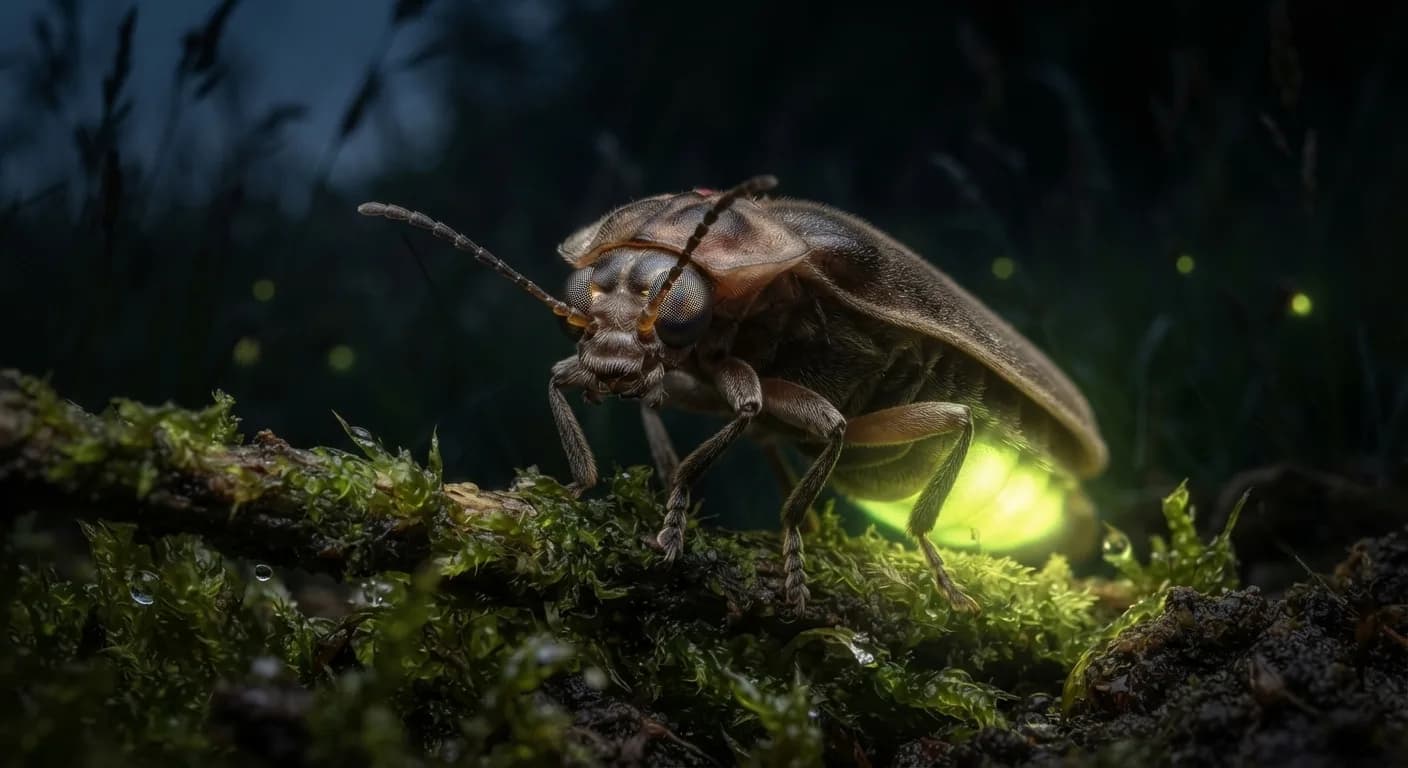
Glow-worm
Lampyris noctiluca
45 countries139 parks
Species group · Insects
WAnimals has 3 species of firefly, spread across 2 families (Keroplatidae, Lampyridae).
Ranges calculated from the profiles that record the figure, not from all 3.
Each one has its own full profile. This group does not replace them: it brings them together.
No species documented in this group is genuinely at risk according to the IUCN, with the data available today.
Recorded in 48 countries. The ones with the most species in the group:
The larva feeds on small snails and slugs, paralysed and consumed by external digestion.
From
It is declining through light pollution, which drowns out the glow it uses to attract a mate.
From
The adults have no working mouthparts and do not feed at all, living off the reserves built up during their long larval stage.
From
Its larvae light the Waitomo caves blue and hunt with sticky threads of silk.
From
The larva regulates its glow according to how hungry it is: the longer it goes unfed, the brighter its light.
From
The adult has no functional mouthparts: it lives barely a few days, solely to breed, and dies without eating.
From
In some populations it synchronises its flashes with nearby males, producing coordinated collective displays whose exact purpose is still under study.
From
As it flies, the male traces a luminous J every five to seven seconds: hence its name, the big dipper firefly, after the constellation.
·
From