One of the 9 gulls on WAnimals

Birds · Charadriiformes · Laridae
Yellow-legged Gull
Larus michahellis
Least Concern
The species is abundant and widely distributed; it faces no significant short-term risk.
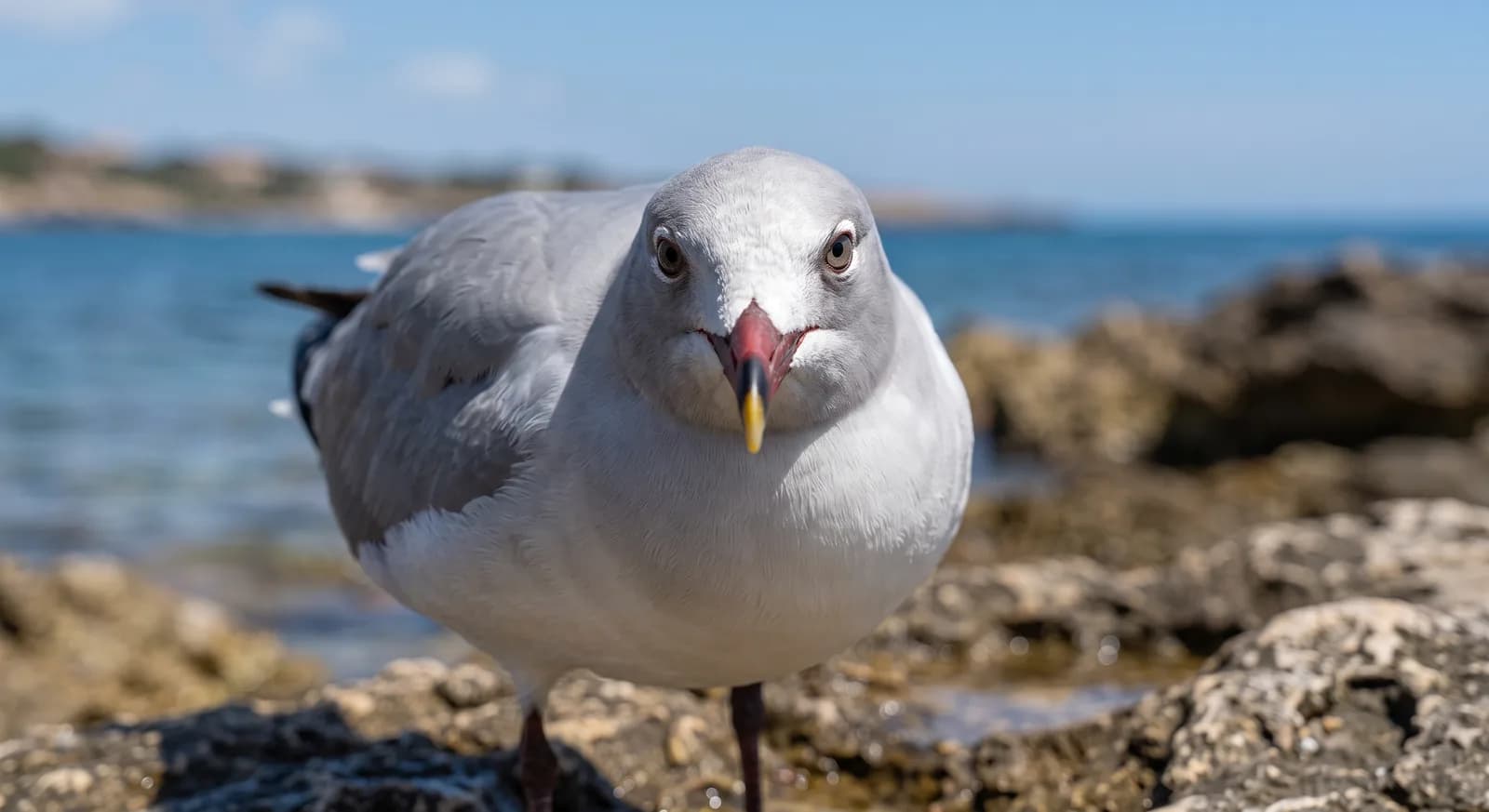
The yellow-legged gull is the commonest large gull of the Mediterranean and the Iberian coasts, with a grey back, yellow legs and a red eye-ring. Its population has grown enormously over recent decades thanks to landfill sites and fishery discards, and it has become a conservation problem: it preys on the eggs and chicks of more threatened species and colonises the rooftops of coastal cities.
Weight
750 g – 1.5 kg
Size
52 cm – 68 cm
Life expectancy
25 years