 Least Concern
Herring Gull
Larus argentatus
Birds · Charadriiformes · Laridae
Larus marinus
The species is abundant and widely distributed; it faces no significant short-term risk.
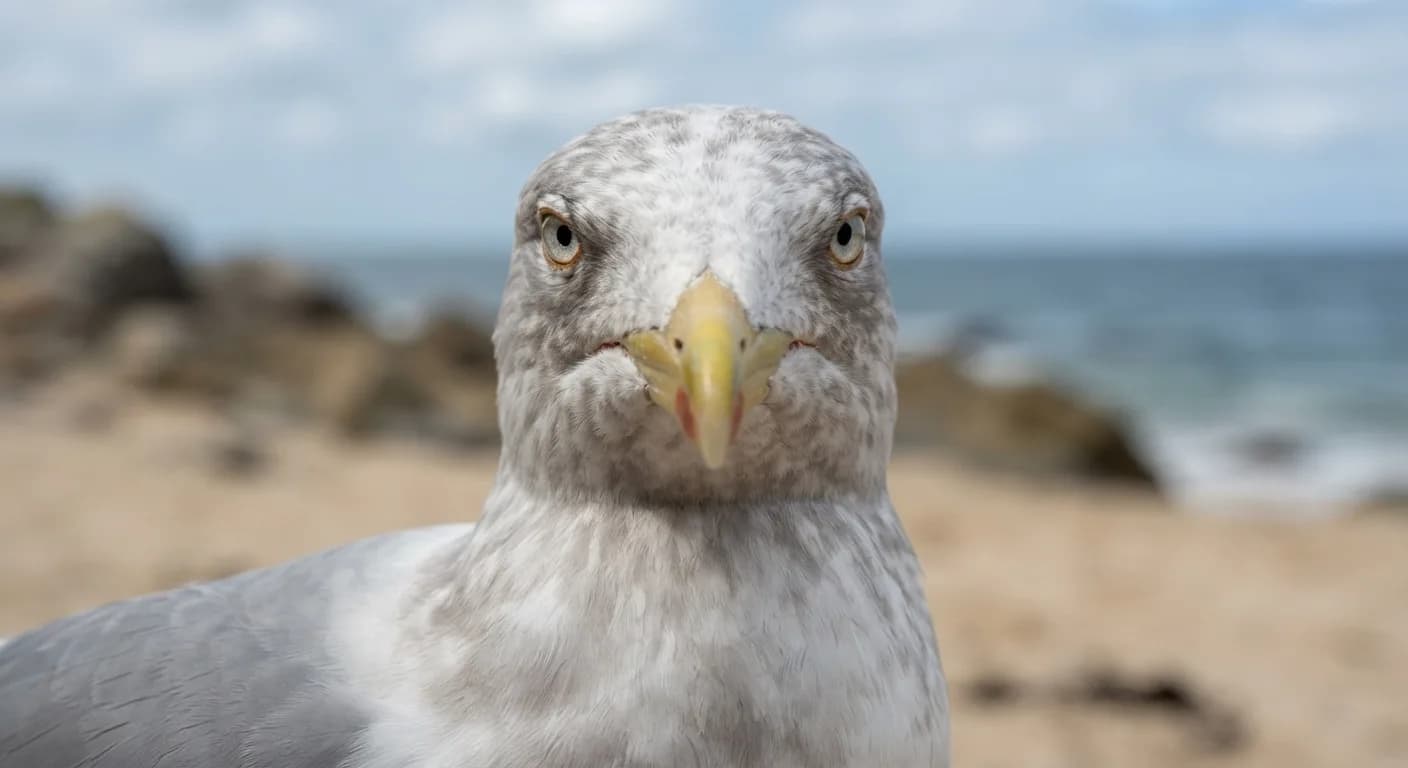
The great black-backed gull is the largest gull in the world: a wingspan of more than a metre and a half and a massive bill able to swallow puffins and rats whole. It is a formidable predator and scavenger that dominates any seabird colony where it is present. It breeds on rocky coasts of the North Atlantic and in winter appears regularly in the Bay of Biscay and in some harbours of northern Spain.
Weight
1 kg – 2.3 kg
Size
64 cm – 79 cm
Life expectancy
27 years
Diet
Omnivore
Combines animal and plant food depending on availability.
Activity
Diurnal
Active mainly during the day.
Social structure
Colony
Lives in large concentrations, often for breeding reasons.
Sighting difficulty
Easy
Sources consulted: https://es.wikipedia.org/wiki/Larus_marinus
The pins mark the parks where its presence is documented.
Parks and dive sites where this species has been documented — showing 10 of 28.
Other species in the catalogue with the most in common with Great Black-backed Gull — same habitat, park, country, tags or family.
Based on what we already know about great black-backed gull.
Share an experience, a fun fact or a tip for seeing the great black-backed gull.
Be the first to comment.