Species group · Mammals
Gibbons
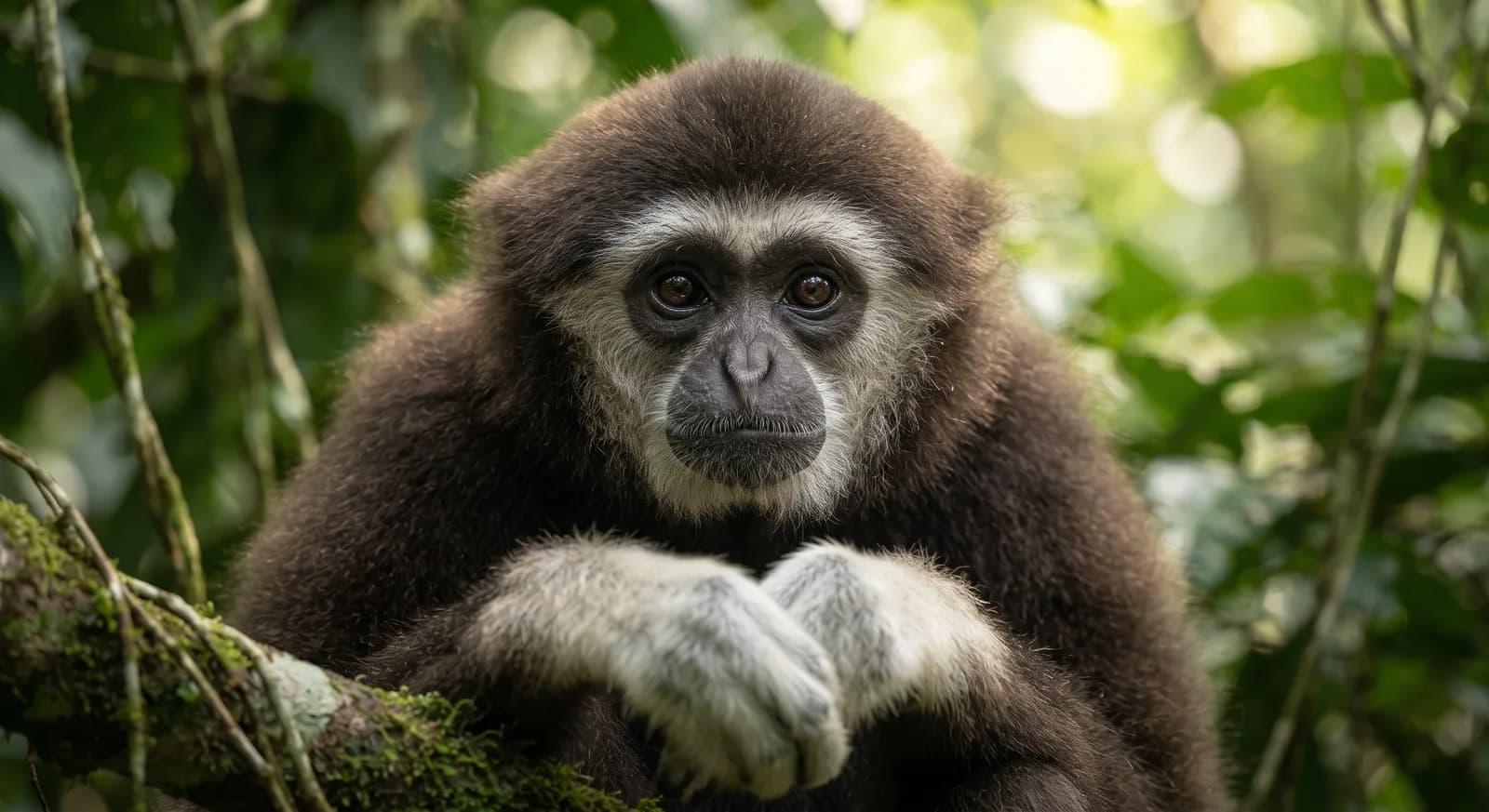
WAnimals has 4 species of gibbon, all in the family Hylobatidae.
- 4 species
- 1 family
- 13 countries
- 16 parks
- Weight
- 4 kg – 8 kg
- Length
- 42 cm – 64 cm
- Lifespan
- 28 – 35 years
Ranges calculated from the entries that record the figure, not from all 4.
All 4 species of gibbons on WAnimals
Each one has its own full entry. This group does not replace them: it brings them together.
Conservation status
4 especies in this group están en alguna categoría de riesgo real según la UICN.
See the global conservation statusWhere they live
Recorded in 13 countries. The ones with the most species in the group:
Where to see them
- Área Nacional Protegida de Nam Et-Phou Louey2 species
- Kaeng Krachan2 species
- Nakai-Nam Theun2 species
- Nam Ha2 species
- Parque Nacional de Khao Sok2 species
- Taman Negara2 species
- Bukit Barisan Selatan1 species
- Doi Inthanon1 species
- Endau-Rompin1 species
- Gunung Leuser1 species
- Kerinci Seblat1 species
- Khao Yai1 species
Did you know…
Brachiating, it can exceed 15 kilometres an hour, with phases in which both hands are free and the animal is literally flying between branches several metres apart.
From Lar Gibbon
Its coat colour distinguishes neither sex nor subspecies: a single family may contain both black and cream individuals, and any one animal keeps its shade for life.
From Lar Gibbon
Every morning the pair sings a duet: the female begins a very powerful rising sequence and the male answers with his own phrase, a ritual that advertises the territory and reinforces the bond.
From Agile Gibbon
In a single swing it can cover three metres between branches, and its shoulders have a ball-and-socket joint that lets it rotate the arm almost fully.
From Agile Gibbon
The pair's duet is so distinctive that researchers use it to census whole populations without seeing a single animal: each song identifies an occupied territory.
From Pileated Gibbon
Male and female are so different in colour that they are often taken for different species: he is black with white extremities, she silvery with a black crown.
From Pileated Gibbon
The pairs sing coordinated duets that mark out their territory.
It changes colour twice in its life: the young are born gold like their mother, within a few months they turn black like the father, and at puberty the females return to gold while the males stay black.