One of the 4 gibbons on WAnimals
Mammals · Primates · Hylobatidae
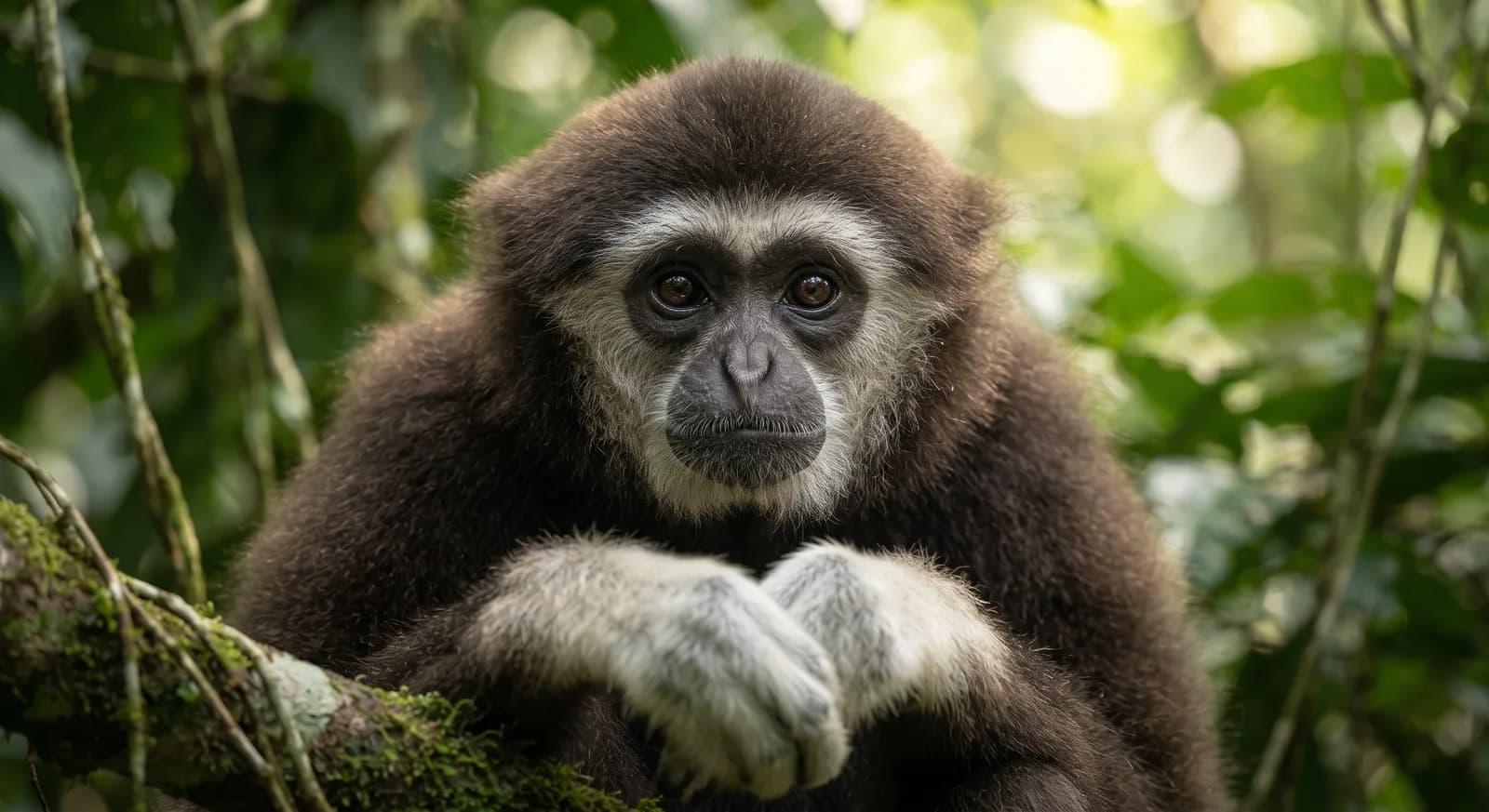
Lar Gibbon
Hylobates lar
It faces a very high risk of extinction in the wild in the near future. See full glossary
The lar gibbon, or white-handed gibbon, is the best known gibbon and the one with the widest range, from south-western China to Sumatra. Its coat may be black or cream within a single population, but every individual has white hands and feet and a pale ring of hair around the face. It lives in family groups holding territories of some 40 hectares and feeds mainly on ripe fruit, especially figs. It is highly sensitive to logging and to the capture of infants for the pet trade.
Weight
4.4 kg – 7.6 kg
Size
42 cm – 59 cm
Lifespan
30 years
Diet
Herbivore
Feeds mainly on plants.
Activity
Diurnal
Active mainly during the day.
Social structure
In pairs
Usually lives in pairs, sometimes for life.
Sighting difficulty
Hard
Fun facts
- Brachiating, it can exceed 15 kilometres an hour, with phases in which both hands are free and the animal is literally flying between branches several metres apart.
- Its coat colour distinguishes neither sex nor subspecies: a single family may contain both black and cream individuals, and any one animal keeps its shade for life.
Life cycle & biology
- Skeleton type
- Vertebrate - internal bony skeleton (mammal)
- Habitat & environment
- The canopy of evergreen and semi-deciduous tropical forest in South-East Asia
- Sexual maturity
- 7 years
- Gestation / incubation
- 7.1 months
- Litter / clutch size
- 1
Sources consulted: https://www.iucnredlist.org/ | https://animaldiversity.org/ | https://es.wikipedia.org/
Where to find it
See its range on the interactive mapWhere to watch it
Parks and dive sites where this species has been documented.
Related species
Other species in the catalogue with the most in common with Lar Gibbon — same habitat, park, country, tags or family.
Agile Gibbon
Hylobates agilis
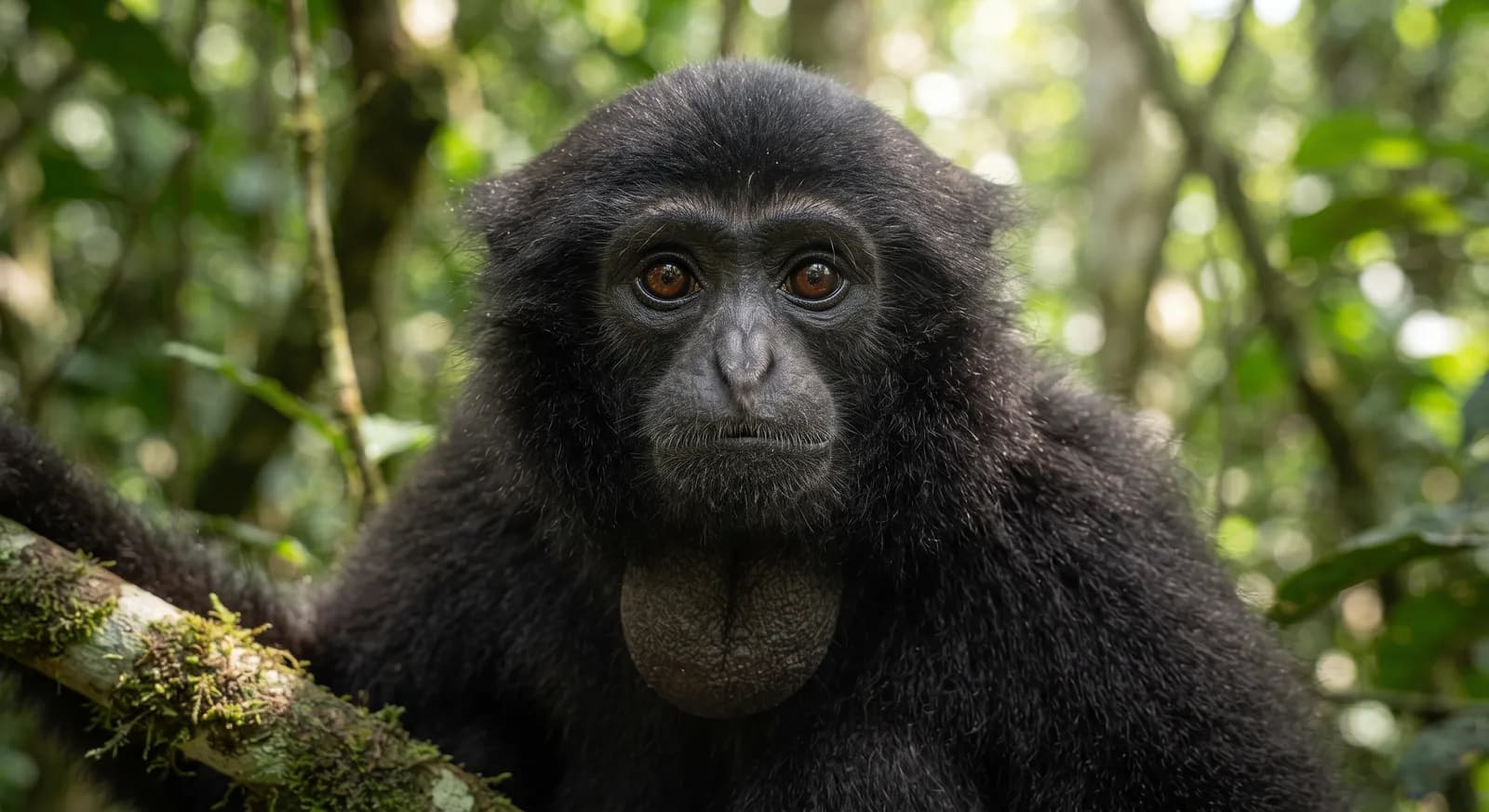 Endangered
Siamang
Symphalangus syndactylus
Pileated Gibbon
Hylobates pileatus
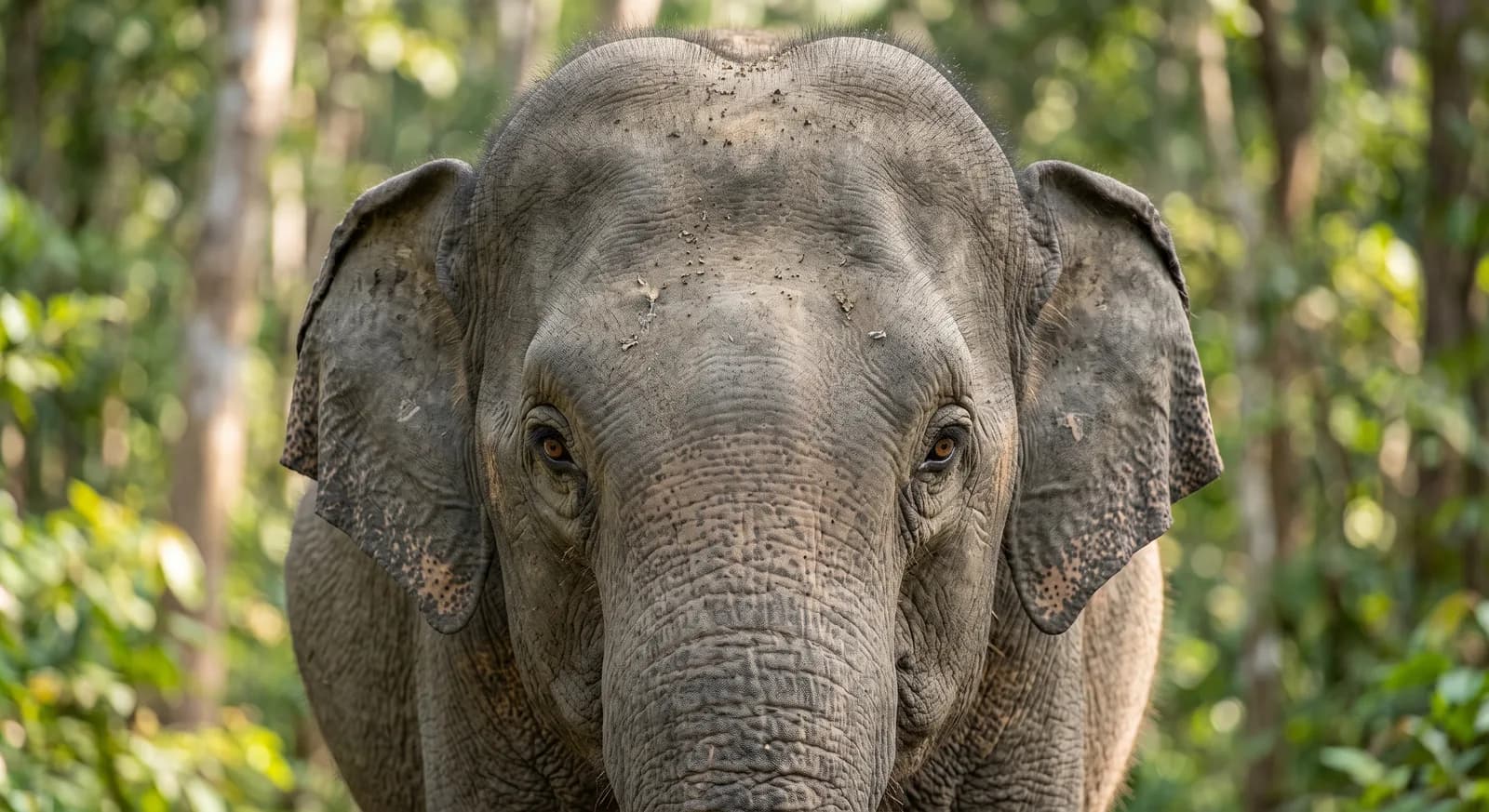 Endangered
Asian Elephant
Elephas maximus
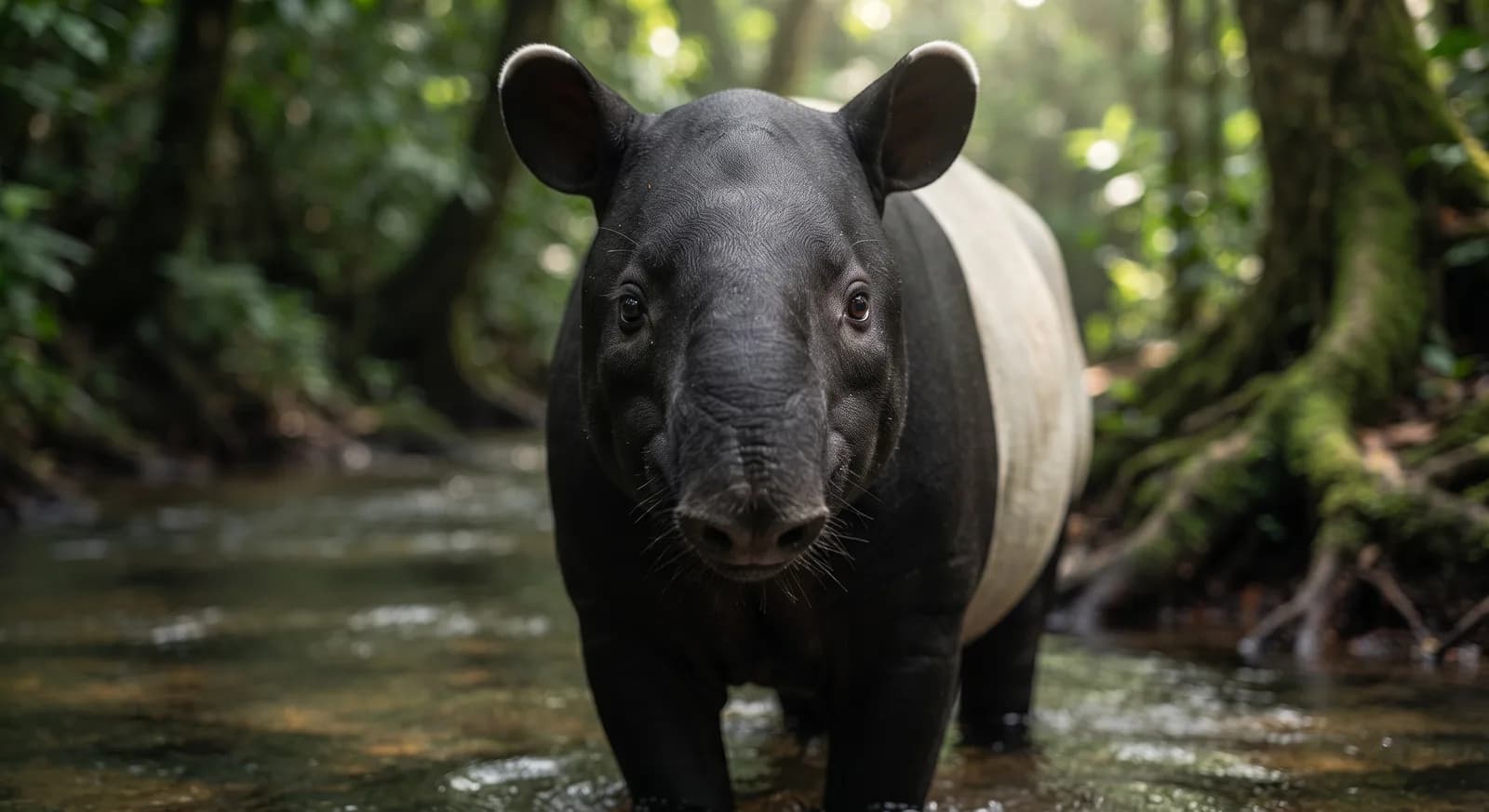 Endangered
Malayan Tapir
Tapirus indicus
Southern Pig-tailed Macaque
Macaca nemestrina
How to help
The lar gibbon is classified as endangered. Organizations such as UICN, WWF y Wildlife Conservation Society work specifically on its conservation and that of its habitat; looking into their programs is a good starting point if you want to get involved.
It's documented in 6 real protected areas — part of why protecting these places matters for its conservation.
Keep exploring
Based on what we already know about lar gibbon.
Comments
Share an experience, a fun fact or a tip for seeing the lar gibbon.
Be the first to comment.