One of the 6 jellyfish on WAnimals
True jellyfish · Coronatae · Periphyllidae
Helmet Jelly
Periphylla periphylla
It has not yet been assessed against the IUCN criteria. See full glossary
The helmet jellyfish, with a conical bell of deep reddish brown, an inhabitant of the deep waters of every ocean. Its dark colour serves to hide inside its stomach the light of the bioluminescent prey it has eaten, so as not to give itself away to predators.
Size
15 cm – 35 cm
Lifespan
30 years
Diet
Carnivore
Feeds mainly on other animals.
Social structure
Solitary
Lives and hunts alone, joining others only to breed.
Sighting difficulty
Unknown
Fun facts
- It is one of the very few true jellyfish to have done away with the fixed polyp stage: the egg develops straight into a medusa, which lets it live permanently in open water without depending on a seabed.
- It shuns light to an extreme degree, and in some Norwegian fjords with dark, stagnant water it has proliferated into extremely dense populations that have displaced the fish.
- It is intensely bioluminescent and flashes blue when disturbed.
- It is photophobic in the extreme: light damages it, which is why it lives in the permanent darkness of the deep.
- Its bell is a deep reddish brown, a colour that at depth amounts to being invisible, because red light does not reach that far.
- The stomach, also dark red, hides the bioluminescence of the prey it has just swallowed, so as not to give away its position.
- It has invaded several Norwegian fjords, forming populations so dense that they have displaced the fish and disrupted the local fishery, an uncommon case of a jellyfish establishing itself permanently in a coastal ecosystem.
- Unlike almost all other scyphozoans, it has no polyp stage: it develops directly from egg to medusa.
- It can live up to thirty years, an extraordinary lifespan for a jellyfish.
Life cycle & biology
- Habitat & environment
- Deep oceanic waters and fjords, between 200 and 2,700 m
Sources consulted: Péron y Lesueur (1810); Jarms et al.; Sørnes et al. (2007); Institute of Marine Research (Noruega)
Where to find it
See its range on the interactive mapWhere to watch it
Parks and dive sites where this species has been documented.
Related species
Other species in the catalogue with the most in common with Helmet Jelly — same habitat, park, country, tags or family.
Beadlet Anemone
Actinia equina
Moon Jellyfish
Aurelia aurita
 Least Concern
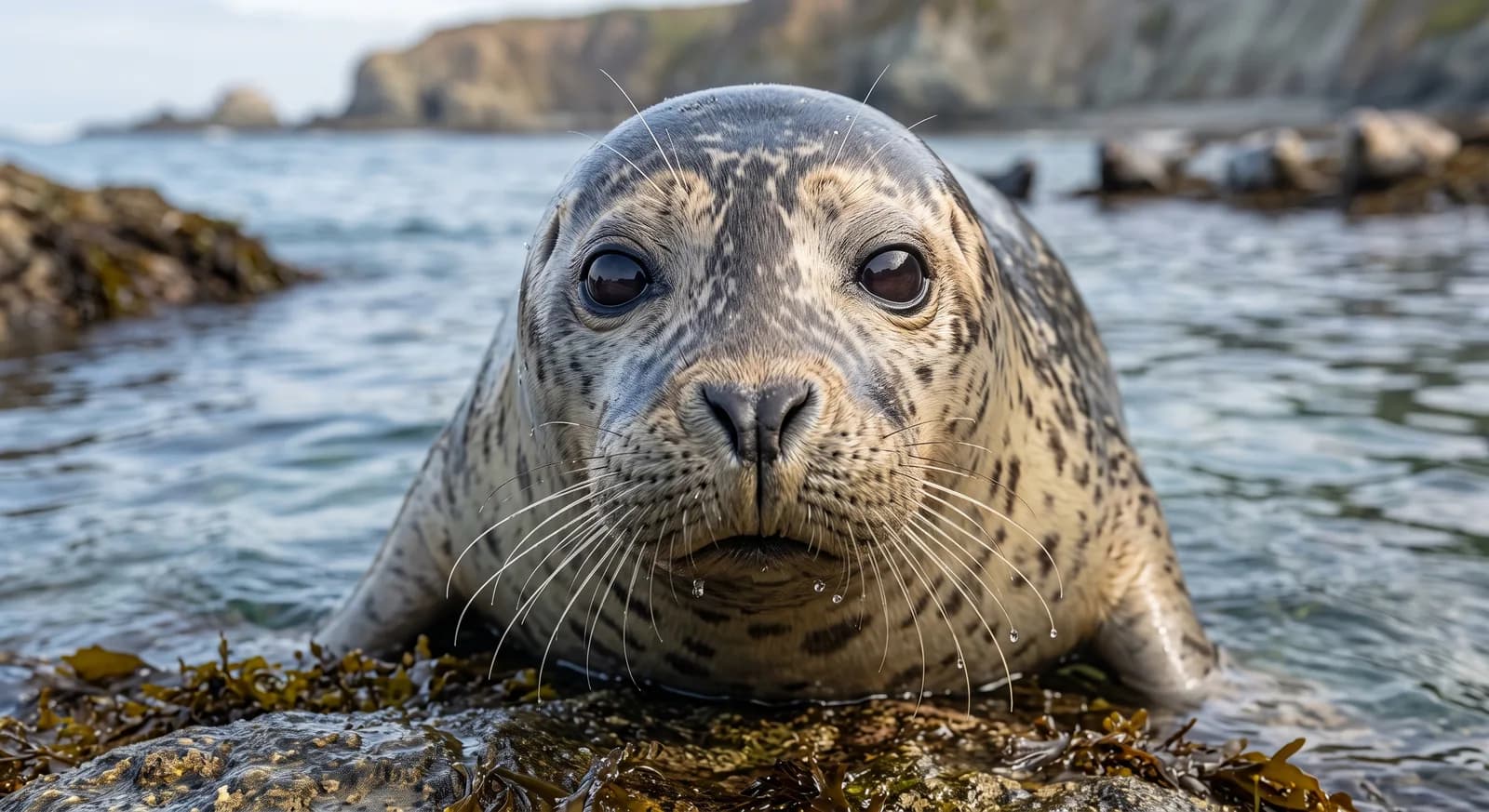
Harbor Seal
Phoca vitulina
 Least Concern
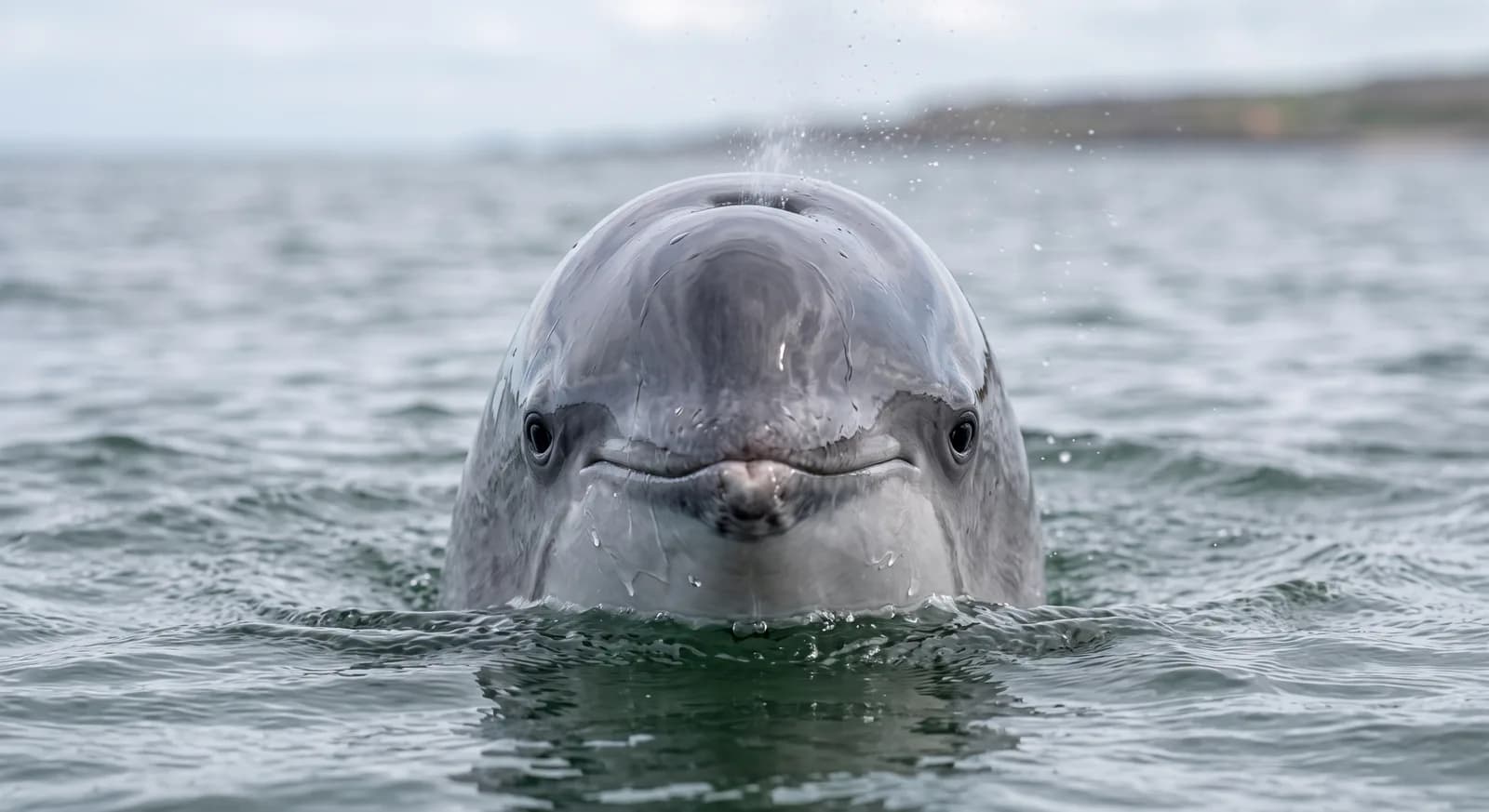
Harbor Porpoise
Phocoena phocoena
Porbeagle
Lamna nasus
Greenland Shark
Somniosus microcephalus
Keep exploring
Based on what we already know about helmet jelly.
Comments
Share an experience, a fun fact or a tip for seeing the helmet jelly.
Be the first to comment.