Birds · Suliformes · Fregatidae
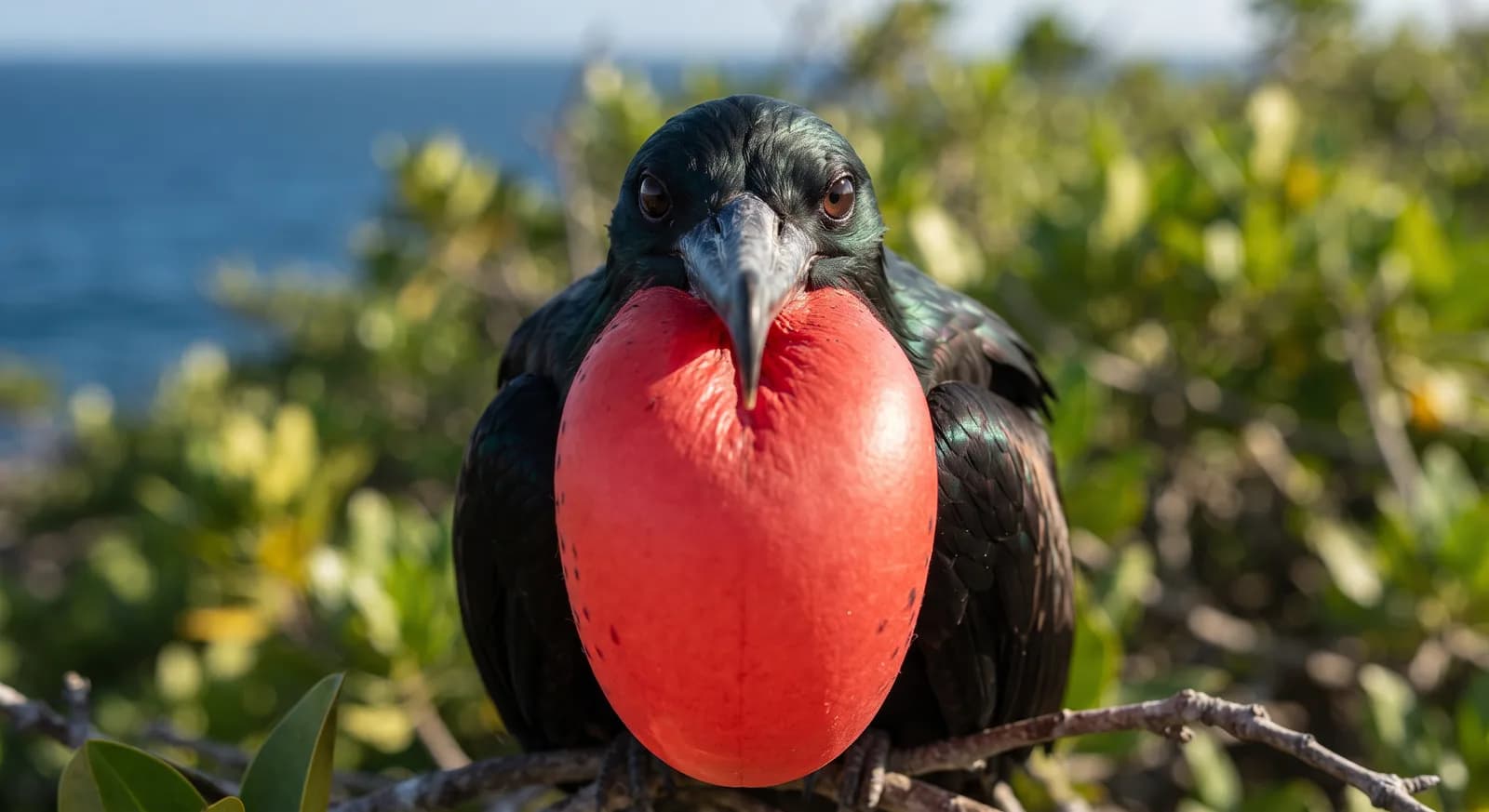
Great Frigatebird
Fregata minor
The species is abundant and widely distributed; it faces no significant short-term risk. See full glossary
A large black seabird that holds its wings in a characteristic curve and spreads a long, deeply forked tail, which looks pointed when closed. The male is entirely black with green and purple sheens and a bright red gular pouch that he inflates in courtship; his feet are red. The female is black with a white throat, neck and breast, and pink legs.
Weight
1.4 kg on average
Size
1 m on average
Diet
Piscivore
Feeds mainly on fish.
Activity
Diurnal
Active mainly during the day.
Social structure
Colony
Lives in large concentrations, often for breeding reasons.
Sighting difficulty
Easy
Fun facts
- Its reputation as a pirate is qualified by the data: a study of frigatebirds robbing masked boobies calculated that at most they could obtain 40% of the food they needed, and on average only 5%. Kleptoparasitism is a supplement, not a way of life.
- It cannot settle on the water: if it falls in by accident, it generally cannot take off again.
- It takes advantage of tuna shoals and dolphin pods, which drive fish towards the surface, and catches flying fish in mid-air.
Life cycle & biology
- Skeleton type
- Vertebrate - internal bony skeleton (bird)
- Habitat & environment
- Pelagic waters within about 80 km of the breeding colony. It nests on the coasts and islands of the Pacific, Indian and Atlantic oceans, in shrubs and trees, or on the ground where there is no vegetation, in colonies of up to several thousand birds and often shared with red-footed boobies and other frigatebirds
- Sexual maturity
- 5 years
- Gestation / incubation
- 56 days
- Litter / clutch size
- A single egg per season. It is seasonally monogamous and its breeding season, from mating to the end of parental care, can last up to two years: the duration of parental care is among the longest of any bird
Sources consulted: IUCN Red List (BirdLife International 2020); Ministerio del Medio Ambiente de Chile (RCE, 14.º proceso); Orta 1992; Vickery y Brooke 1994; Couve et al. 2016; Jaramillo 2005; Animalia.bio; Gmelin 1789
Where to find it
See its range on the interactive mapBest time: All year round in tropical waters; the male inflates his gular pouch in the breeding season
Where to watch it
Parks and dive sites where this species has been documented.
Related species
Other species in the catalogue with the most in common with Great Frigatebird — same habitat, park, country, tags or family.
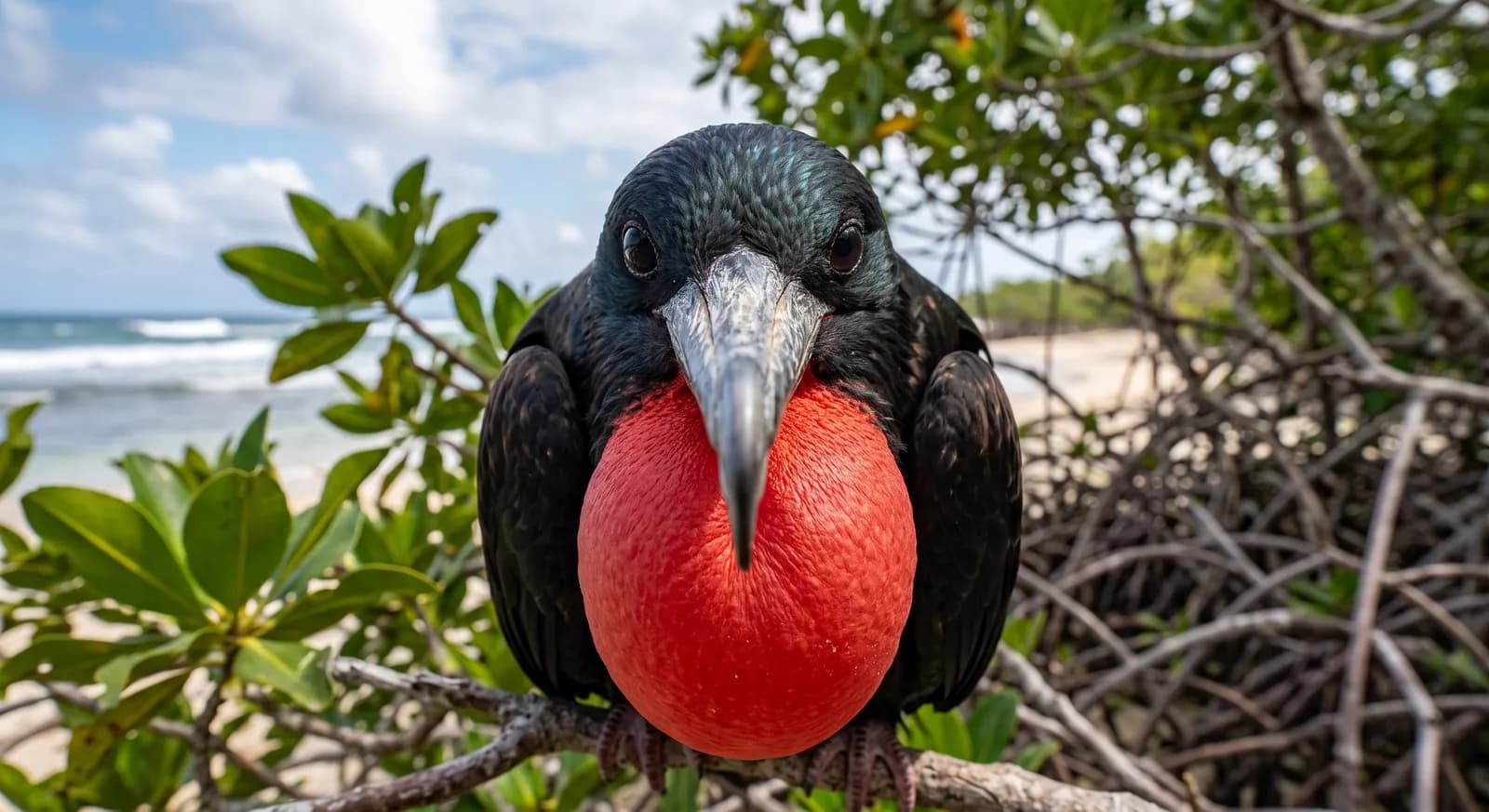
Lesser Frigatebird
Fregata ariel
 Least Concern
Magnificent Frigatebird
Fregata magnificens
Banded Humbug
Dascyllus aruanus
Spotted Garden Eel
Heteroconger hassi
White-spotted Puffer
Arothron hispidus
Clown Triggerfish
Balistoides conspicillum
Keep exploring
Based on what we already know about great frigatebird.
Comments
Share an experience, a fun fact or a tip for seeing the great frigatebird.
Be the first to comment.