Bony fish · Anguilliformes · Congridae
Spotted Garden Eel
Heteroconger hassi
The species is abundant and widely distributed; it faces no significant short-term risk. See full glossary
The spotted garden eel, its white body flecked with black dots, which lives in colonies of hundreds of individuals on sandy bottoms beside reefs. Each eel occupies a vertical burrow it makes itself and protrudes only the front half of its body, facing into the current.
Size
30 cm – 40 cm
Diet
Carnivore
Feeds mainly on other animals.
Activity
Diurnal
Active mainly during the day.
Social structure
Colony
Lives in large concentrations, often for breeding reasons.
Sighting difficulty
Easy
Fun facts
- GeneralIt lives buried in the sand in colonies that sway like a garden of plants.
- It never leaves its burrow: it builds the tube by secreting a mucus that hardens the sand and, at any danger, withdraws inside in an instant.
- It mates without leaving the hole: two neighbours stretch out until they intertwine, each keeping its tail inside its own burrow.
- A colony can hold from hundreds to thousands of individuals, each in its own burrow and at a fixed distance from its neighbours. Seen from afar they look like a meadow of seagrass swaying in the current.
- It digs with its tail, not its head: it uses the rigid, muscular rear end as a spike, then secretes a mucus that acts as cement and stops the tunnel collapsing.
- It never comes out entirely. It extends about a third of its body, points its mouth into the current and catches zooplankton; at any threat it vanishes in a flash, backwards.
- Its body has between 163 and 177 vertebrae, and its dorsal fin between 449 and 540 rays.
- In the breeding season individuals shift their burrows closer together until they can touch; it is the only occasion on which they move.
- The species honours Hans Hass, the Austrian biologist and underwater film-maker.
Life cycle & biology
- Skeleton type
- Vertebrate - internal bony skeleton (fish)
- Habitat & environment
- Sandy bottoms beside coral reefs
Sources consulted: https://es.wikipedia.org/wiki/Heteroconger_hassi
Where to find it
See its range on the interactive mapWhere to watch it
Parques y spots de buceo donde se ha documentado esta especie — se muestran 20 de 266 documentados.
Related species
Other species in the catalogue with the most in common with Spotted Garden Eel — same habitat, park, country, tags or family.
Banded Humbug
Dascyllus aruanus
 Least Concern
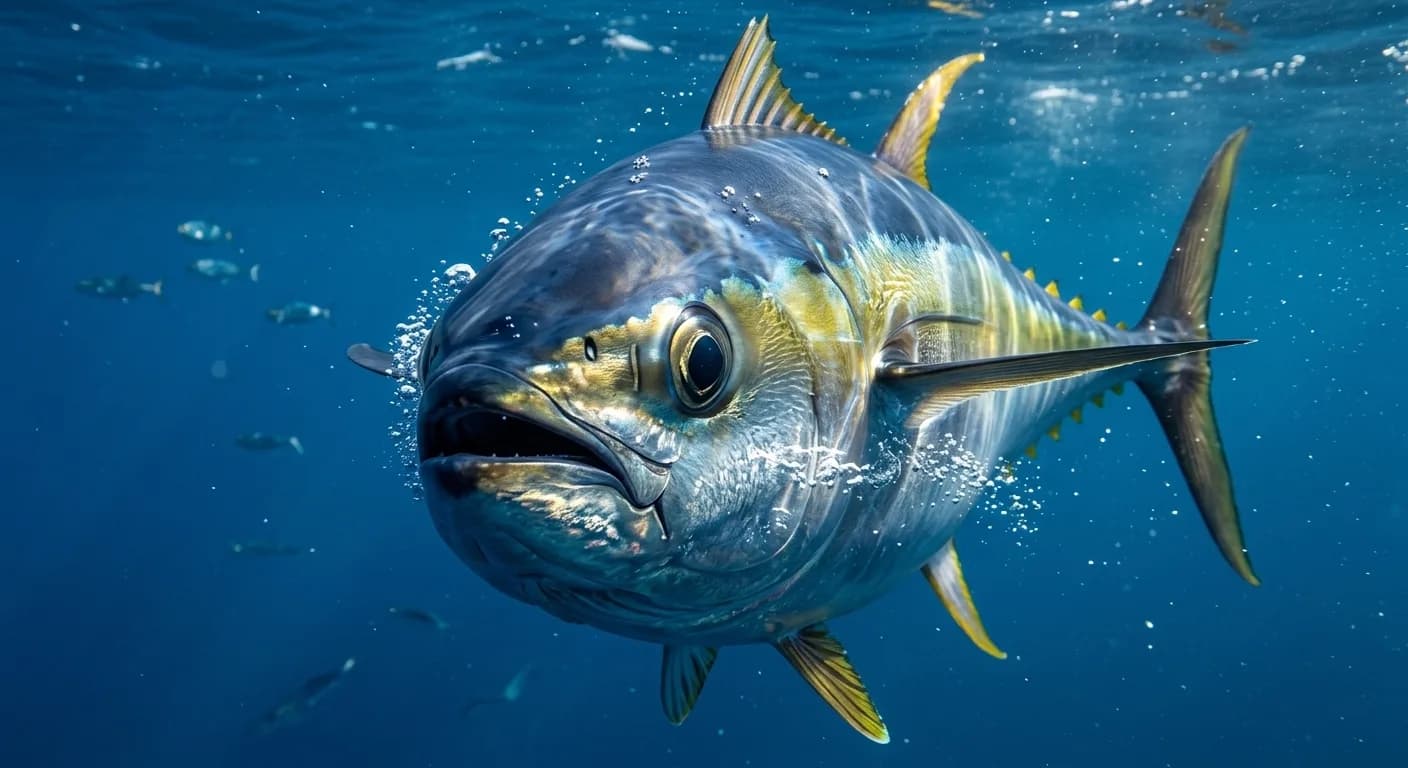
Yellowfin Tuna
Thunnus albacares
Skipjack
Katsuwonus pelamis
White-spotted Puffer
Arothron hispidus
Clown Triggerfish
Balistoides conspicillum
Dorab Wolf Herring
Chirocentrus dorab
Keep exploring
Based on what we already know about spotted garden eel.
Comments
Share an experience, a fun fact or a tip for seeing the spotted garden eel.
Be the first to comment.