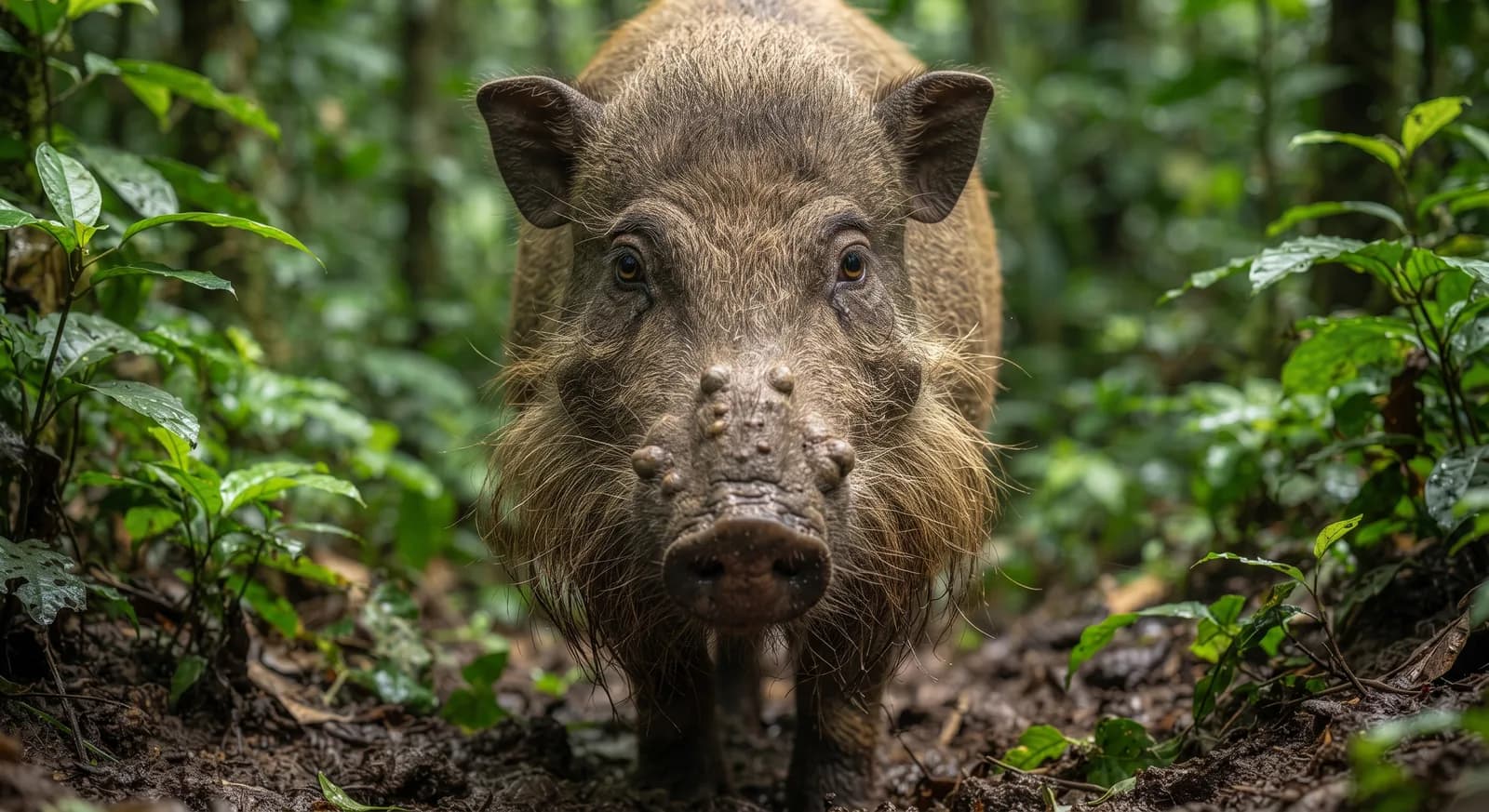
One of the 2 wild pigs on WAnimals
Mammals · Artiodactyla · Suidae
Bearded Pig
Sus barbatus
It faces a high risk of extinction in the wild over the medium term. See full glossary
It is the star of one of the least known land-mammal migrations in the world: large herds follow the irregular mast-fruiting cycles of Borneo's forests, moving en masse along predictable routes.
Weight
41 kg – 150 kg
Size
1.2 m – 1.5 m
Lifespan
15 years
Diet
Omnivore
Combines animal and plant food depending on availability.
Activity
Irregular activity
Active at irregular times, by day or night depending on circumstances.
Social structure
Herd
Lives in large groups as a strategy against predators.
Sighting difficulty
Moderate
Fun facts
- It follows the irregular mast-fruiting cycles of Borneo's forests in large herds.
- It is born with adult coat colour, without the camouflage stripes typical of other wild pigs.
- Its predictable migration routes historically made it easy prey for local hunters.
Life cycle & biology
- Skeleton type
- Vertebrate - internal bony skeleton (mammal)
- Habitat & environment
- Rainforest, mangrove and secondary forest of the Malay Peninsula, Borneo, Sumatra and nearby archipelagos of South East Asia
- Birth weight
- Exact weight not found as a precise figure
- Size at birth
- Born already in the species' typical coat, without the camouflage stripes of other pigs
- Sexual maturity
- 10-20 months (though males get no access to receptive females until 4-5 years, through physical competition)
- Gestation / incubation
- 90-160 days (~3-5 months, with marked variation between sources)
- Litter / clutch size
- 2 to 12 young per litter (most commonly 7-9)
- Lifespan in captivity
- Documented record of 16.2 years in captivity
Sources consulted: AnAge; Facts and Details; Ultimate Ungulate; Animal Diversity Web; Know Your Mammals; iNaturalist; Grokipedia; Animalia.bio
Where to find it
See its range on the interactive mapWhere to watch it
Parks and dive sites where this species has been documented.
Related species
Other species in the catalogue with the most in common with Bearded Pig — same habitat, park, country, tags or family.
Hairy Babirusa
Babyrousa babyrussa
 Vulnerable
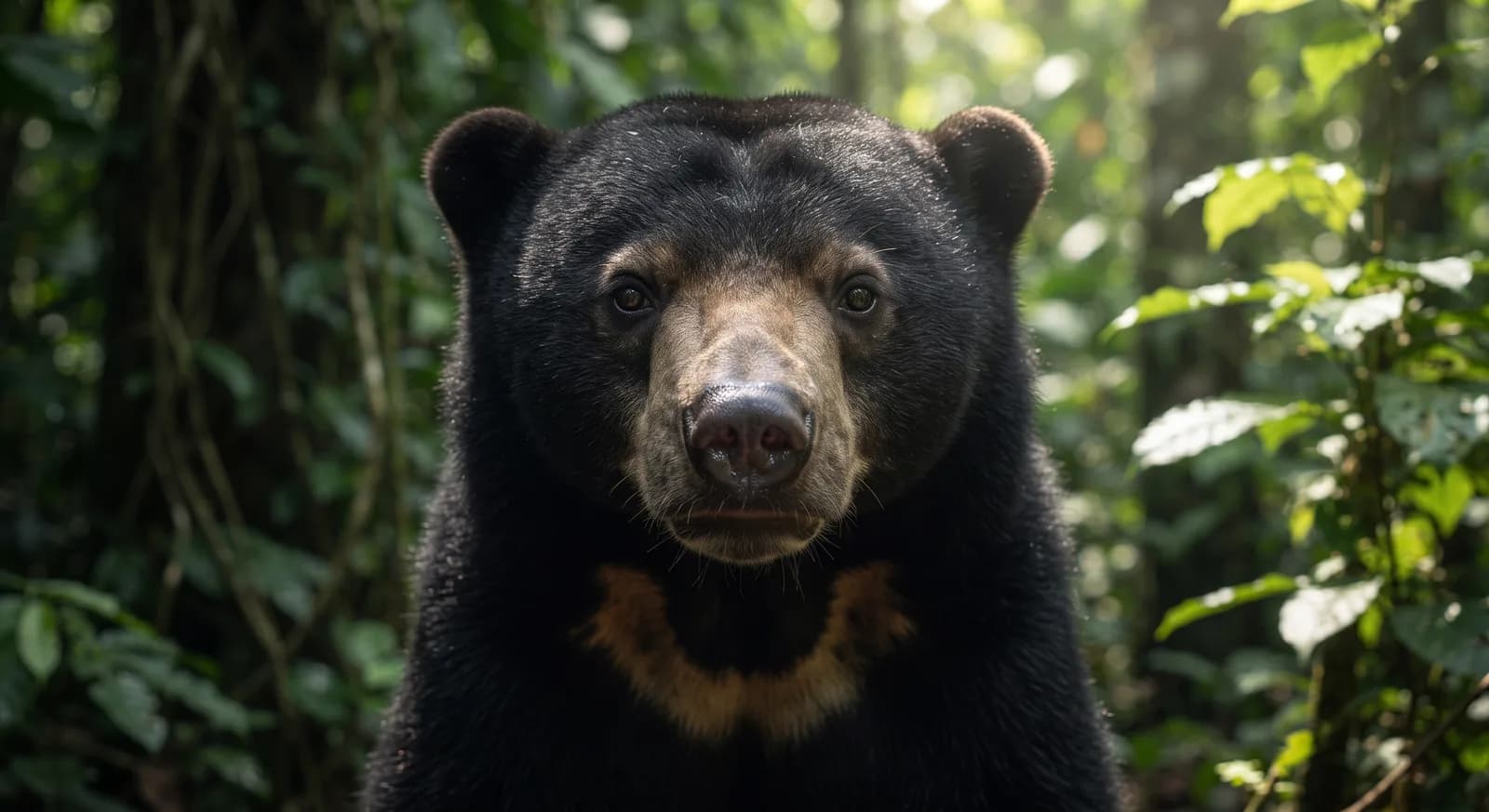
Sun Bear
Helarctos malayanus
 Vulnerable
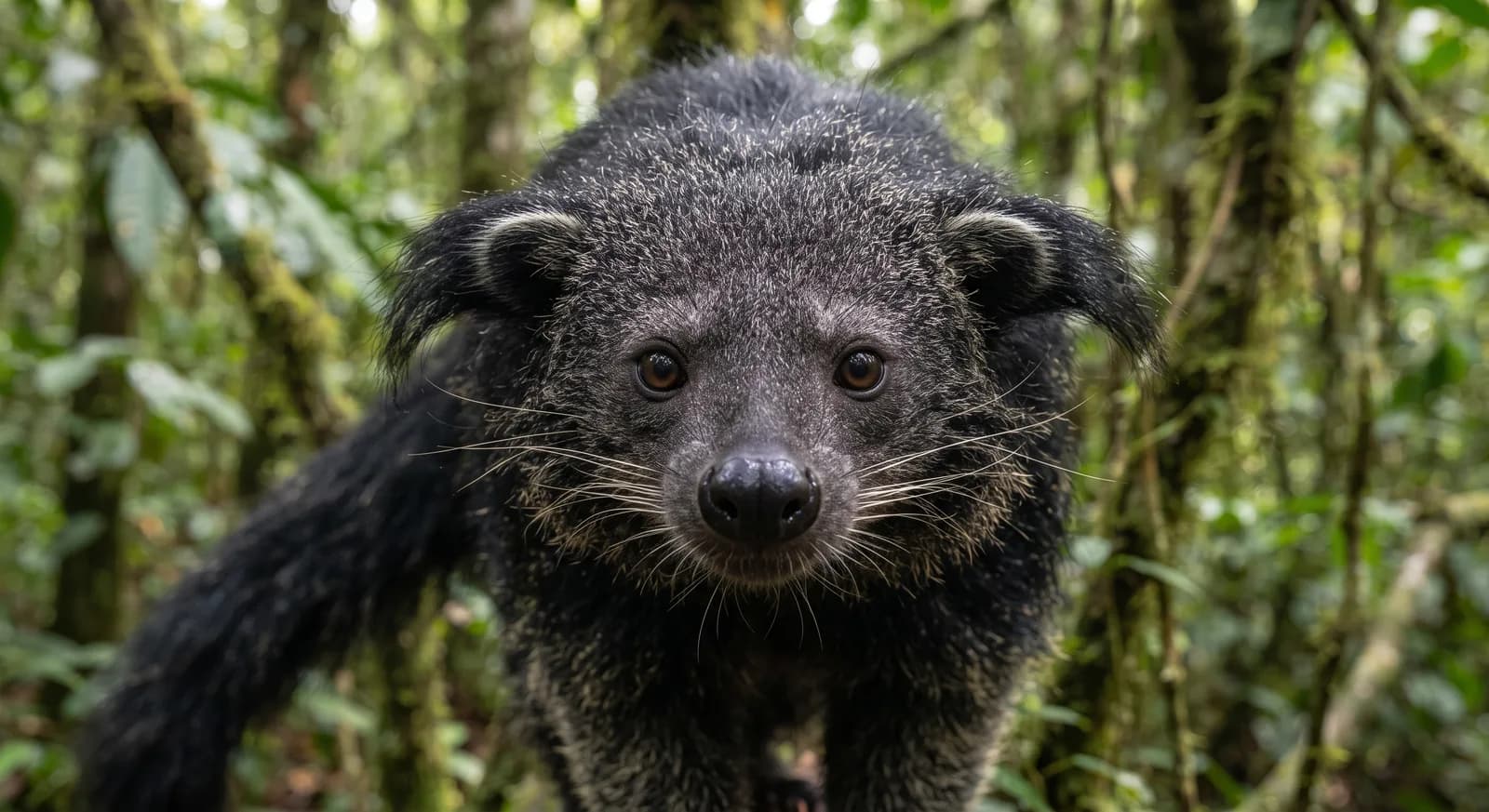
Binturong
Arctictis binturong
Short-tailed Gymnure
Hylomys suillus
 Endangered
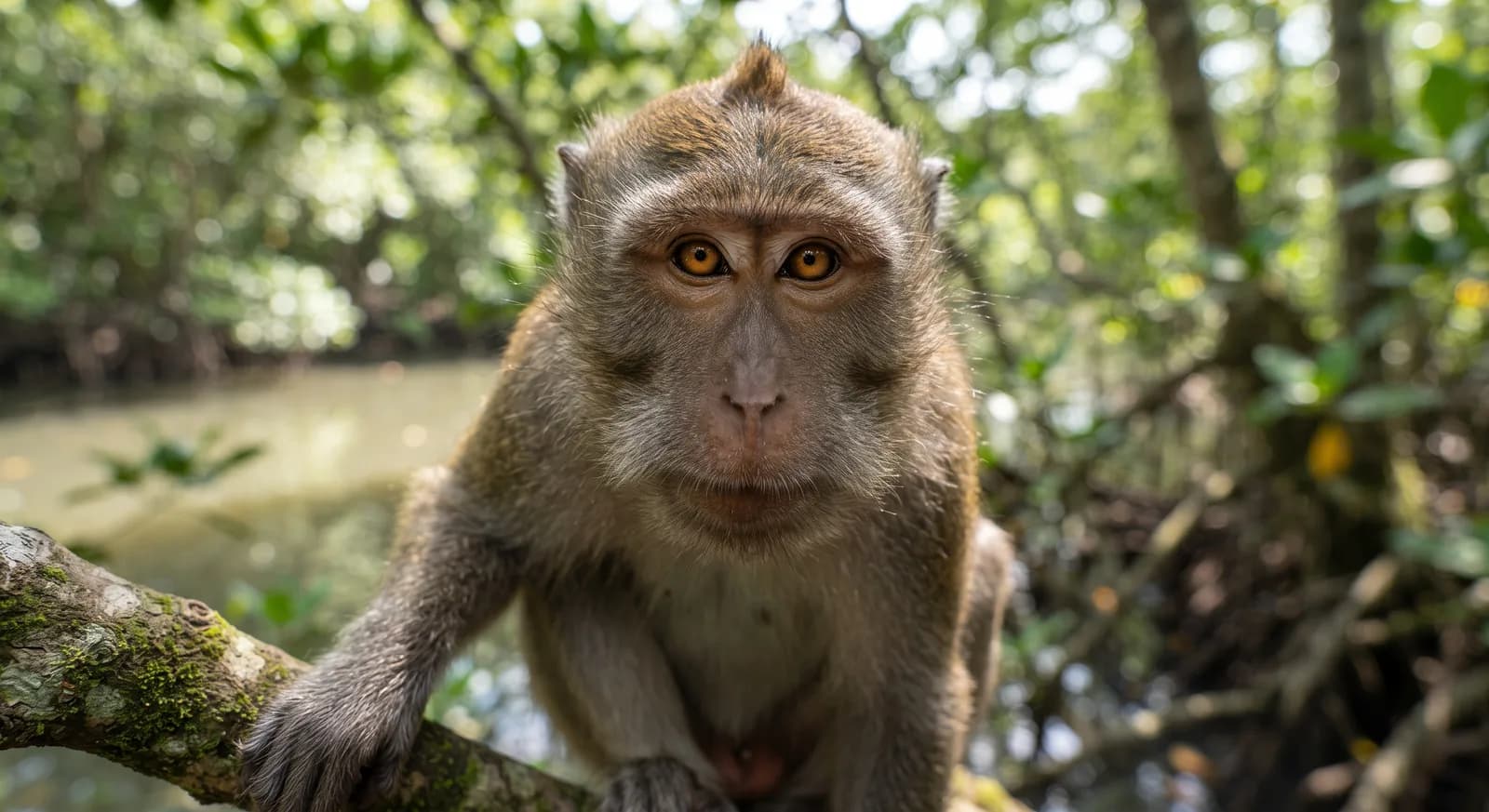
Long-tailed Macaque
Macaca fascicularis
Western Tarsier
Tarsius bancanus
How to help
The bearded pig is classified as vulnerable. Organizations such as UICN, WWF y Wildlife Conservation Society work specifically on its conservation and that of its habitat; looking into their programs is a good starting point if you want to get involved.
It's documented in 4 real protected areas — part of why protecting these places matters for its conservation.
Keep exploring
Based on what we already know about bearded pig.
Comments
Share an experience, a fun fact or a tip for seeing the bearded pig.
Be the first to comment.