One of the 4 tapirs on WAnimals
Mammals · Perissodactyla · Tapiridae
Mountain Tapir
Tapirus pinchaque
It faces a very high risk of extinction in the wild in the near future. See full glossary
The mountain tapir, known in Spanish as danta de páramo, is the only tapir that lives outside the tropical rainforests and the smallest of the four that exist. It is covered in a thick, woolly coat adapted to the cold of the high mountains, with white-edged lips. It browses leaves, shoots and fruit in the páramo and the cloud forest, and its role as a disperser of large seeds is hard to replace. Agricultural expansion, the burning of páramo and hunting have reduced it to fragmented populations.
Weight
136 kg – 250 kg
Size
1.8 m – 2.5 m
Lifespan
27 years
Diet
Herbivore
Feeds mainly on plants.
Activity
Crepuscular
Active above all at dawn and dusk.
Social structure
Solitary
Lives and hunts alone, joining others only to breed.
Sighting difficulty
Hard
Estimated population
Fewer than 2,500 mature individuals
Fun facts
- GeneralThe only tapir that lives outside the rainforest; its woolly coat keeps out the cold of altitude.
- adaptaciónIt is the only tapir adapted to the high Andes, with a denser coat than its lowland relatives to withstand the cold.
- It is the only high-mountain tapir: while its relatives live in warm rainforest, this one endures night frosts above 4,000 metres thanks to a woolly coat that none of the others has.
- Tapirs are relatives of horses and rhinoceroses, not of the pigs they resemble, and their short, prehensile trunk is a fused upper lip and nose.
Life cycle & biology
- Skeleton type
- Vertebrate - internal bony skeleton (mammal)
- Habitat & environment
- Andean páramo and cloud forest of Colombia, Ecuador and northern Peru, between 2,000 and 4,500 m
- Sexual maturity
- 3 years
- Gestation / incubation
- 13.1 months
- Litter / clutch size
- 1
Sources consulted: https://es.wikipedia.org/wiki/Tapirus_pinchaque
Where to find it
See its range on the interactive mapWhere to watch it
Parques y spots de buceo donde se ha documentado esta especie — se muestran 10 de 12 documentados.
Related species
Other species in the catalogue with the most in common with Mountain Tapir — same habitat, park, country, tags or family.
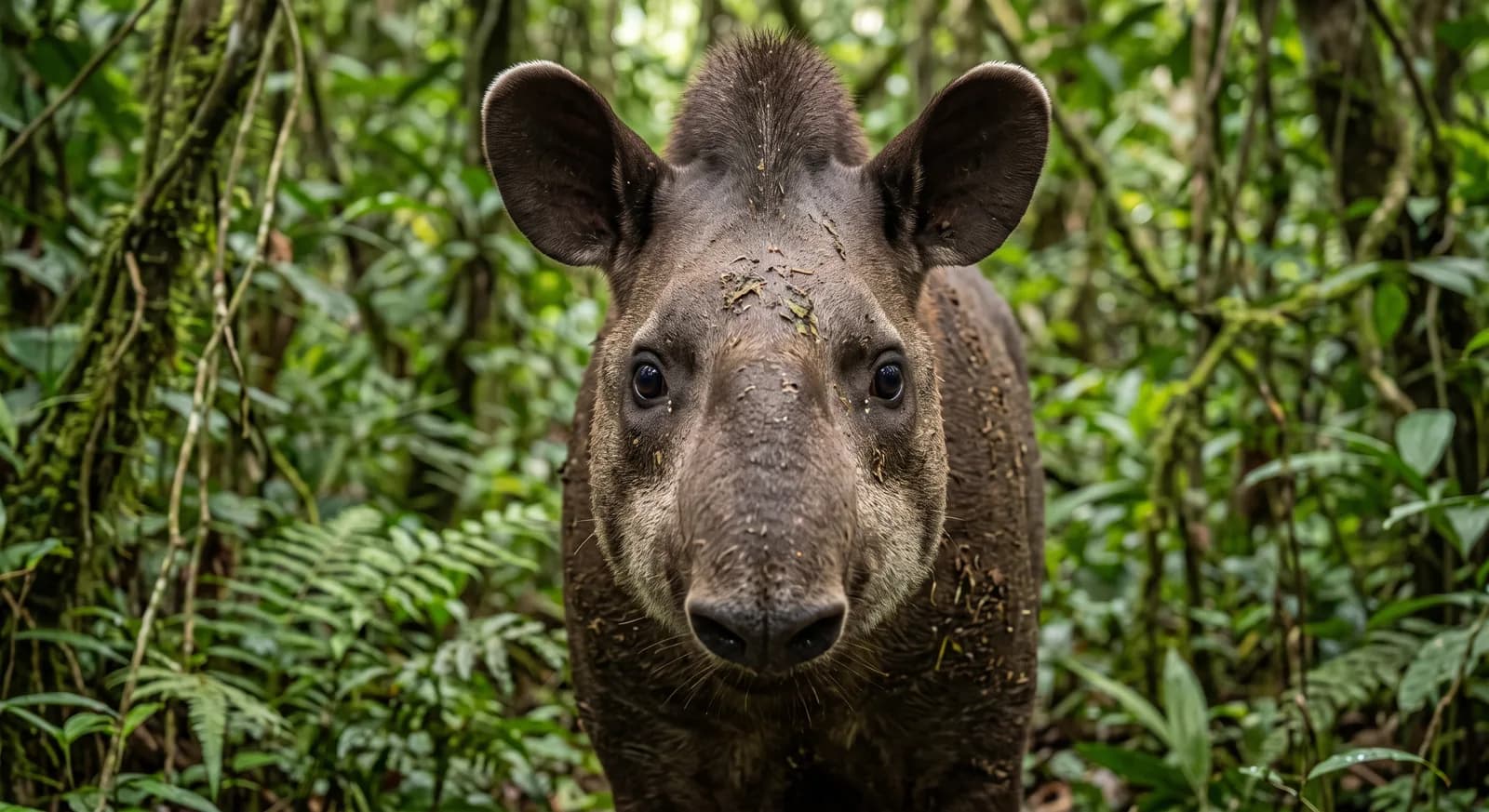 Vulnerable
Lowland Tapir
Tapirus terrestris
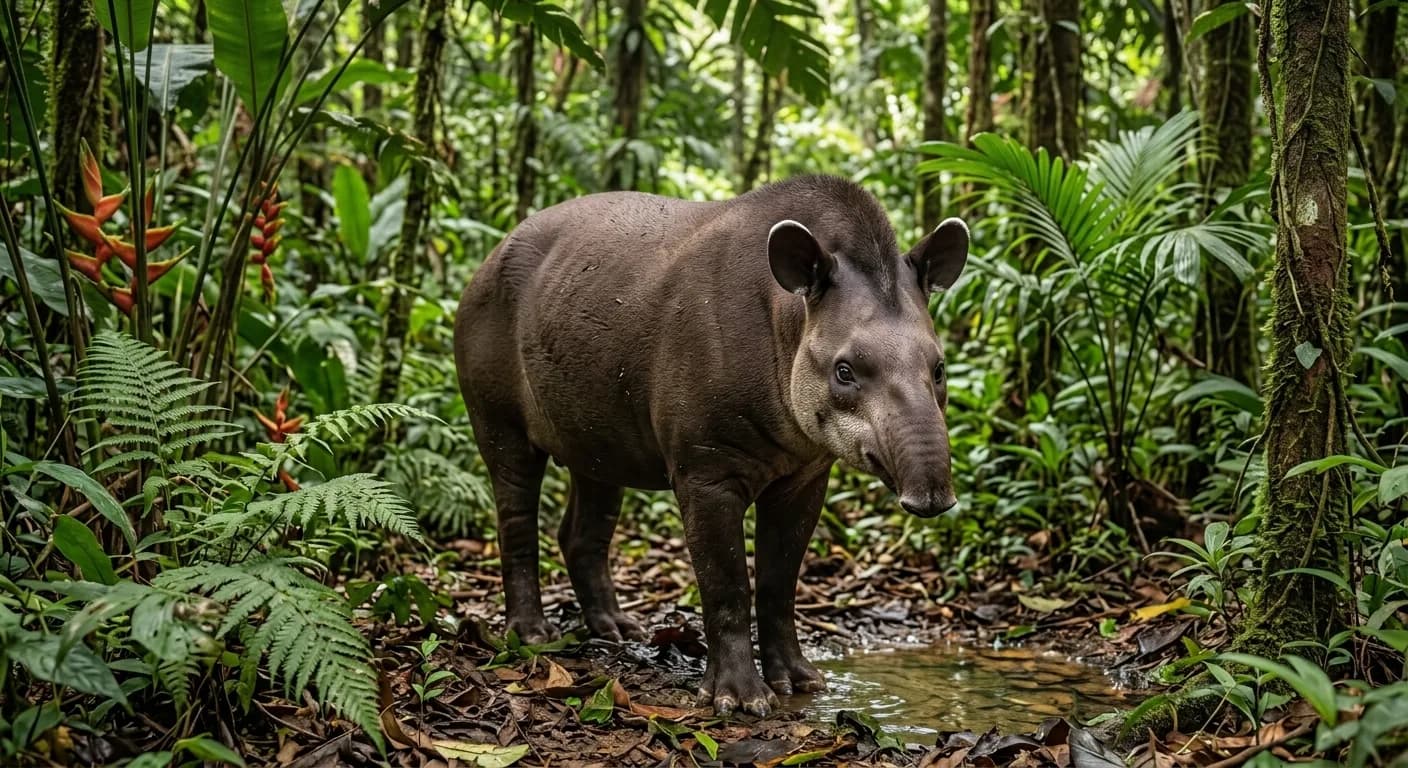 Endangered
Baird's Tapir
Tapirus bairdii
Common Woolly Monkey
Lagothrix lagothricha
Helmeted Curassow
Pauxi pauxi
Common Marsupial Frog
Gastrotheca ovifera
Brown-throated Sloth
Bradypus variegatus
How to help
The mountain tapir is classified as endangered. Organizations such as UICN, WWF y Wildlife Conservation Society work specifically on its conservation and that of its habitat; looking into their programs is a good starting point if you want to get involved.
It's documented in 10 real protected areas — part of why protecting these places matters for its conservation.
Keep exploring
Based on what we already know about mountain tapir.
Comments
Share an experience, a fun fact or a tip for seeing the mountain tapir.
Be the first to comment.