One of the 12 vipers on WAnimals
Reptiles · Squamata · Viperidae
Phoorsa
Echis carinatus
The species is abundant and widely distributed; it faces no significant short-term risk. See full glossary
The saw-scaled viper is a species of venomous viperid snake of the Middle East and Central Asia, especially the Indian subcontinent. It is the smallest member of the four snake species responsible for causing most of the fatal snakebites within its range. This is due to several factors, including its unobtrusive nature and its frequent occurrence in heavily populated areas. Five subspecies are currently recognised.
Weight
142 g on average
Size
40 cm – 80 cm
Lifespan
12 years
Diet
Carnivore
Feeds mainly on other animals.
Activity
Nocturnal
Active mainly at night.
Social structure
Solitary
Lives and hunts alone, joining others only to breed.
Sighting difficulty
Easy
Fun facts
- GeneralIt kills more people by snakebite than any other snake in the world.
- It is thought to cause more human deaths than any other snake in the world: not through the potency of its venom, but through its abundance in densely populated farmland across Asia and Africa and its defensive nature.
- Its warning is not a hiss: it coils its body into loops and rubs together flank scales with serrated keels, producing a harsh rasp comparable to a saw on wood.
- It can move across loose sand with a sideways motion similar to that of the American sidewinder, a case of convergence between snakes from deserts half a world apart.
Life cycle & biology
- Skeleton type
- Vertebrate - internal bony skeleton (reptile)
- Habitat & environment
- Arid and semi-arid country, thorn scrub and dryland crops of southern Asia and the Near East
- Sexual maturity
- 2 years
- Gestation / incubation
- 5 months of gestation
- Litter / clutch size
- 10 live young
Sources consulted: https://es.wikipedia.org/wiki/Echis_carinatus
Where to find it
See its range on the interactive mapWhere to watch it
Parques y spots de buceo donde se ha documentado esta especie — se muestran 10 de 24 documentados.
Related species
Other species in the catalogue with the most in common with Phoorsa — same habitat, park, country, tags or family.
 Least Concern
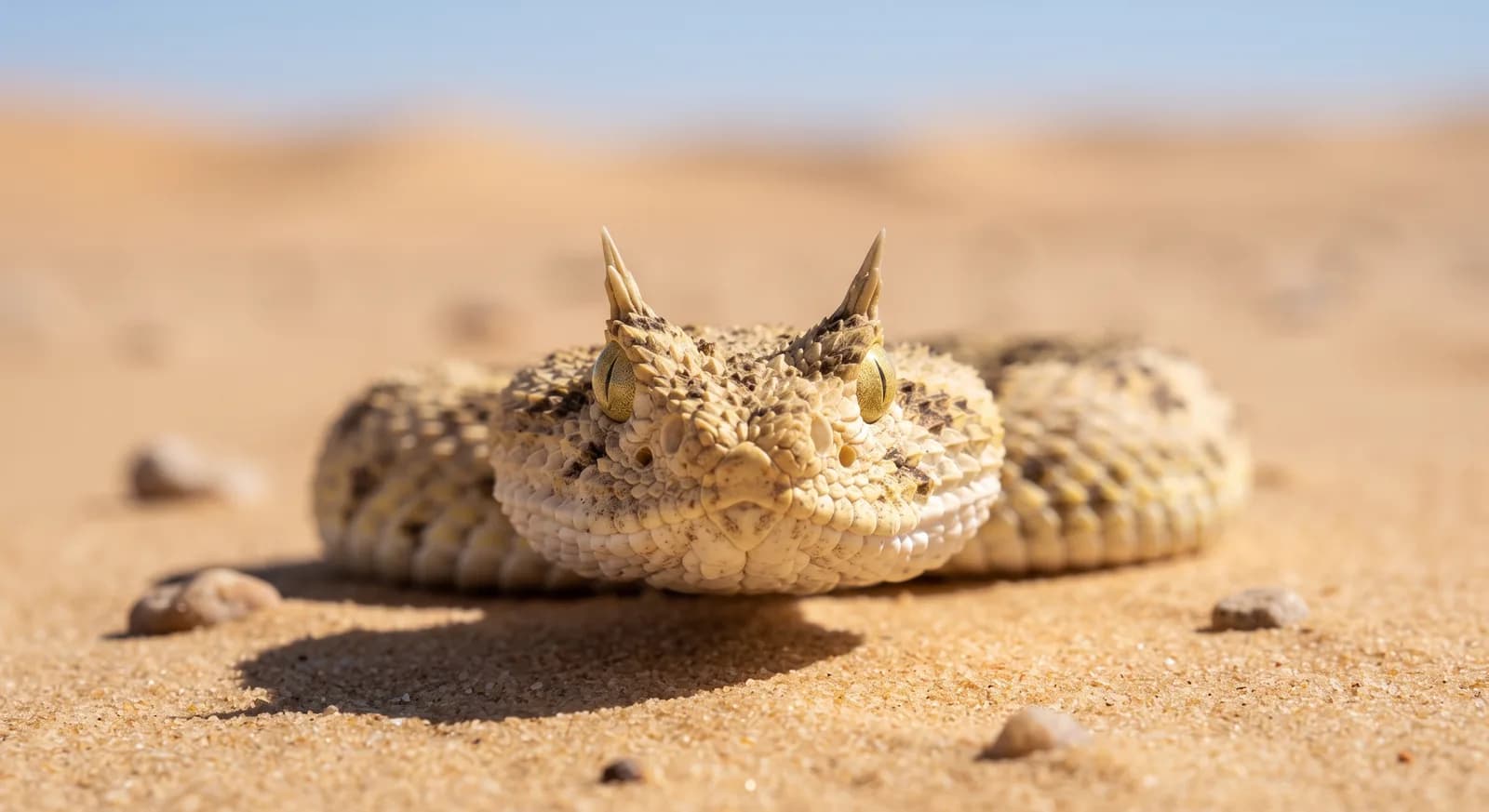
Desert Horned Viper
Cerastes cerastes
Puff Adder
Bitis arietans
Western Russel’s Viper
Daboia russelii
Nose-horned Viper
Vipera ammodytes
Black-necked Spitting Cobra
Naja nigricollis
 Least Concern
Caracal
Caracal caracal
Keep exploring
Based on what we already know about phoorsa.
Comments
Share an experience, a fun fact or a tip for seeing the phoorsa.
Be the first to comment.