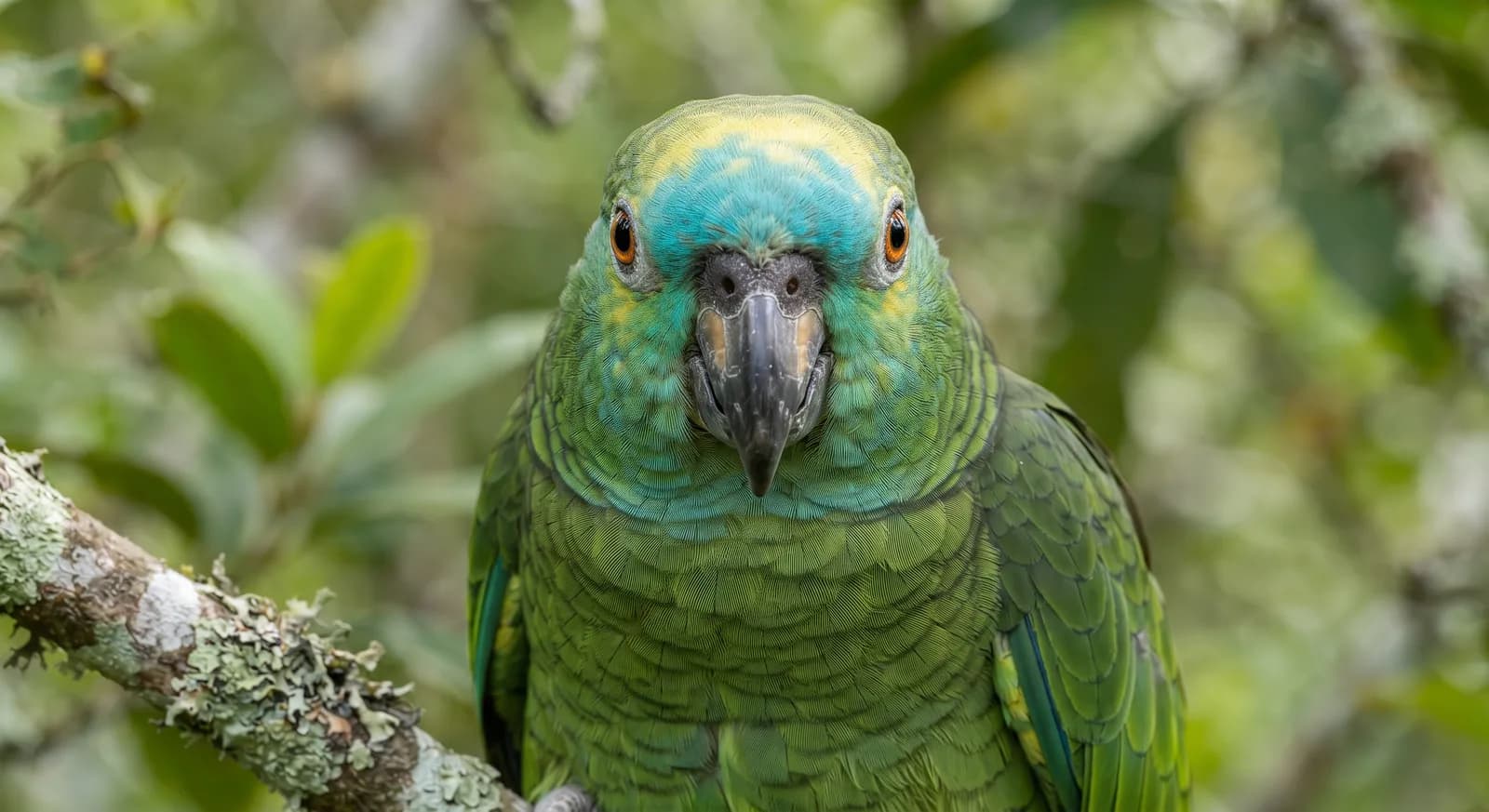
 Near Threatened
Turquoise-fronted Amazon
Amazona aestiva
12 countries29 parks
Species group · Birds
WAnimals has 3 species of amazon, in the family Psittacidae.
Ranges calculated from the profiles that record the figure, not from all 3.
Each one has its own full profile. This group does not replace them: it brings them together.
1 species in this group is in a threatened category according to the IUCN.
Recorded in 20 countries. The ones with the most species in the group:
One of the most talkative parrots, and one of the most heavily taken for the pet trade.
From
It is one of the parrots most able to imitate the human voice, and that reputation is precisely the cause of its decline: for decades it was one of the most heavily exported parrots in the world from Argentina and Brazil.
From
In Argentina there is a sustainable-use scheme in the Chaco: a limited number of chicks are taken from monitored nests, local communities are paid and the forest is protected, a controversial model but one that has reduced poaching.
From
Its name once covered several species now separated, among them the yellow-naped and the yellow-headed amazon, both endangered: when the group was split, the decline was concentrated in those taxa and this species was left as the least threatened of the set.
From
It forms communal roosts of hundreds of birds and moves in pairs that are perfectly recognisable within the flock: the parrots always fly paired up, however large the group.
From
It is one of the most heavily traded parrots in South America, and although its populations are holding up, the taking of chicks from nests remains intense.
From
·
Its recovery began with a campaign of national identity: it was declared the national bird, appeared on stamps and banknotes and was taught in schools, and within a few years hunting it went from custom to social disgrace.
From
The entire world population lives in the montane forest of an island of 600 square kilometres, which leaves it very vulnerable to a single high-intensity hurricane.
From