 Not Evaluated
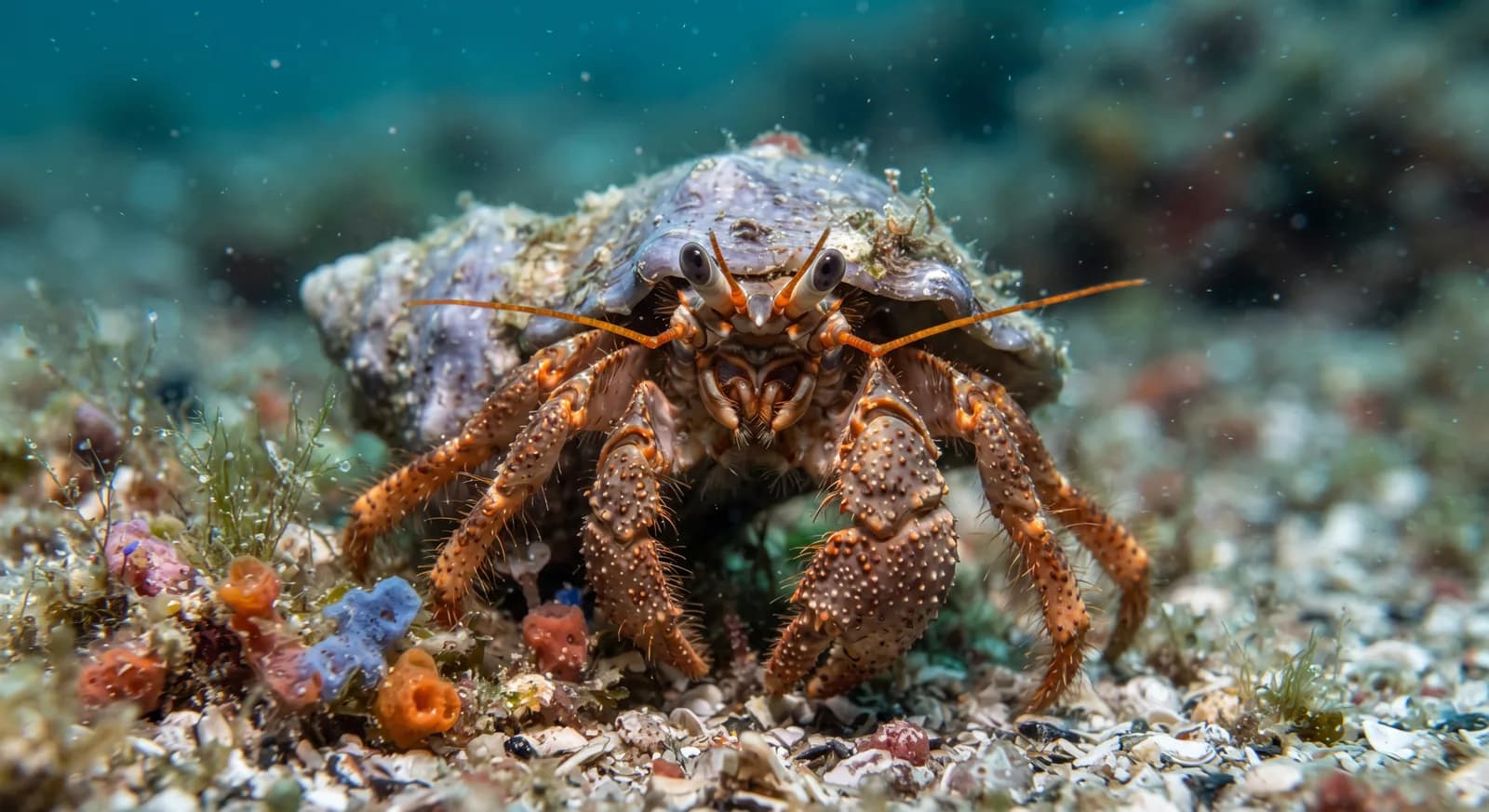
Common Hermit Crab
Pagurus bernhardus
18 countries21 parks33 dive sites
Species group · Malacostracans
WAnimals has 2 species of hermit crab, spread across 2 families (Diogenidae, Paguridae).
Ranges calculated from the profiles that record the figure, not from all 2.
Each one has its own full profile. This group does not replace them: it brings them together.
No species documented in this group is genuinely at risk according to the IUCN, with the data available today.
Recorded in 42 countries. The ones with the most species in the group:
It has to change shells several times as it grows, and now and then a group will queue up in order of size to swap shells one after another.
From
The shell is its limiting resource, which is why hermit crabs compete intensely for shells. An individual assesses an empty shell by inserting a claw, gauging the interior and the weight before deciding on the switch.
From
And they form vacancy chains: when a large empty shell turns up, a queue of hermit crabs forms in order of size, and as soon as the largest moves in, each one takes the shell the one before has left. It is a well-documented collective behaviour, much cited in economics as an analogy for housing markets.
From
When an empty shell turns up, several hermit crabs may line up by size and hand the shells on in a chain, each moving into the one the previous crab has left.
From
It reappeared on the coasts of south-west England in 2016, after almost three decades without records, in a shift linked to the warming of the sea.
From
It occupies empty gastropod shells, above all of Littorina striata, Mitra, Nassarius incrassatus and Stramonita haemastoma, and changes them as it grows.
From
·