Species group · Birds
Parrots
WAnimals has 6 species of parrot, spread across 2 families (Psittacidae, Psittaculidae).
- 6 species
- 2 families
- 38 countries
- 55 parks
- Weight
- 130 g – 600 g
- Length
- 30 cm – 47 cm
- Lifespan
- 25 – 50 years
Ranges calculated from the profiles that record the figure, not from all 6.
All 6 species of parrots on WAnimals
Each one has its own full profile. This group does not replace them: it brings them together.
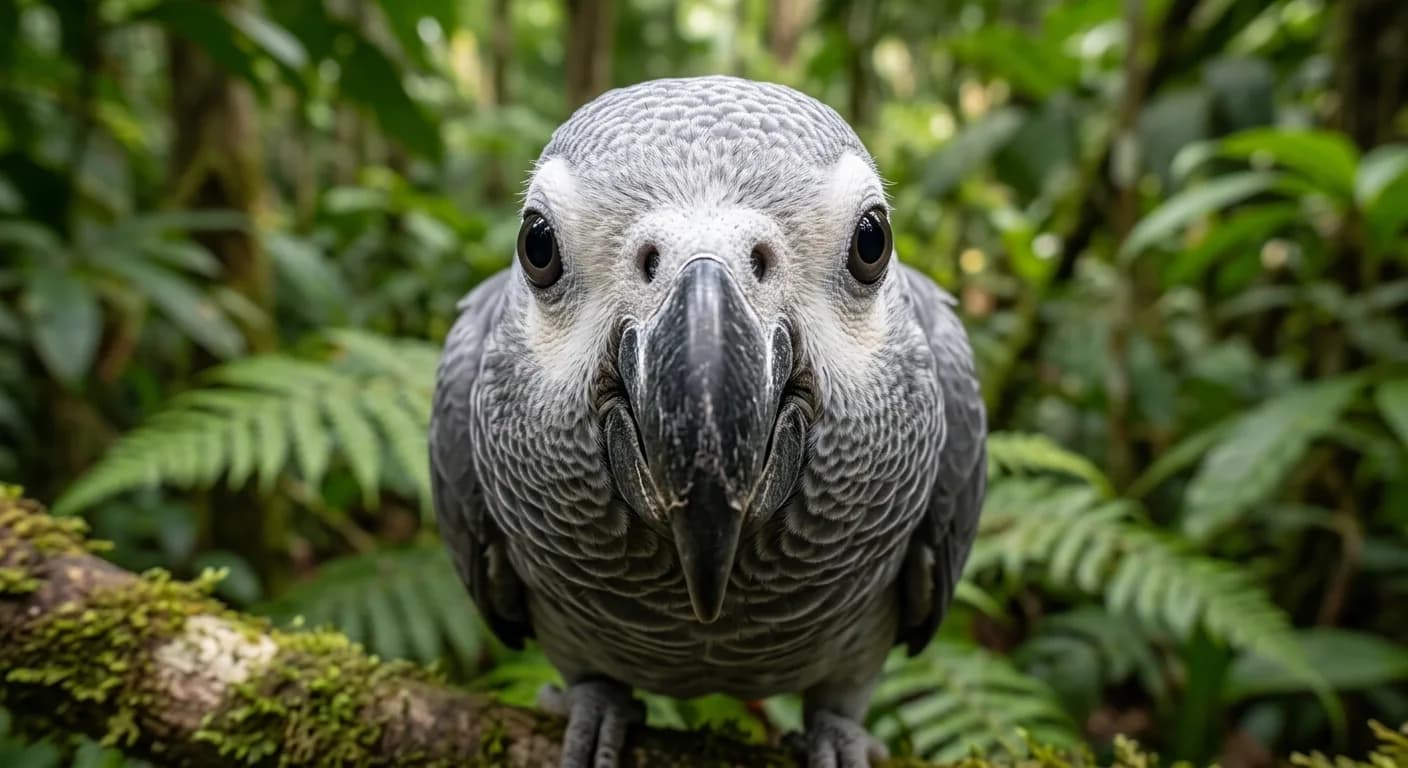 Endangered
Grey Parrot
Psittacus erithacus
23 countries7 parks
 Least Concern
Burrowing Parrot
Cyanoliseus patagonus
7 countries24 parks
 Vulnerable
Tucuman Amazon
Amazona tucumana
2 countries7 parks
Least Concern
Moluccan Eclectus
Eclectus roratus
5 countries7 parks
Vulnerable
Yellow-eared Parrot
Ognorhynchus icterotis
2 countries9 parks
Vulnerable
Seychelles Parrot
Coracopsis barklyi
1 country1 park
Conservation status
3 Vulnerable2 Least Concern1 Endangered
4 species in this group are in a threatened category according to the IUCN.
Where they live
Recorded in 38 countries. The ones with the most species in the group:
Where to see them
Did you know…?
In laboratory studies it has shown it can link words to abstract concepts such as quantity, shape and colour.
From Grey Parrot
Alex the grey parrot, studied for thirty years by the researcher Irene Pepperberg, handled more than a hundred words, counted up to six, understood the concepts of same and different and asked what colour things were: his last words to his keeper were a goodbye he had learned to say every night.
From Grey Parrot
It has been shown to help others of its kind selflessly: in experiments, a grey parrot hands tokens to a companion who can exchange them for food even though it gains nothing itself, something not even chimpanzees do.
From Grey Parrot
The colony at El Cóndor, on the coast of Río Negro, is the largest parrot colony in the world: more than 35,000 nests dug along twelve kilometres of sandstone cliff.
From Burrowing Parrot
It digs its own tunnels with bill and feet, some of them more than three metres deep, and pairs return to the same burrow year after year, extending it gradually.
From Burrowing Parrot
It makes seasonal altitudinal movements within the yungas: it moves up and down in elevation following the ripening of alder and pino del cerro seed, rather than migrating horizontally like other birds.
From Tucuman Amazon
Argentina was exporting tens of thousands of birds a year in the 1980s for the pet trade, before the species entered the international protection lists.
From Tucuman Amazon
Male and female are so different that they were catalogued as two separate species until the early twentieth century.
From Moluccan Eclectus