One of the 13 seals on WAnimals
Mammals · Carnivora · Phocidae
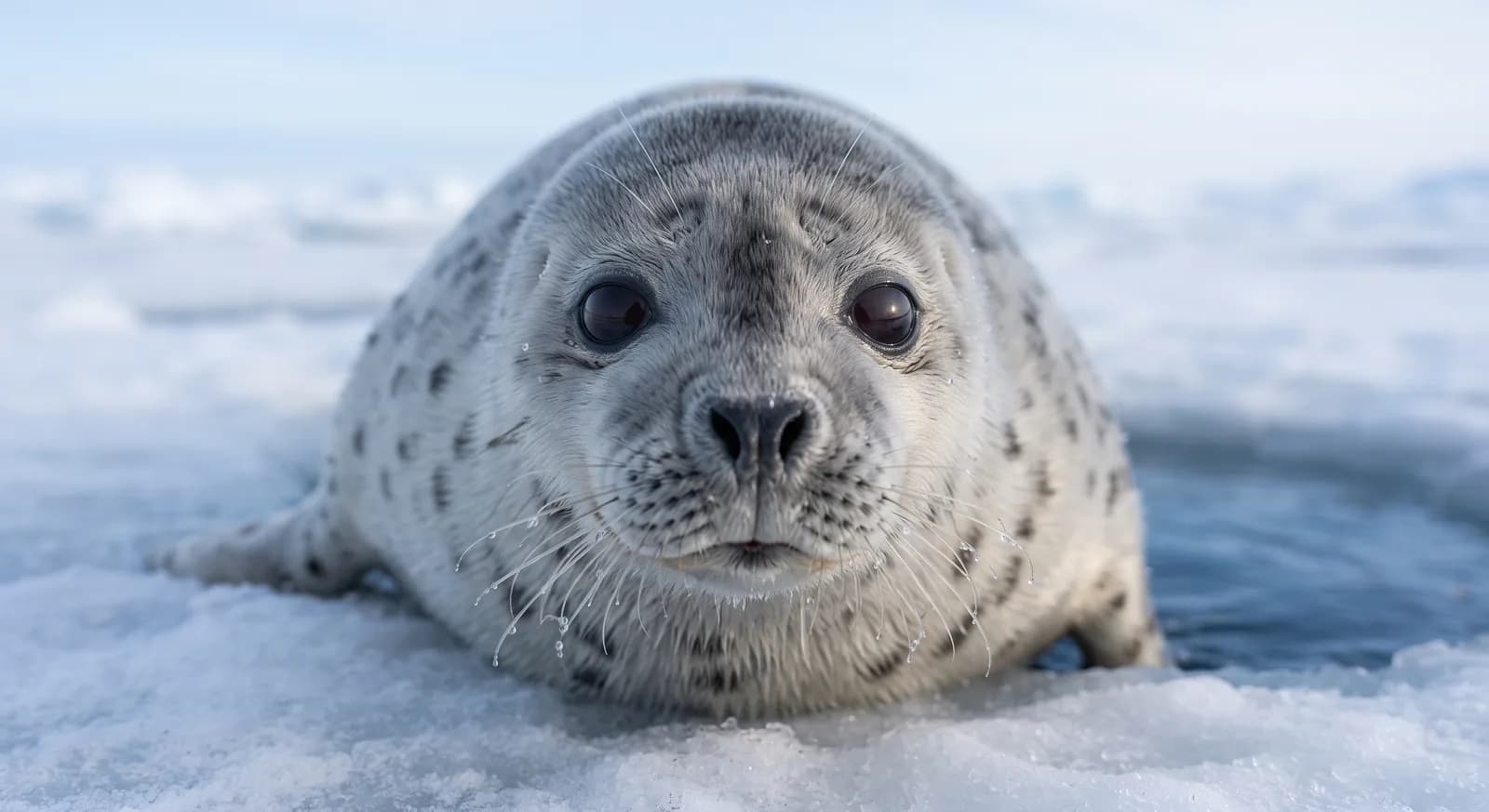
Ringed Seal
Pusa hispida
Least Concern
The species is abundant and widely distributed; it faces no significant short-term risk.
The ringed seal is the smallest and most abundant of the Arctic seals, and owes its name to the pale rings that dot its dark coat. It is the species that sustains the polar bear: it makes up most of its diet. It keeps breathing holes open in the ice by scraping with the claws of its fore flippers, which allows it to occupy areas of fast ice where other seals cannot live. Its life cycle is so bound up with the ice that the Arctic thaw threatens it directly.
Weight
50 kg – 110 kg
Size
1 m – 1.8 m
Life expectancy
40 years