One of the 23 eagles on WAnimals
Birds · Accipitriformes · Accipitridae
Eastern Imperial Eagle
Aquila heliaca
It faces a high risk of extinction in the wild over the medium term. See full glossary
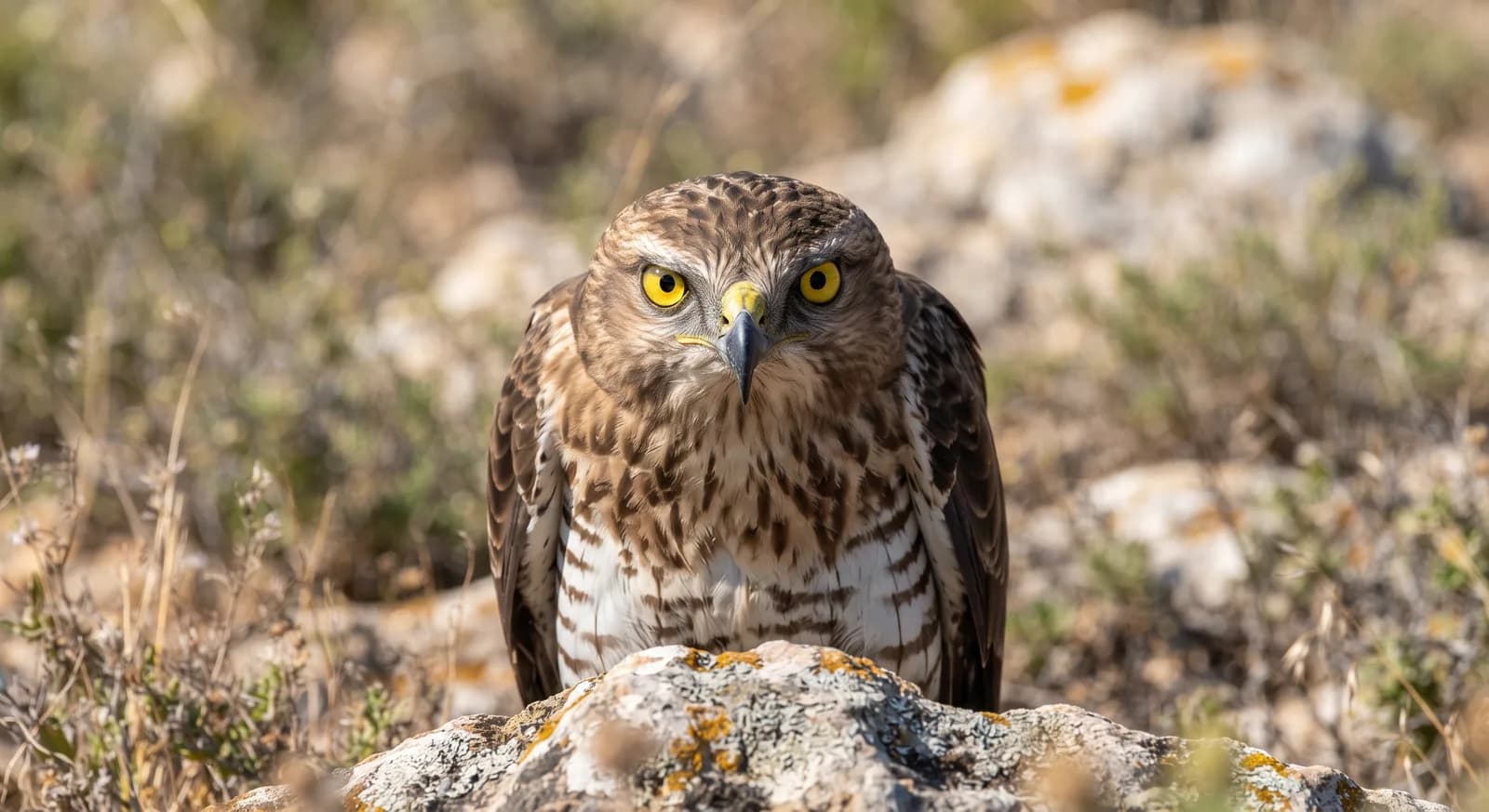
The eastern imperial eagle, formerly called simply the imperial eagle, is an accipitriform bird of the family Accipitridae distributed across eastern Europe and much of Asia, from where it migrates to South-East Asia and East Africa in winter. There are small isolated populations in the Austrian and Italian Alps and on the island of Cyprus. The Spanish imperial eagle of Spain, Portugal and part of Morocco, long considered a subspecies of the imperial eagle, was recognised in 1996 as a separate species on the strength of significant genetic differences. The two eagles also differ in appearance and in habitual behaviour. For this reason this species is also called the eastern imperial eagle. No subspecies are known.
Weight
2.6 kg – 3.8 kg
Size
68 cm – 90 cm
Lifespan
56 years
Diet
Carnivore
Feeds mainly on other animals.
Activity
Diurnal
Active mainly during the day.
Social structure
In pairs
Usually lives in pairs, sometimes for life.
Sighting difficulty
Moderate
Fun facts
- It is the sister species of the Spanish imperial eagle: until the 1990s the two were considered a single species with two subspecies, and today they are two distinct species separated by thousands of kilometres.
- Electrocution on power poles is its leading cause of death in Kazakhstan and Russia: modifying dangerous lines has measurably reduced mortality wherever it has been done.
- It is the national bird of Hungary and appears in Magyar mythology as the turul, the bird that led the Hungarians to the Danube basin.
Life cycle & biology
- Skeleton type
- Vertebrate - internal bony skeleton (bird)
- Habitat & environment
- Wooded steppe, lowland forest and farmland mosaics of eastern Europe and Central Asia
- Sexual maturity
- 4.5 years
- Gestation / incubation
- 43 days of incubation
- Litter / clutch size
- 2 eggs
Sources consulted: https://es.wikipedia.org/wiki/Aquila_heliaca
Where to find it
See its range on the interactive mapWhere to watch it
Parques y spots de buceo donde se ha documentado esta especie — se muestran 10 de 26 documentados.
Related species
Other species in the catalogue with the most in common with Eastern Imperial Eagle — same habitat, park, country, tags or family.
Eurasian Sparrowhawk
Accipiter nisus
Lesser Spotted Eagle
Clanga pomarina
Northern Goshawk
Accipiter gentilis
 Least Concern
Short-toed Eagle
Circaetus gallicus
Common Buzzard
Buteo buteo
Booted Eagle
Hieraaetus pennatus
How to help
The eastern imperial eagle is classified as vulnerable. Organizations such as UICN, WWF y Wildlife Conservation Society work specifically on its conservation and that of its habitat; looking into their programs is a good starting point if you want to get involved.
It's documented in 7 real protected areas — part of why protecting these places matters for its conservation.
Keep exploring
Based on what we already know about eastern imperial eagle.
Comments
Share an experience, a fun fact or a tip for seeing the eastern imperial eagle.
Be the first to comment.