One of the 6 duikers on WAnimals
Mammals · Artiodactyla · Bovidae
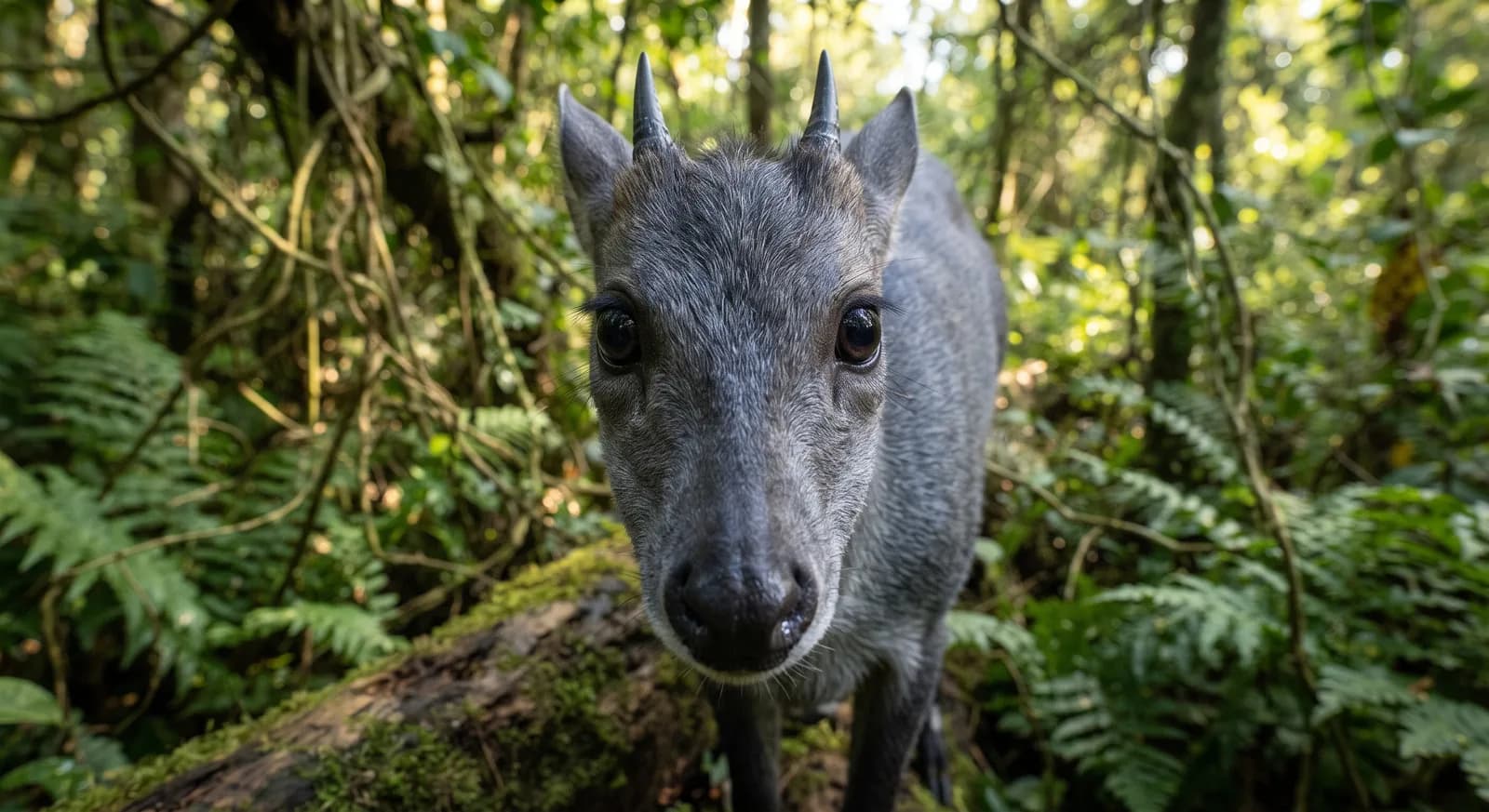
Blue Duiker
Philantomba monticola
The species is abundant and widely distributed; it faces no significant short-term risk. See full glossary
The blue duiker is the smallest of the duikers and one of the tiniest antelopes in Africa, with a slate-grey coat that takes on a bluish cast in the filtered light of the forest. It lives in monogamous pairs that defend a territory marked with secretions from the preorbital glands. It feeds mainly on leaves and fallen fruit, and follows monkey troops through the forest to take what they drop from the canopy.
Weight
3.5 kg – 9 kg
Size
55 cm – 75 cm
Lifespan
12 years
Diet
Herbivore
Feeds mainly on plants.
Activity
Diurnal
Active mainly during the day.
Social structure
In pairs
Usually lives in pairs, sometimes for life.
Sighting difficulty
Easy
Fun facts
- It follows monkey troops through the understorey to eat the fruit they drop from the canopy, a strategy that gives it access to food it could not reach on its own.
- It marks its territory by rubbing its face against branches and trunks: in front of each eye it has a well-developed preorbital gland that leaves a lasting scent trail.
Life cycle & biology
- Skeleton type
- Vertebrate - internal bony skeleton (mammal)
- Habitat & environment
- Dense understorey of rainforest, coastal forest and gallery forest in sub-Saharan Africa
- Sexual maturity
- 16 months
- Gestation / incubation
- 6.3 months
- Litter / clutch size
- 1
Sources consulted: https://es.wikipedia.org/wiki/Philantomba_monticola
Where to find it
See its range on the interactive mapWhere to watch it
Parks and dive sites where this species has been documented.
Related species
Other species in the catalogue with the most in common with Blue Duiker — same habitat, park, country, tags or family.
 Least Concern
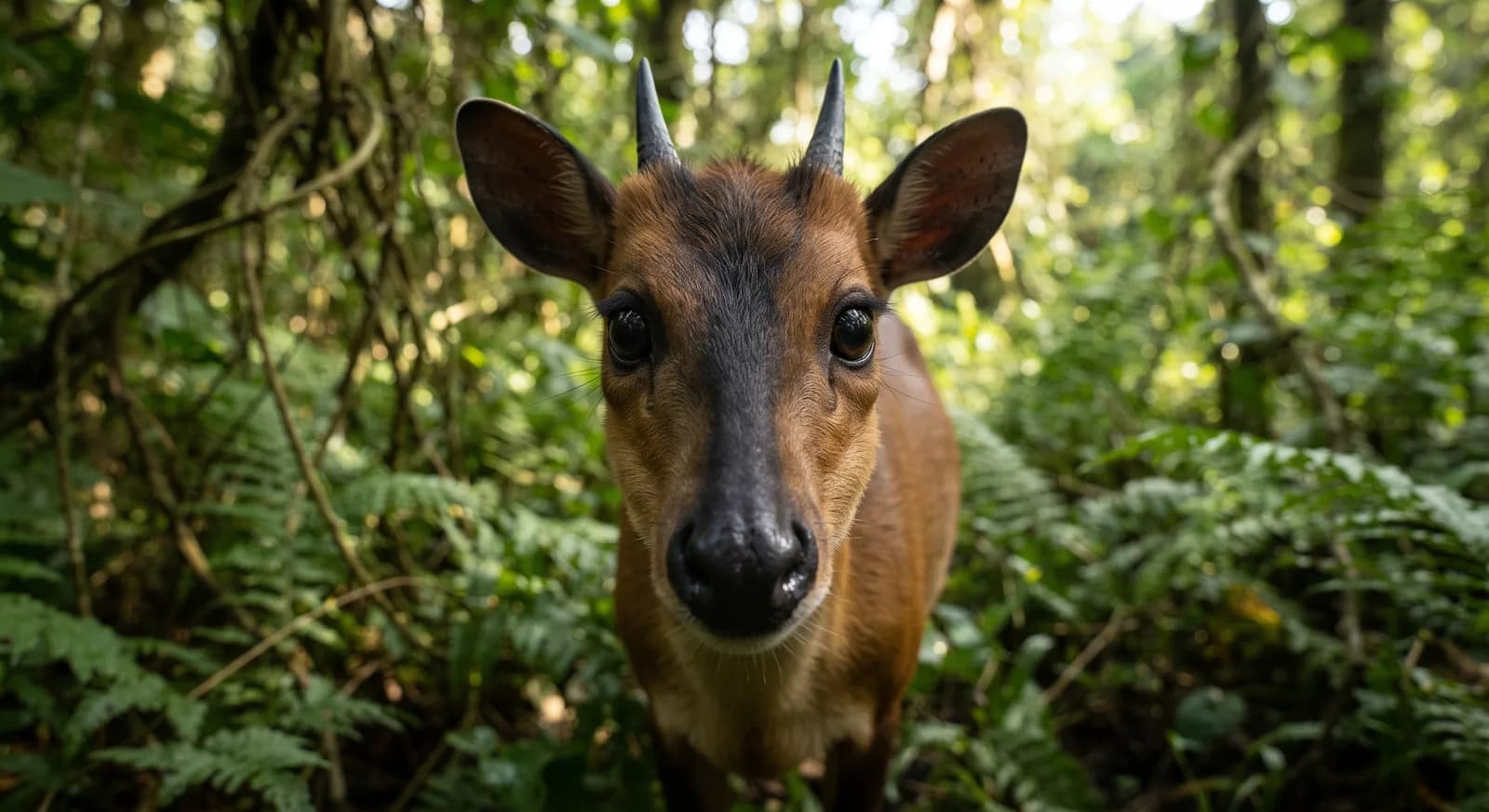
Black-fronted Duiker
Cephalophus nigrifrons
Klipspringer
Oreotragus oreotragus
Waterbuck
Kobus ellipsiprymnus
Abbott's Duiker
Cephalophus spadix
 Least Concern
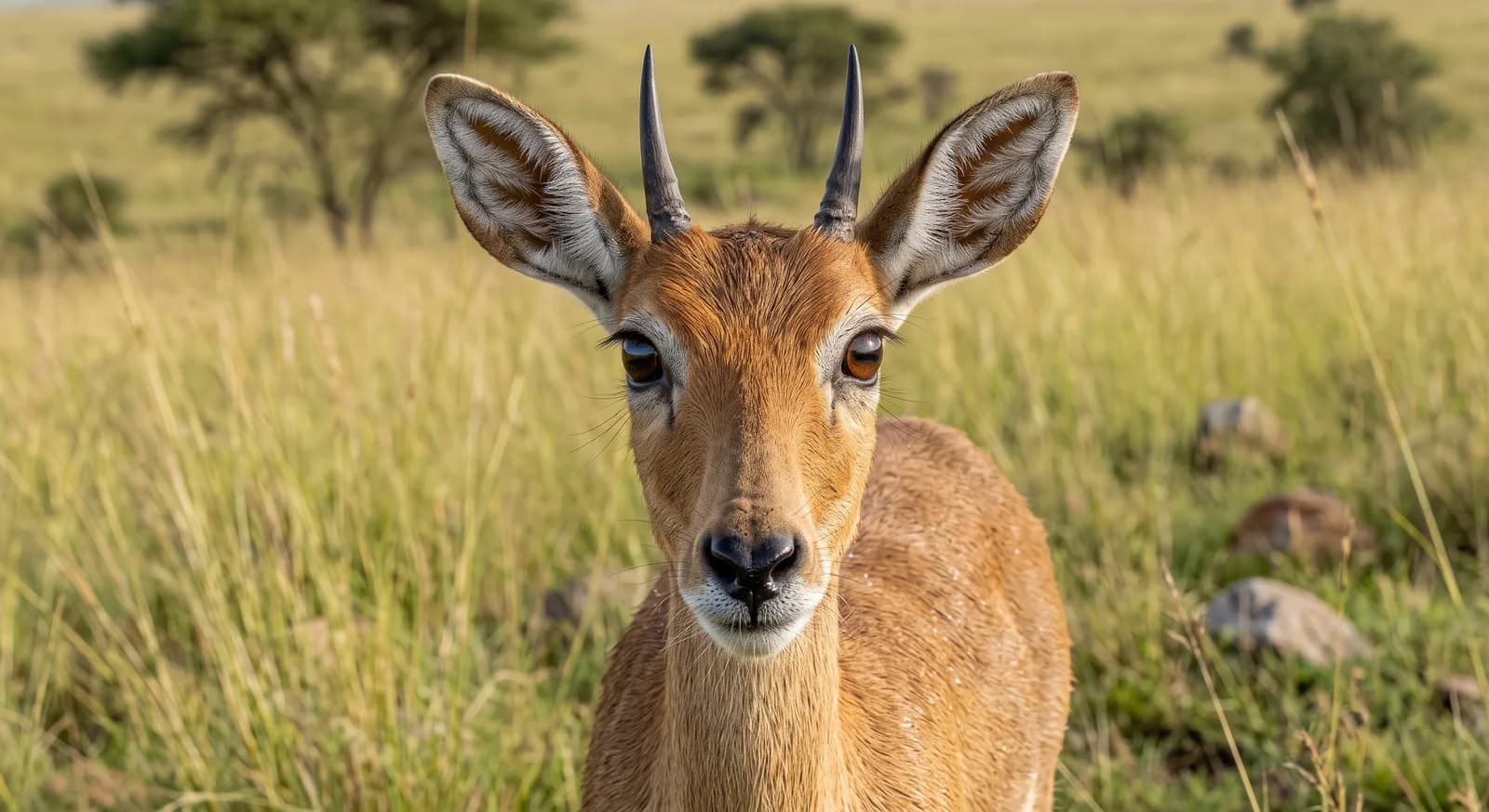
Oribi
Ourebia ourebi
Roan Antelope
Hippotragus equinus
Keep exploring
Based on what we already know about blue duiker.
Comments
Share an experience, a fun fact or a tip for seeing the blue duiker.
Be the first to comment.