Species group · Anthozoans
Corals
WAnimals has 9 species of coral, spread across 7 families (Acroporidae, Antipathidae, Coralliidae, Faviidae, Fungiidae, Poritidae, Tubiporidae).
- 9 species
- 7 families
- 126 countries
- 88 parks
- Length
- 10 cm – 6 m
- Lifespan
- 75 – 900 years
Ranges calculated from the entries that record the figure, not from all 9.
All 9 species of corals on WAnimals
Each one has its own full entry. This group does not replace them: it brings them together.
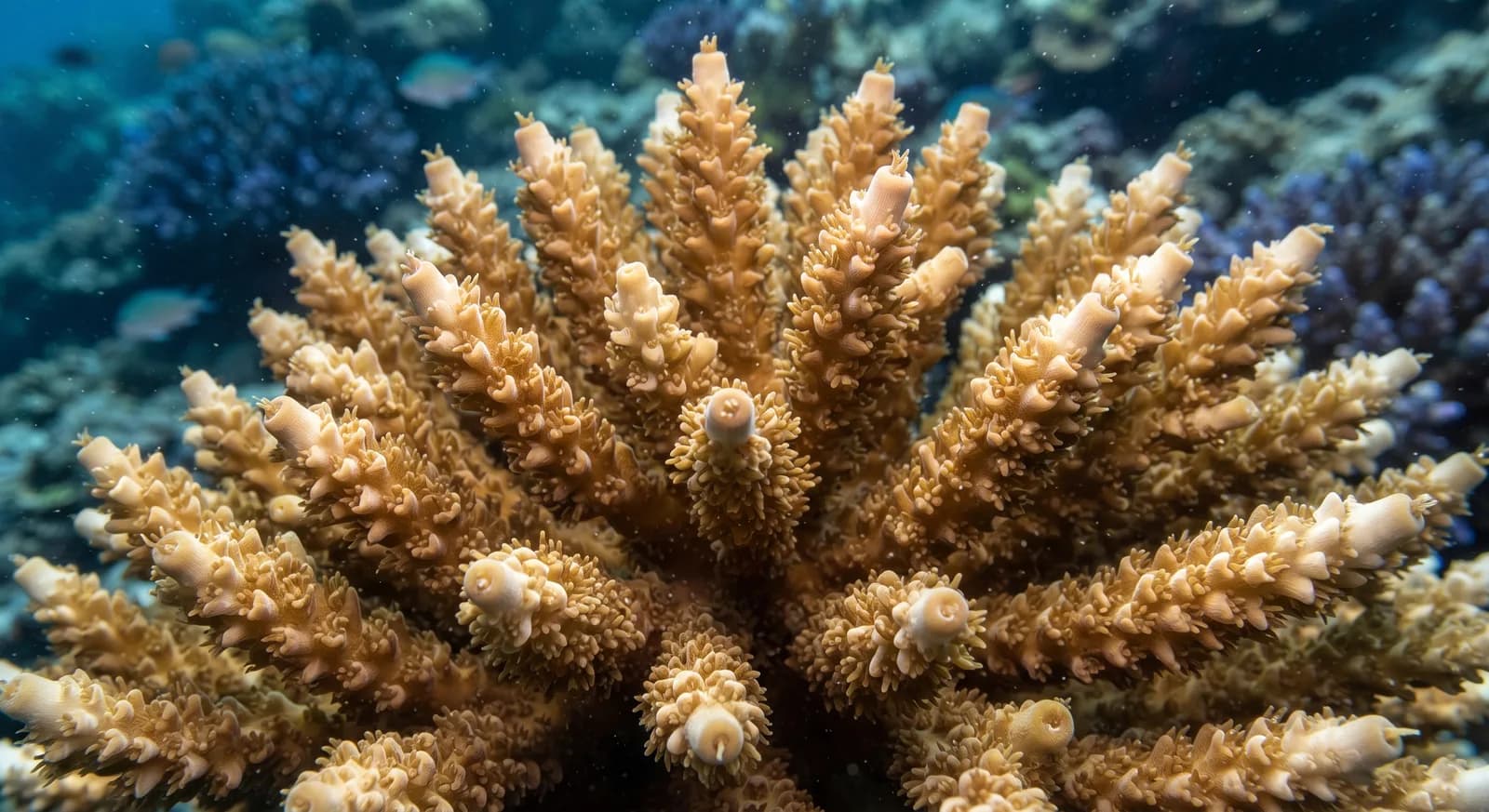 Critically Endangered
Staghorn Coral
Acropora cervicornis
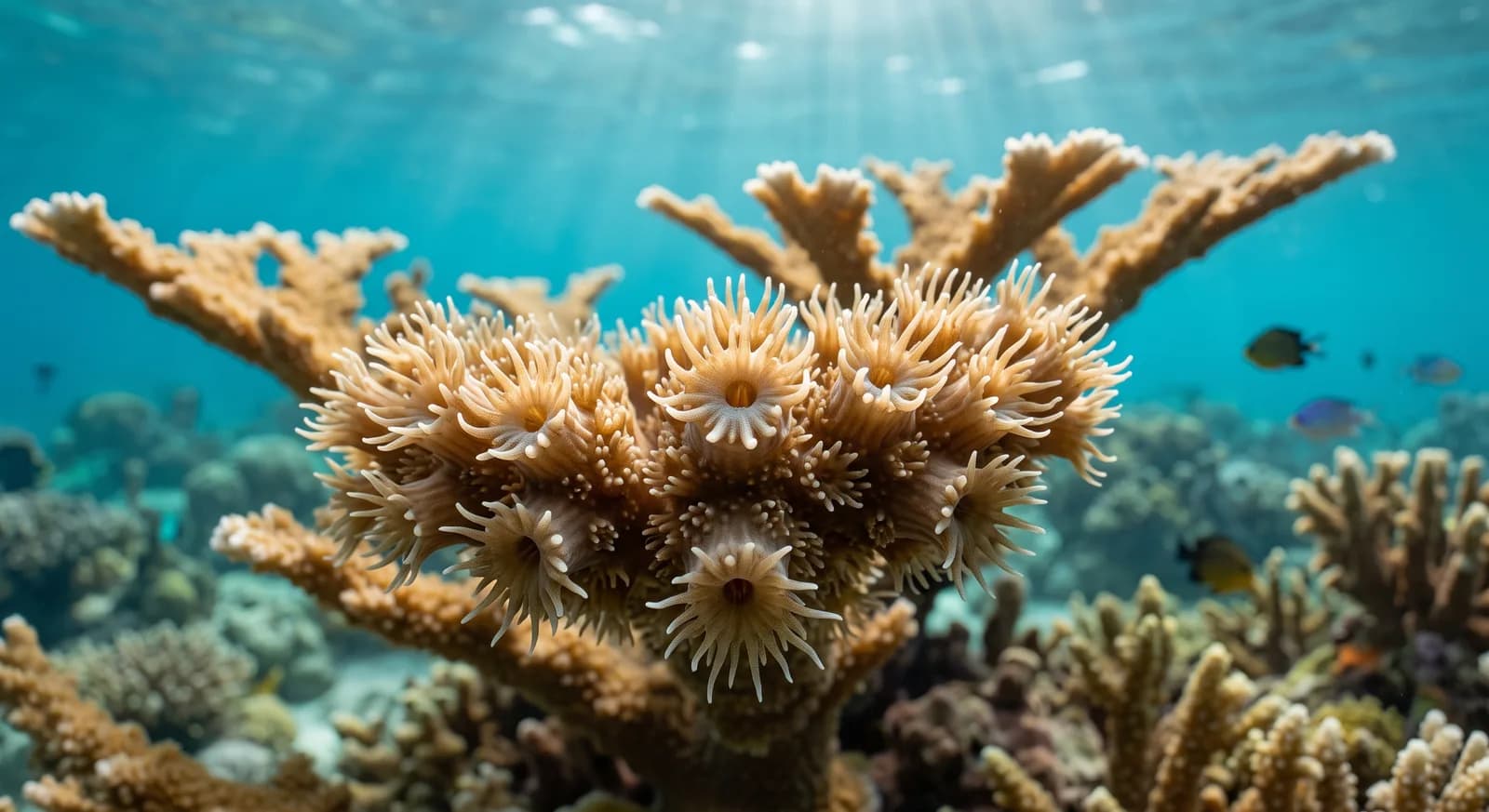 Critically Endangered
Elkhorn Coral
Acropora palmata
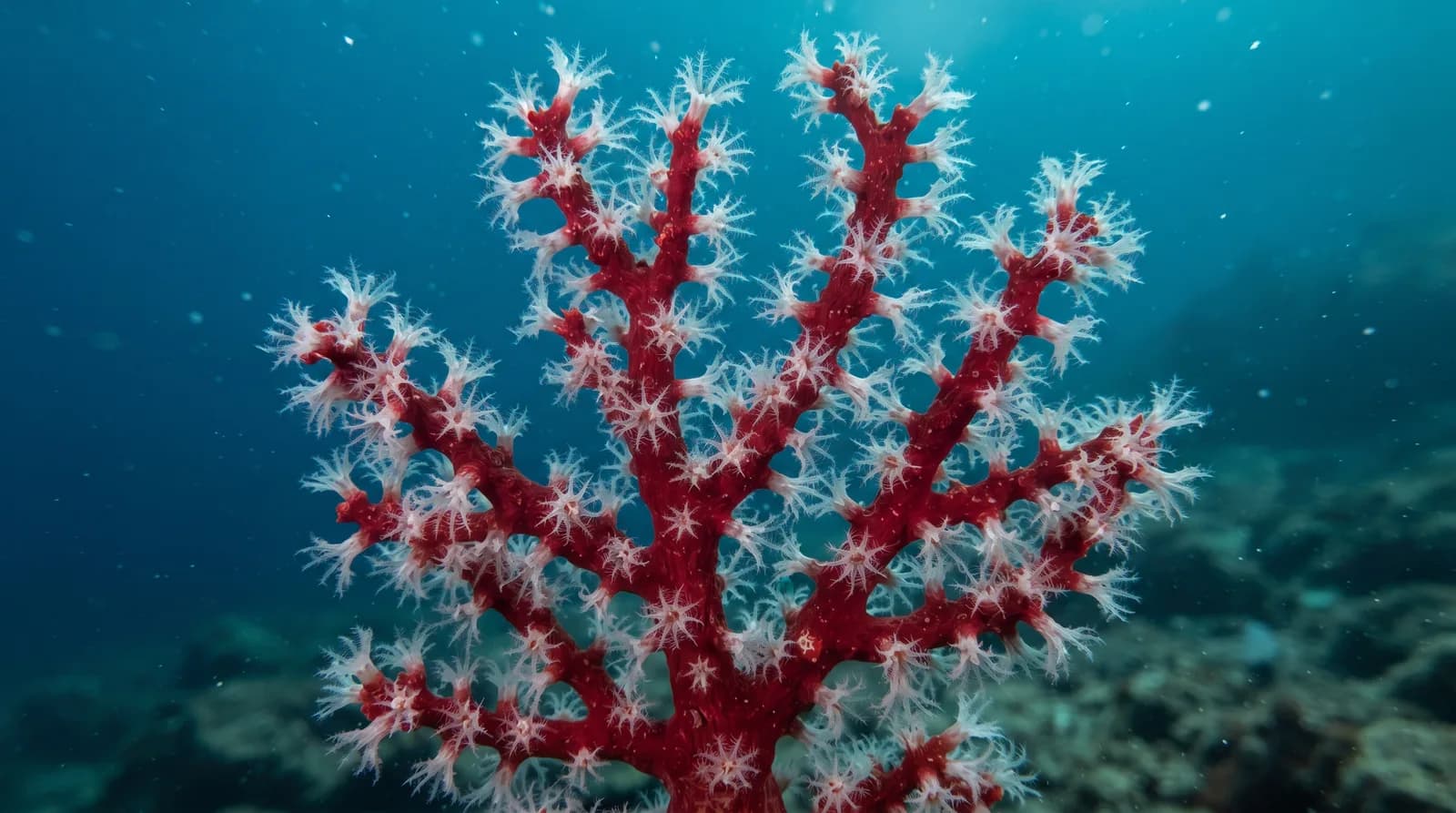 Endangered
Red Coral
Corallium rubrum
Grooved Brain Coral
Diploria labyrinthiformis
Hump Coral
Porites lobata
Organ Pipe Coral
Tubipora musica
Common Mushroom Coral
Fungia fungites
Hawaiian Black Coral
Antipathes griggi
Head Coral
Favia favus
Conservation status
4 especies in this group están en alguna categoría de riesgo real según la UICN.
See the global conservation statusWhere they live
Recorded in 126 countries. The ones with the most species in the group:
Where to see them
- Gran Barrera de Coral4 species
- Aldabra3 species
- Ao Phang Nga3 species
- Archipielago de Bazaruto3 species
- Arrecifes de Tubbataha3 species
- Bali Barat3 species
- Bunaken3 species
- Cape Range3 species
- iSimangaliso3 species
- Islas Similan3 species
- Karimunjawa3 species
- Komodo3 species
- Abu Dabab (dugongos)diving
- Abu Nuhas (Ghiannis D)diving
- Agincourt Reefsdiving
- Aldabra Atolldiving
- Alligator Head (Ocean Ridge)diving
- Alor Archipelagodiving
Did you know…
It is a key reef-building species that breeds by releasing eggs and sperm together on a single night of the year, timed to the phases of the moon.
From Staghorn Coral
It is the fastest-growing coral in the western Atlantic: its branches lengthen by 10 to 20 cm a year.
From Staghorn Coral
It reproduces mainly asexually: branches that break off and reattach start new colonies, which allows a quick recovery from a storm but not from disease.
From Staghorn Coral
Its population has fallen by roughly 97% since 1980 because of disease, bleaching and climate change.
From Elkhorn Coral
It can breed sexually, releasing gametes in a synchronised spawning, and asexually, through broken branches that grow into genetically identical new colonies.
From Elkhorn Coral
Individual polyps live only 2 to 3 years, but whole colonies can persist for centuries.
From Elkhorn Coral
It grows only a few millimetres a year, so a colony of moderate size may be several decades or even centuries old.
From Red Coral
Its red skeleton has been used in jewellery since antiquity; it grows less than 1 mm a year.
From Red Coral