One of the 4 insects on WAnimals
Insects · Phasmatodea · Heteropterygidae
Jungle Nymph
Heteropteryx dilatata
It has not yet been assessed against the IUCN criteria. See full glossary
The Malaysian giant stick insect is among the heaviest in the world: the female, bright green and bristling with spines, reaches sixteen centimetres and weighs more than sixty grams, while the male is brown, slender and able to fly. It lives in the rainforest of South-East Asia, feeding on leaves.
Weight
up to 65 g
Size
up to 17 cm
Lifespan
2 years
Diet
Herbivore
Feeds mainly on plants.
Activity
Nocturnal
Active mainly at night.
Social structure
Solitary
Lives and hunts alone, joining others only to breed.
Sighting difficulty
Unknown
Fun facts
- Its female is among the heaviest insects alive and lays the largest eggs known in any insect, comparable to a peanut.
- It defends itself by snapping its spiny hind legs shut on whatever is holding it, and it also produces an audible hiss by rubbing its reduced wings together.
- Incubation of its eggs can last more than a year, one of the longest embryonic developments in the insect world.
- It is the heaviest stick insect in the world: females can exceed 60 g.
- Its incubation is among the longest of any stick insect: between seven and fourteen months buried in the ground.
- The dimorphism is extreme: the female is lime green, broad, flightless and very aggressive, while the male is mottled brown, slender and winged.
- When threatened, the female raises her abdomen and snaps her spine-covered hind legs shut like a pair of pincers.
- The nymphs change colour between day and night and roost in groups until the fourth instar.
Life cycle & biology
- Habitat & environment
- Rainforest of Malaysia, Borneo and Sumatra
- Gestation / incubation
- The eggs take between 7 and 14 months to hatch
Sources consulted: Wikipedia (Heteropteryx); Phasmid Study Group (PSG 18); Catalogue of Life
Where to find it
See its range on the interactive mapWhere to watch it
Parques y spots de buceo donde se ha documentado esta especie — se muestran 10 de 18 documentados.
Related species
Other species in the catalogue with the most in common with Jungle Nymph — same habitat, park, country, tags or family.
Sunda Flying Lemur
Galeopterus variegatus
 Endangered
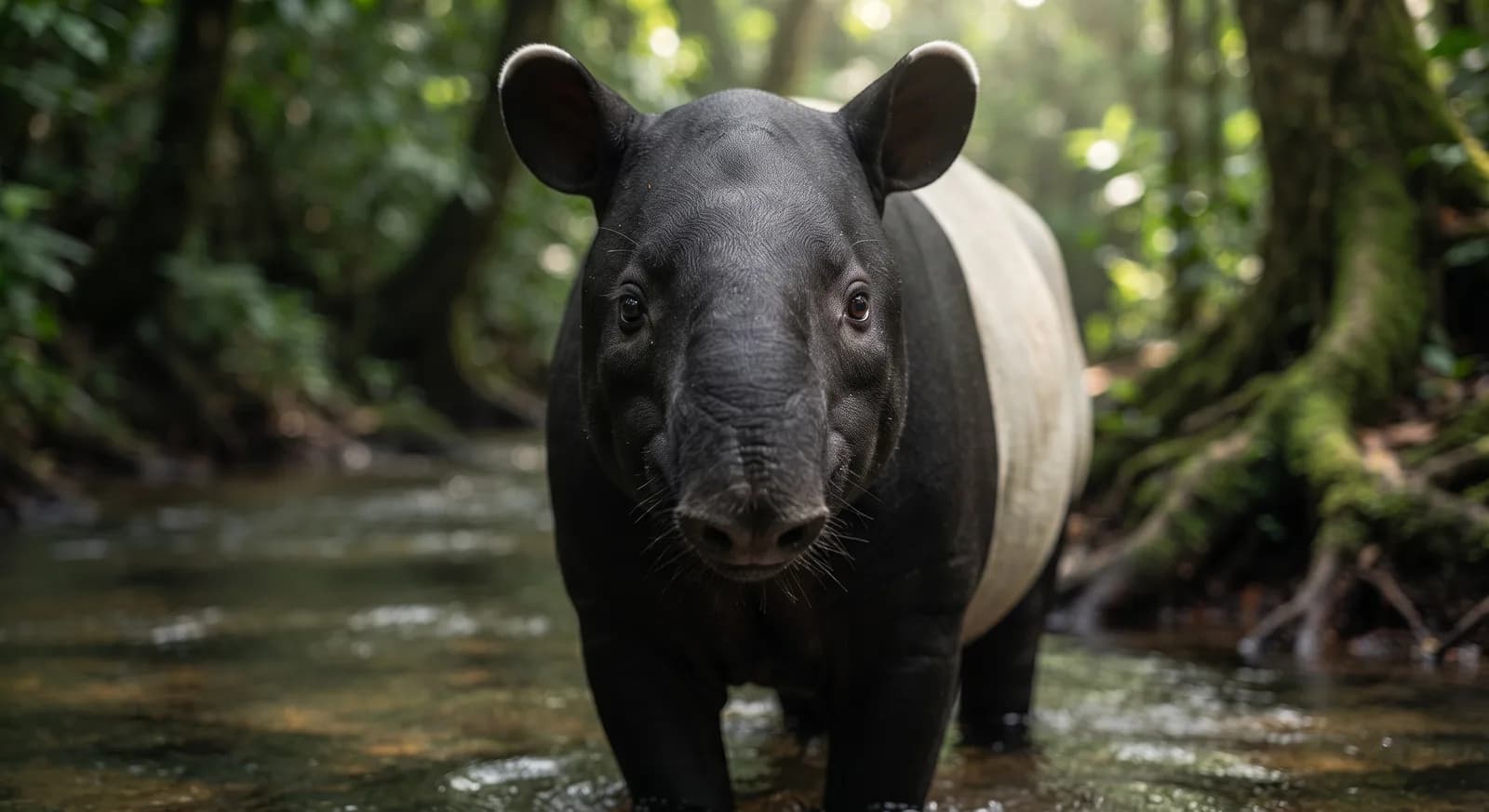
Malayan Tapir
Tapirus indicus
Atlas Moth
Attacus atlas
Giant Leaf Insect
Phyllium giganteum
Giant African Snail
Lissachatina fulica
Keep exploring
Based on what we already know about jungle nymph.
Comments
Share an experience, a fun fact or a tip for seeing the jungle nymph.
Be the first to comment.