One of the 11 snails on WAnimals
Gastropods · Stylommatophora · Achatinidae
Giant African Snail
Lissachatina fulica
It has not yet been assessed against the IUCN criteria. See full glossary
The giant African snail is a land snail of the family Achatinidae, in the order Stylommatophora. These snails are frequently found in gardens and crops, where they feed on various plants, sometimes becoming pests of economic importance.
Size
5 cm – 20 cm
Lifespan
6 years
Diet
Herbivore
Feeds mainly on plants.
Activity
Nocturnal
Active mainly at night.
Social structure
Solitary
Lives and hunts alone, joining others only to breed.
Sighting difficulty
Unknown
Fun facts
- It is on the IUCN list of the 100 most damaging invasive alien species in the world.
- It is hermaphroditic: two individuals fertilise each other and both lay eggs, and a single pair can produce hundreds of offspring in a year.
- It can transmit the nematode Angiostrongylus cantonensis, which causes eosinophilic meningitis in humans, so it should not be handled without washing your hands afterwards.
- In the dry season it seals the shell opening with a sheet of hardened mucus and goes dormant.
- It appears on the IUCN list of the hundred worst invasive species in the world.
- It eats almost anything: it prefers decomposing vegetation, lichens and fungi, but it has been recorded on hundreds of plant species, and masses of snails can raze an entire seedbed in a single night.
- Its health risk is the most serious part: it is an intermediate host of the nematode Angiostrongylus cantonensis, the rat lungworm, which causes eosinophilic meningitis in people. Infection comes from eating raw or undercooked snails, or vegetables contaminated with their slime.
- It was almost always introduced on purpose: as food, as a pet, for educational purposes or for rearing. It is a textbook case of invasion by the deliberate route.
- Its size helps explain the problem: its shell reaches 20 cm and it lays several hundred eggs per clutch, with several clutches a year.
- It is a hermaphrodite, and a single individual is enough to found a population if it has already been fertilised.
- Florida managed to eradicate it twice, most recently with the lifting of the quarantine in 2021 after years of campaigning; it is one of the few successful eradications of an invasive mollusc.
Life cycle & biology
- Skeleton type
- Invertebrate - external calcareous shell (mollusc)
- Habitat & environment
- Humid tropical areas: crops, gardens and forest edges
- Sexual maturity
- 5-8 months
- Gestation / incubation
- 11-15 days
- Litter / clutch size
- 100-400 eggs per clutch, with several clutches a year
- Lifespan in captivity
- Up to 9 years
Sources consulted: https://es.wikipedia.org/wiki/Lissachatina_fulica
Where to find it
See its range on the interactive mapWhere to watch it
Parques y spots de buceo donde se ha documentado esta especie — se muestran 10 de 51 documentados.
Related species
Other species in the catalogue with the most in common with Giant African Snail — same habitat, park, country, tags or family.
Brown-throated Sloth
Bradypus variegatus
Sunda Flying Lemur
Galeopterus variegatus
Brazilian Porcupine
Coendou prehensilis
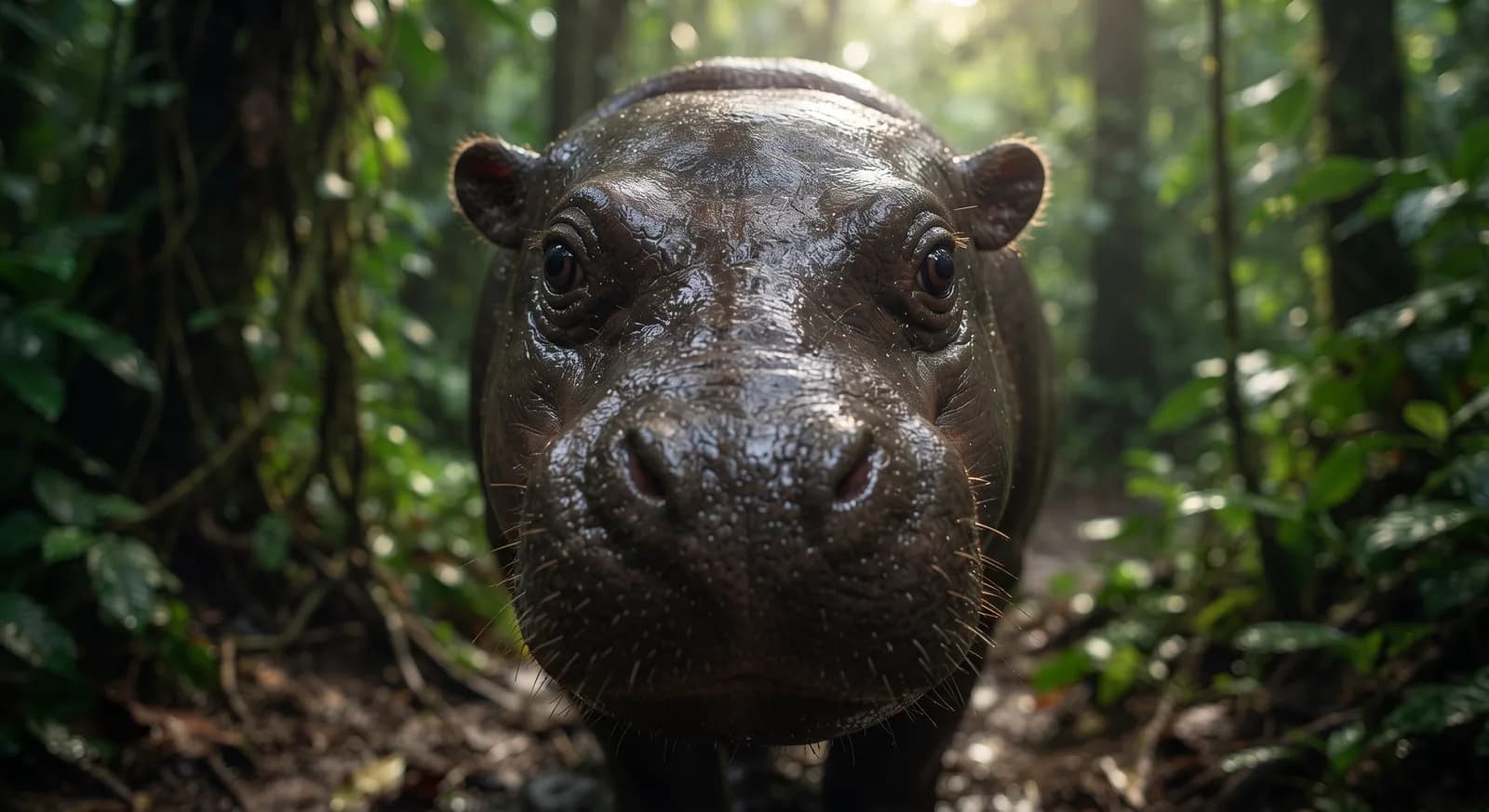 Endangered
Pygmy Hippopotamus
Choeropsis liberiensis
Hercules Beetle
Dynastes hercules
Atlas Moth
Attacus atlas
Keep exploring
Based on what we already know about giant african snail.
Comments
Share an experience, a fun fact or a tip for seeing the giant african snail.
Be the first to comment.