Insects · Hymenoptera · Apidae
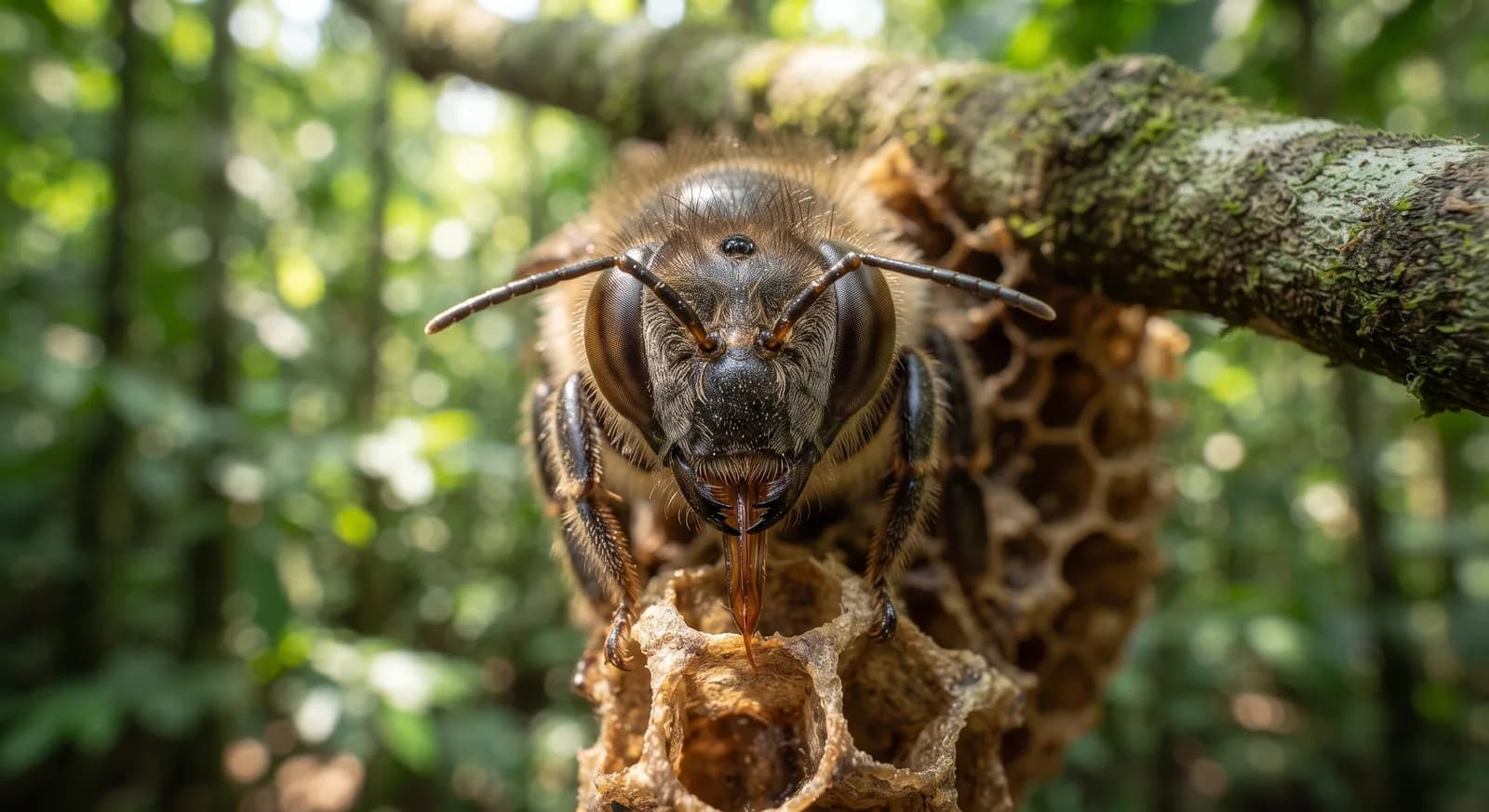
Apis dorsata
It has not yet been assessed against the IUCN criteria.
It builds a single massive comb, up to 2 metres across, entirely open to the air on high branches or cliffs, unlike other bees, which nest in sheltered cavities.
Size
up to 3 cm
Life expectancy
1 year
Diet
Nectarivore
Feeds mainly on flower nectar.
Activity
Diurnal
Active mainly during the day.
Social structure
Colony
Lives in large concentrations, often for breeding reasons.
Sighting difficulty
Unknown
AI-generated images: illustrations, not photographs.
Sources consulted: University of Florida Entomology; The Holy Habibee; ScienceDirect Topics; Plantiary; Entomologically.com; arXiv (Varroa epidemiology study)
Parks and dive sites where this species has been documented — showing 10 of 51.
Other species in the catalogue with the most in common with Giant Honey Bee — same habitat, park, country, tags or family.
Based on what we already know about giant honey bee.
Share an experience, a fun fact or a tip for seeing the giant honey bee.
Be the first to comment.
The pins mark the parks where its presence is documented.