Skip to content
WAnimals
  • Map
  • Species
  • Parks
  • Diving
Log inCreate account
WAnimals

The guide for travellers and animal lovers: discover, plan and share your wild adventures around the world.

Discover wildlife

  • Species
  • Ecosystems
  • Glossary
  • Tags

Explore places

  • Map
  • Countries
  • Parks
  • Diving

Plan experiences

  • Guides

Learn

  • Blog

Resources

  • About us
  • How we build our profiles
  • Help centre
  • Contact
  • Install the app

Follow us

Account

  • Log in
  • Create account

© 2026 WAnimals. All rights reserved.

Terms of servicePrivacyCookiesLegal notice
MapSpeciesParksDiving
  1. Home
  2. Species
  3. Great Potoo

Birds · Nyctibiiformes · Nyctibiidae

Great Potoo

Nyctibius grandis

Least Concern

The species is abundant and widely distributed; it faces no significant short-term risk.

Spotted something wrong?

The great potoo is the largest of the potoos and an absolute master of camouflage. By day it perches upright on the end of a stump or a broken branch, stretches its neck, closes its eyes and becomes completely motionless: its mottled plumage turns it into an extension of the wood, indistinguishable from a few metres away. At night it hunts large insects from a perch, launching out and returning to the same spot. It lays a single egg straight onto a depression in a stump, with no nest at all.

Weight

360 g – 680 g

Size

48 cm – 60 cm

Life expectancy

15 years

Diet

Insectivore

Feeds mainly on insects and other invertebrates.

Activity

Nocturnal

Active mainly at night.

Social structure

Solitary

Lives and hunts alone, joining others only to breed.

RainforestFreshwater
16countries68parks

Fun facts

  • GeneralBy day it perches bolt upright on a stump and passes for a broken piece of wood.
  • It can see with its eyes closed: its eyelids have slits that let it detect movement without opening them, so it can watch a predator without breaking its impersonation of a stump.
  • It builds no nest: it lays a single egg in a crack or depression on the end of a stump and incubates it standing upright, camouflaged, for more than a month.

Life cycle and biology

Skeleton type
Vertebrate - internal bony skeleton (bird)
Habitat and environment
Rainforest, gallery forest and wooded clearings of tropical America
Sexual maturity
2 years
Gestation / incubation
33 days of incubation
Litter / clutch size
1 egg

Sources consulted: Wikipedia (en): Great potoo

Where to find it

Loading map…

Where to see it

Parks and dive sites where this species has been documented — showing 10 of 68.

Related species

Other species in the catalogue with the most in common with Great Potoo — same habitat, park, country, tags or family.

Shares a park
Shares a park
Shares a park
Shares a park
Shares a park
Shares a park

Keep exploring

Based on what we already know about great potoo.

Share an experience, a fun fact or a tip for seeing the great potoo.
See full glossary
This page in other languages: Español · Deutsch · Français · Português · Italiano

The pins mark the parks where its presence is documented.
See its range on the interactive map→
CorcovadoCosta Rica
TortugueroCosta Rica
Manuel AntonioCosta Rica
MonteverdeCosta Rica
Arenal VolcanoCosta Rica
Barú VolcanoPanama
CoibaPanama
DariénPanama
TikalGuatemala
Maya Biosphere ReserveGuatemala
See all 68 parks
Least Concern

Water Opossum

Chironectes minimus

Least Concern

Southern Naked-tailed Armadillo

Cabassous unicinctus

Southern TamanduaLeast Concern

Southern Tamandua

Tamandua tetradactyla

Least Concern

Common Silky Anteater

Cyclopes didactylus

Least Concern

Crimson Topaz

Topaza pella

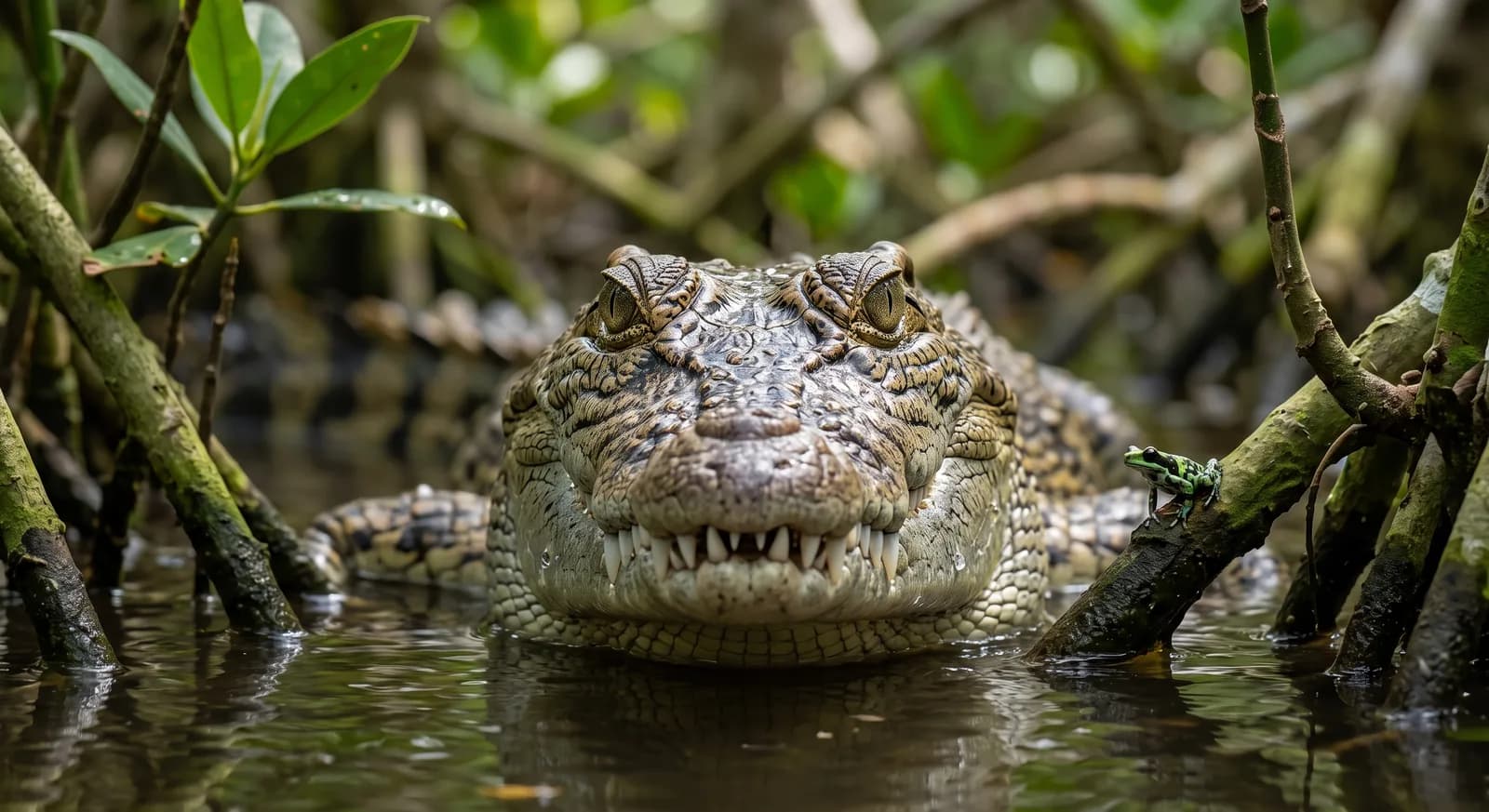
Morelet's CrocodileLeast Concern

Morelet's Crocodile

Crocodylus moreletii

CountriesCosta Rica
ParksCorcovadoCosta Rica
TagsInsectivore
Insectivore
Nocturnal
Solitary
Bird
Rainforest
Freshwater

North America8

South America8

Costa Rica
Panama
Peru
Brazil
Guatemala
Honduras
Belize
Costa Rica
El Salvador
Guatemala
Honduras
Mexico
Nicaragua
Panama
Bolivia
Brazil
Colombia
Ecuador
Guyana
Peru
Suriname
Venezuela