Species group · Mammals
Armadillos
WAnimals has 5 species of armadillo, spread across 2 families (Chlamyphoridae, Dasypodidae).
- 5 species
- 2 families
- 25 countries
- 55 parks
- Weight
- 1 kg – 54 kg
- Length
- 22 cm – 1.5 m
- Lifespan
- 7 – 15 years
Ranges calculated from the profiles that record the figure, not from all 5.
All 5 species of armadillos on WAnimals
Each one has its own full profile. This group does not replace them: it brings them together.
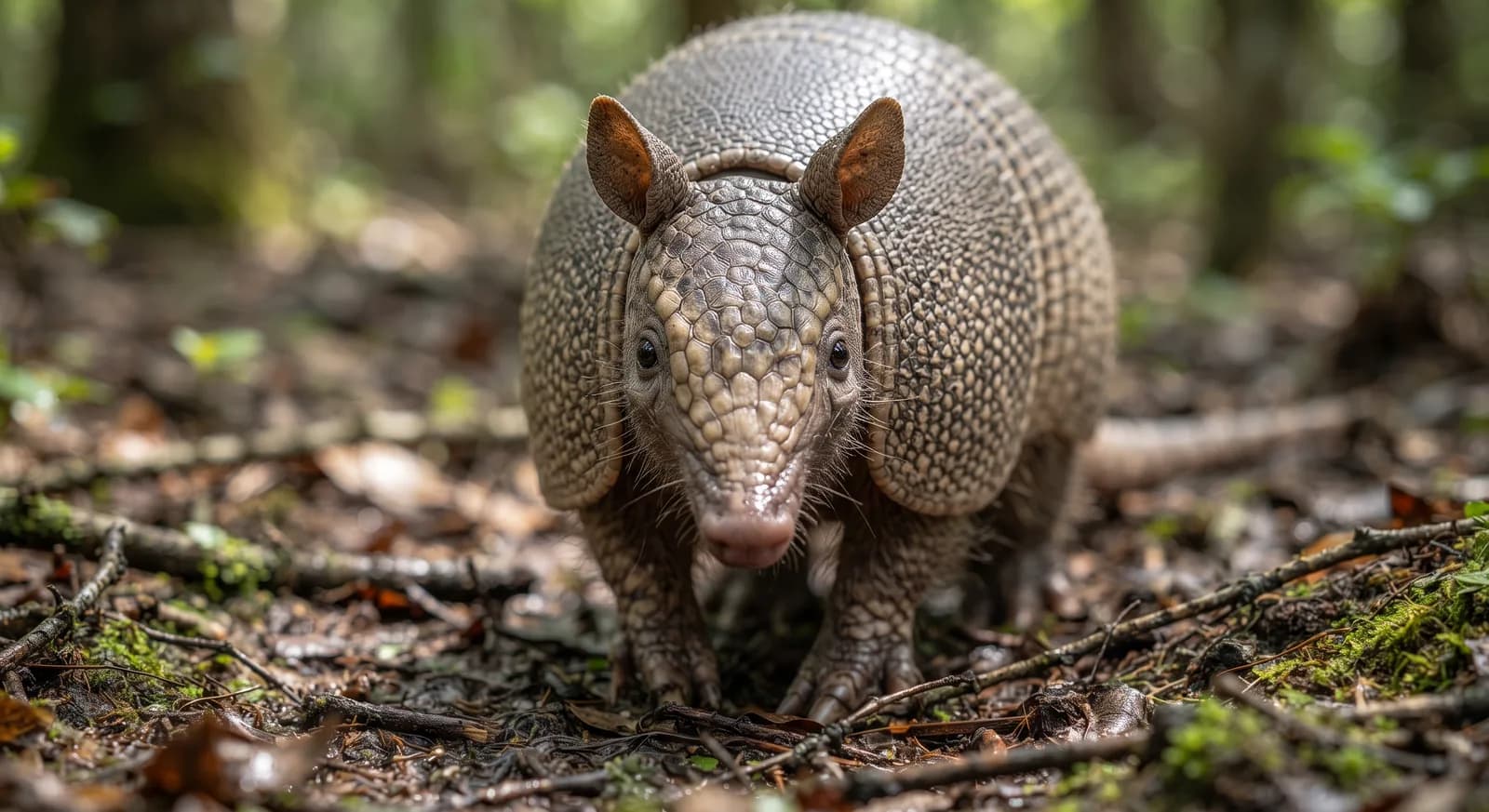 Least Concern
Nine-banded Armadillo
Dasypus novemcinctus
22 countries14 parks
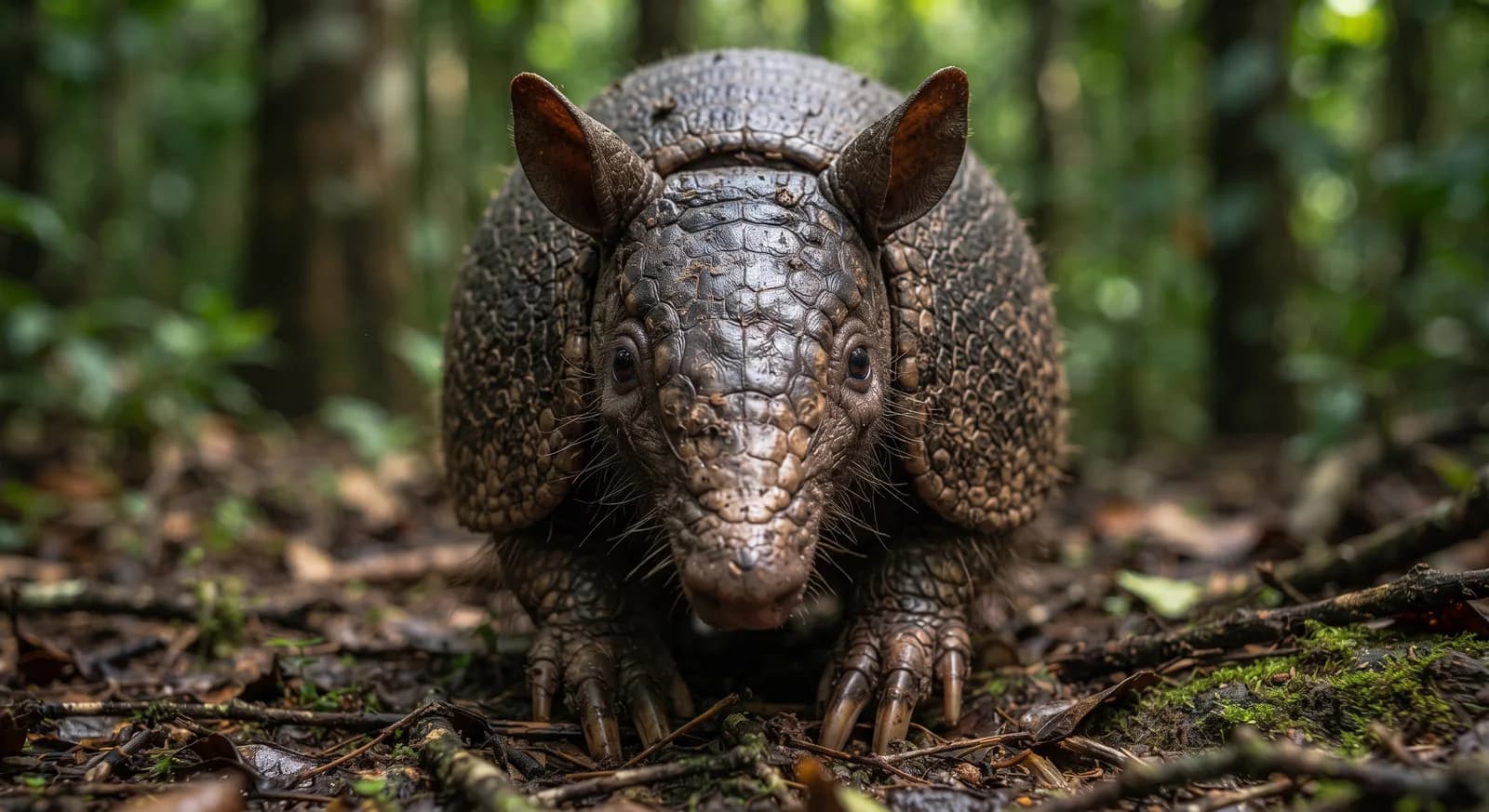 Vulnerable
Giant Armadillo
Priodontes maximus
11 countries18 parks
Least Concern
Yellow Armadillo
Euphractus sexcinctus
8 countries31 parks
Near Threatened
Southern Three-banded Armadillo
Tolypeutes matacus
4 countries9 parks
Least Concern
Greater Long-nosed Armadillo
Dasypus kappleri
10 countries
Conservation status
3 Least Concern1 Vulnerable1 Near Threatened
1 species in this group is in a threatened category according to the IUCN.
Where they live
Recorded in 25 countries. The ones with the most species in the group:
Where to see them
Did you know…?
It always gives birth to four genetically identical young of the same sex, developed from a single fertilised egg.
It eats insects, grubs, small invertebrates and occasionally plant matter.
It lives in forest, grassland and semi-desert across the Americas, from the southern United States to Uruguay.
It is the largest armadillo in the world.
From Giant Armadillo
More than 70 different species use its abandoned burrows for shelter.
From Giant Armadillo
The curved 20 cm claw on its third front toe is one of the largest for body size of any mammal.
From Giant Armadillo
It is one of the more day-active armadillos rather than being strictly nocturnal.
From Yellow Armadillo
It eats insects, ants, carrion and plant matter.
From Yellow Armadillo