Species group · Arachnids
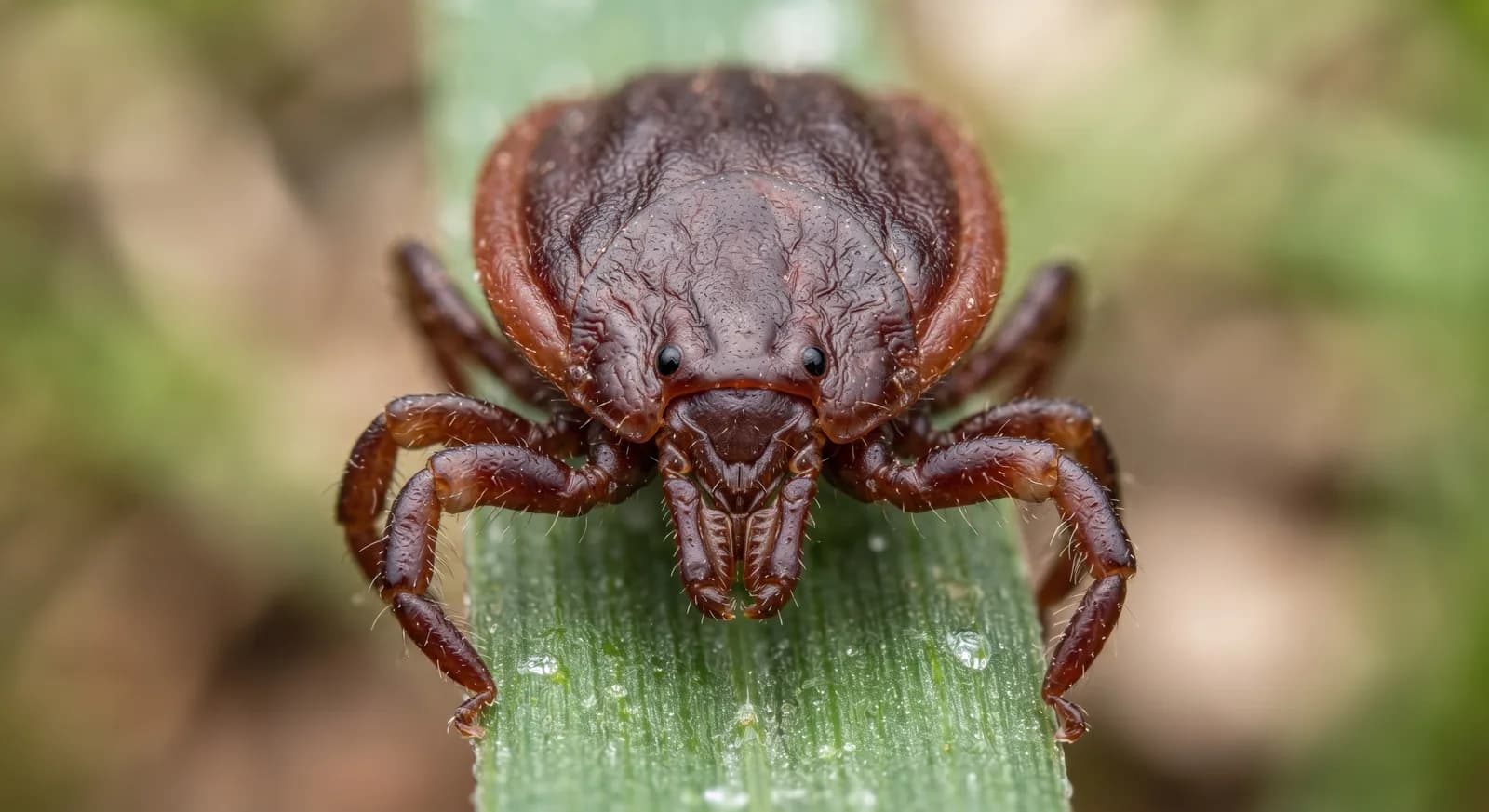
Ticks
WAnimals has 3 species of tick, spread across 2 families (Argasidae, Ixodidae).
- 3 species
- 2 families
- 70 countries
- Length
- 0.3 cm – 1.2 cm
- Lifespan
- 3 years
Ranges calculated from the profiles that record the figure, not from all 3.
All 3 species of ticks on WAnimals
Each one has its own full profile. This group does not replace them: it brings them together.
Conservation status
3 Not Evaluated
No species documented in this group is genuinely at risk according to the IUCN, with the data available today.
Where they live
Recorded in 70 countries. The ones with the most species in the group:
Did you know…?
It has a cycle involving three different hosts that takes two to three years to complete, and can stretch to six in extreme cases.
From Castor Bean Tick
As many as 160 vertebrate species have been documented as its hosts: larvae and nymphs feed on rodents, birds and lizards, and the adults on large mammals.
From Castor Bean Tick
The nymph, barely 1-2 mm across, is the main transmitter of Lyme borreliosis to people precisely because it goes unnoticed; it needs more than 24 hours of contact to pass the infection on.
From Castor Bean Tick
It is the main vector of African swine fever, a disease that has killed hundreds of millions of pigs worldwide.
From Eyeless Tampan
It also transmits African relapsing fever, caused by the bacterium Borrelia duttonii.
From Eyeless Tampan
Unlike the hard ticks, which feed for days, this one feeds in minutes and can survive for years between one meal and the next.
From Eyeless Tampan
It completes its cycle indoors and carries canine ehrlichiosis.
From Kennel Tick
It is the only tick that has managed to become a household pest: it lays several thousand eggs in cracks around the house and can infest a whole home.
From Kennel Tick