Skip to content
WAnimals
  • Map
  • Species
  • Parks
  • Diving
Log inCreate account
WAnimals

The guide for travellers and animal lovers: discover, plan and share your wild adventures around the world.

Discover wildlife

  • Species
  • Ecosystems
  • Glossary
  • Tags

Explore places

  • Map
  • Countries
  • Parks
  • Diving

Plan experiences

  • Guides

Learn

  • Blog

Resources

  • About us
  • How we build our profiles
  • Help centre
  • Contact
  • Install the app

Follow us

Account

  • Log in
  • Create account

© 2026 WAnimals. All rights reserved.

Terms of servicePrivacyCookiesLegal notice
MapSpeciesParksDiving
  1. Home
  2. Species
  3. Species groups
  4. Ptarmigans

Species group · Birds

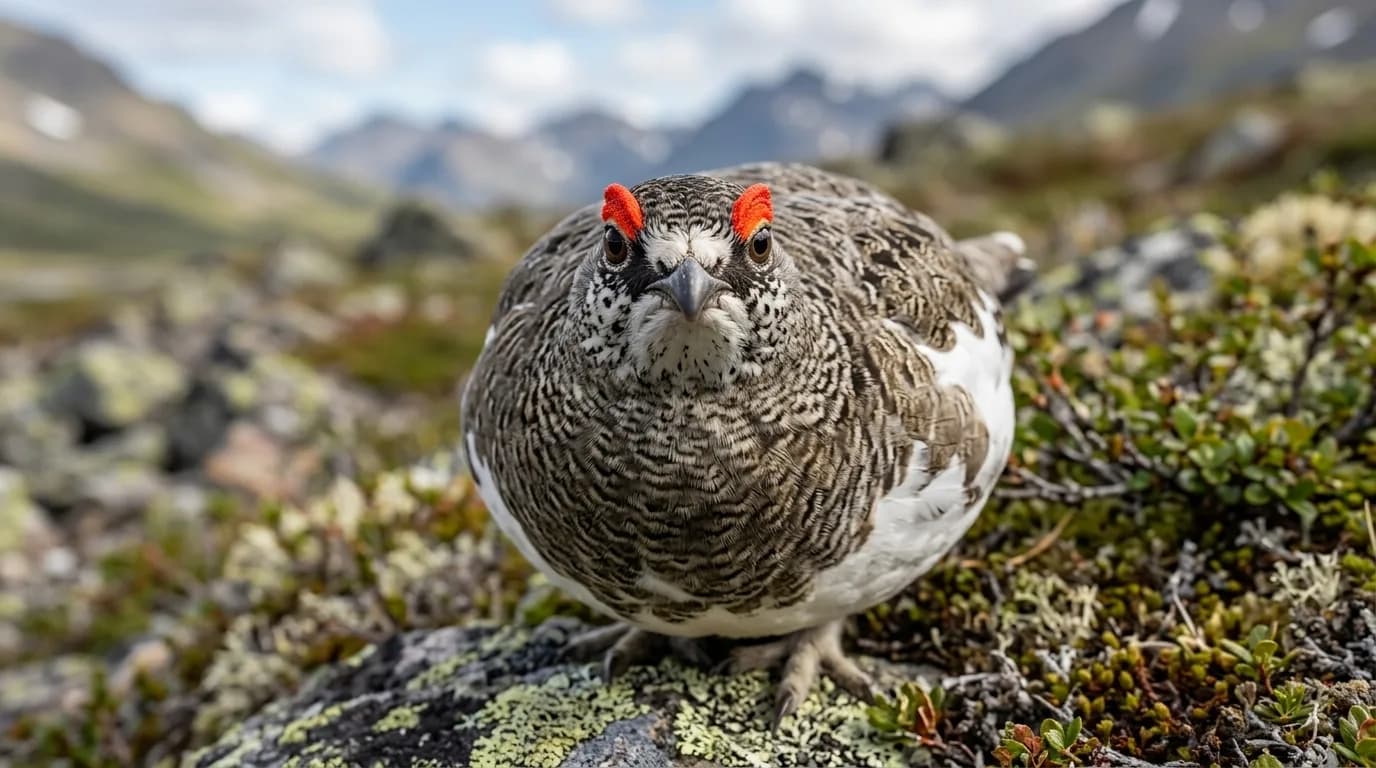
Ptarmigans

WAnimals has 2 species of ptarmigan, in the family Phasianidae.

2 species
1 family
20 countries
40 parks
Weight
555 g – 720 g
Length
31 cm – 43 cm
Lifespan
8 – 12 years

Ranges calculated from the profiles that record the figure, not from all 2.

All 2 species of ptarmigans on WAnimals

Each one has its own full profile. This group does not replace them: it brings them together.

Conservation status

2 Least Concern

No species documented in this group is genuinely at risk according to the IUCN, with the data available today.

Where they live

Recorded in 20 countries. The ones with the most species in the group:

Where to see them

Did you know…?

  • It moults into wholly white plumage in winter, and its feathered feet let it walk on snow.

    From

  • It moults three times a year instead of twice, matching the white of the snow, the mottling of the thaw and the grey of the summer rock: it is one of the most precise seasonal camouflages in the animal kingdom.

    From

  • The Pyrenean population is a glacial relict: it was left isolated on the summits when the ice retreated and has nowhere higher to go as the climate warms.

    From

  • The British subspecies is the only one in the world that does not turn white in winter: on islands where lasting snow is rare, white camouflage would be counterproductive.

    From

  • Its populations fluctuate in cycles of several years driven by an intestinal nematode, a mechanism demonstrated experimentally and a classic case of population regulation by parasites.

    From

  • The heather moors of Scotland are managed by burning them in patches to maximise grouse density for shooting, a practice that shapes the landscape of large parts of the Highlands and that generates permanent environmental controversy.

    From

Ecosystems

·

Rock PtarmiganLeast Concern

Rock Ptarmigan

Lagopus muta

17 countries26 parks
Willow PtarmiganLeast Concern

Willow Ptarmigan

Lagopus lagopus

11 countries14 parks
Canada2
Finland2
Greenland2
Norway2
Russia2
Sweden2
United Kingdom2
United States2
Andorra1
Austria1
France1
Iceland1
Ireland1
Italy1
Japan1
Kazakhstan1
Liechtenstein1
Mongolia1
Spain1
Switzerland1
Abisko1 species
Aiguestortes i Estany de Sant Maurici1 species
Bannau Brycheiniog (Brecon Beacons)1 species
Berchtesgaden1 species
Cairngorms1 species
Connemara1 species
Dartmoor1 species
Dovrefjell-Sunndalsfjella1 species
Ecrins1 species
Exmoor1 species
Femundsmarka1 species
Fulufjallet1 species
Rock Ptarmigan
Rock Ptarmigan
Rock Ptarmigan
Willow Ptarmigan
Willow Ptarmigan
Willow Ptarmigan
Mountain2
Polar2
Tundra2
See every species group
Explore the species one by one
This page in other languages: Español · Deutsch · Français · Português · Italiano