Species group · Sea cucumbers
Sea Cucumbers
WAnimals has 4 species of sea cucumber, spread across 3 families (Cucumariidae, Holothuriidae, Synaptidae).
- 4 species
- 3 families
- 80 countries
- 81 parks
- Weight
- 300 g – 1.5 kg
- Length
- 20 cm – 3 m
- Lifespan
- 10 – 25 years
Ranges calculated from the profiles that record the figure, not from all 4.
All 4 species of sea cucumbers on WAnimals
Each one has its own full profile. This group does not replace them: it brings them together.
Conservation status
2 Not Evaluated1 Least Concern1 Endangered
1 species in this group is in a threatened category according to the IUCN.
Where they live
Recorded in 80 countries. The ones with the most species in the group:
Where to see them
- Aldabra2 species
- Amami Gunto2 species
- Ao Phang Nga2 species
- Bali Barat2 species
- Bazaruto Archipelago2 species
- Bunaken2 species
- Cape Range2 species
- Con Dao2 species
- East Rennell2 species
- Fakarava2 species
- Gebel Elba2 species
- Great Barrier Reef2 species
- Abu Dabab (dugongs)diving
- Abu Nuhas (Ghiannis D)diving
- Agincourt Reefsdiving
- Aitutakidiving
- Aldabra Atolldiving
- Alor Archipelagodiving
Did you know…?
It has no tube feet and no respiratory organs at all: it breathes through its skin and moves by crawling through contractions of the body wall.
From Snake Sea Cucumber
Its skin grips the hand like adhesive tape thanks to microscopic carbonate anchors embedded in the body wall.
From Snake Sea Cucumber
It can break apart if handled, and some fragments are able to regenerate a complete animal.
From Snake Sea Cucumber
By processing tonnes of sediment a year, sea cucumbers aerate and clean the reef floor and lower its local acidity, a service that favours coral growth.
From Pinkfish
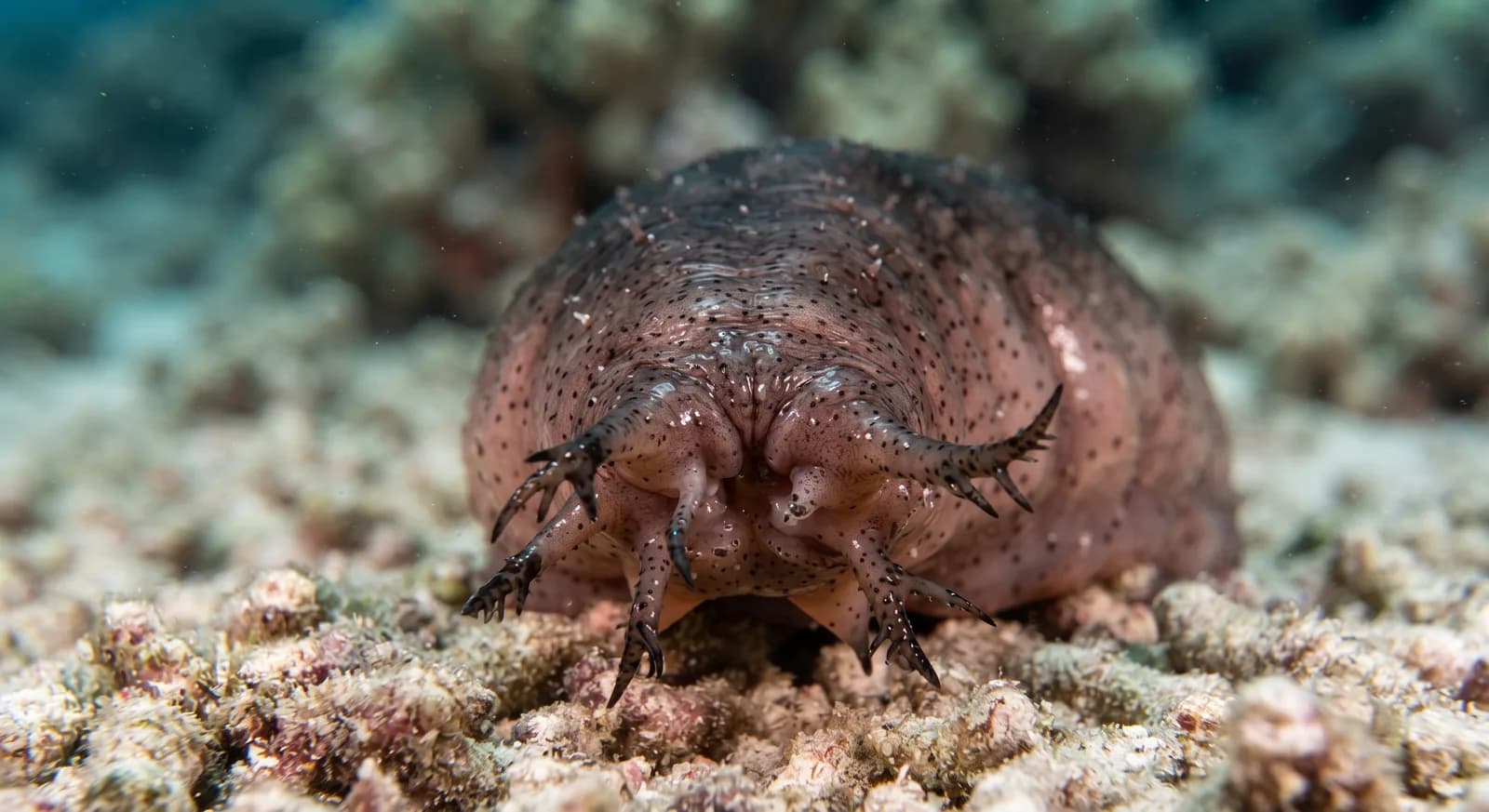
Under attack it can expel part of its internal organs through the anus — sticky and sometimes toxic — and regrow them within weeks.
From Pinkfish
It is one of the species traded as trepang or bêche-de-mer, and the enormous Asian demand has depleted its populations across much of the Indo-Pacific.
From Pinkfish
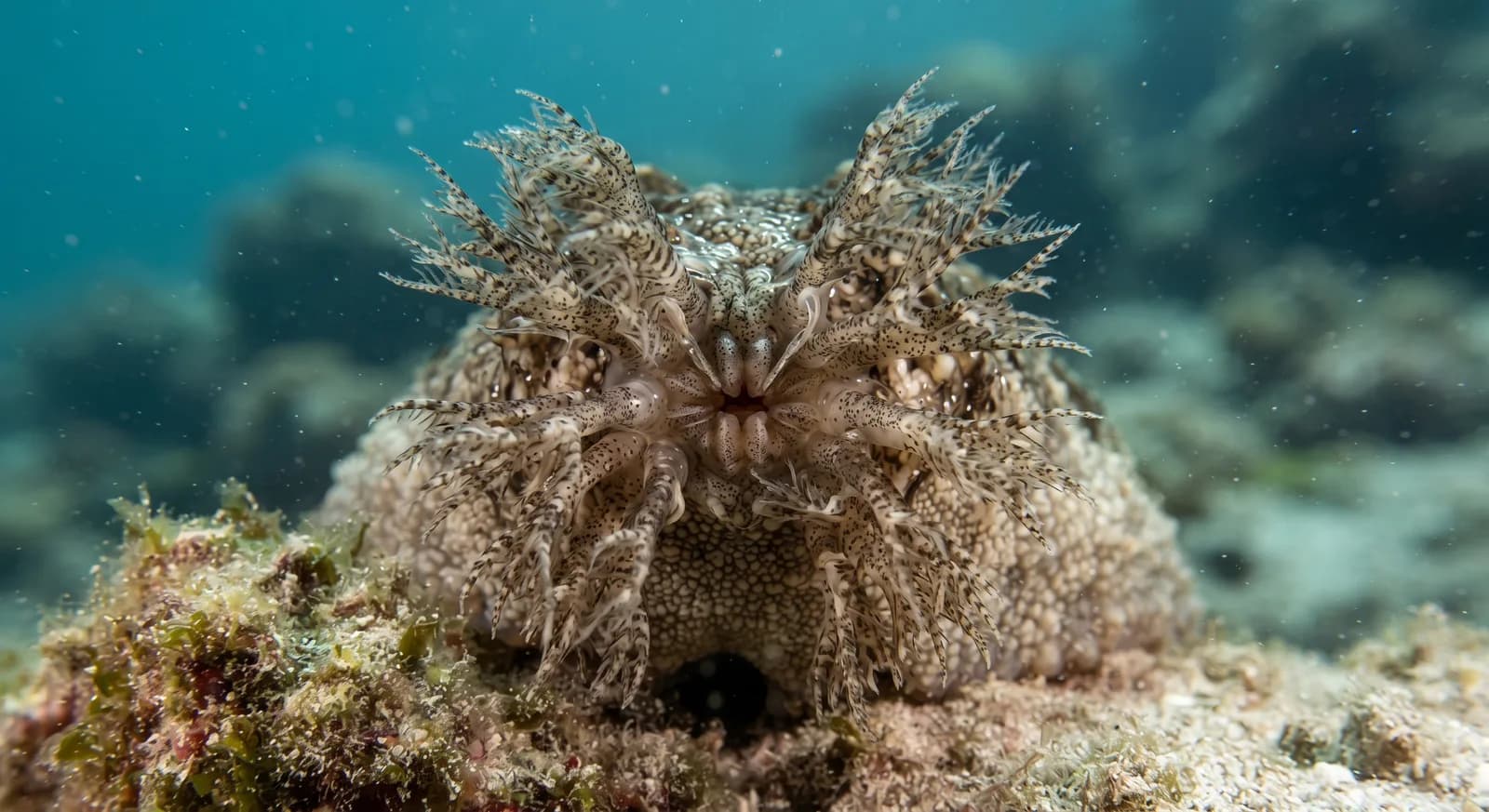
It feeds like an anemone rather than like a burrowing sea cucumber: it spreads its branched tentacles into the current and puts them into its mouth in turn, cleaning off the particles each one has caught.
From
It supports a growing fishery in Canada, Iceland and Norway, driven by Asian demand, on a species that grows slowly and matures late.
From