Species group · Cephalopods
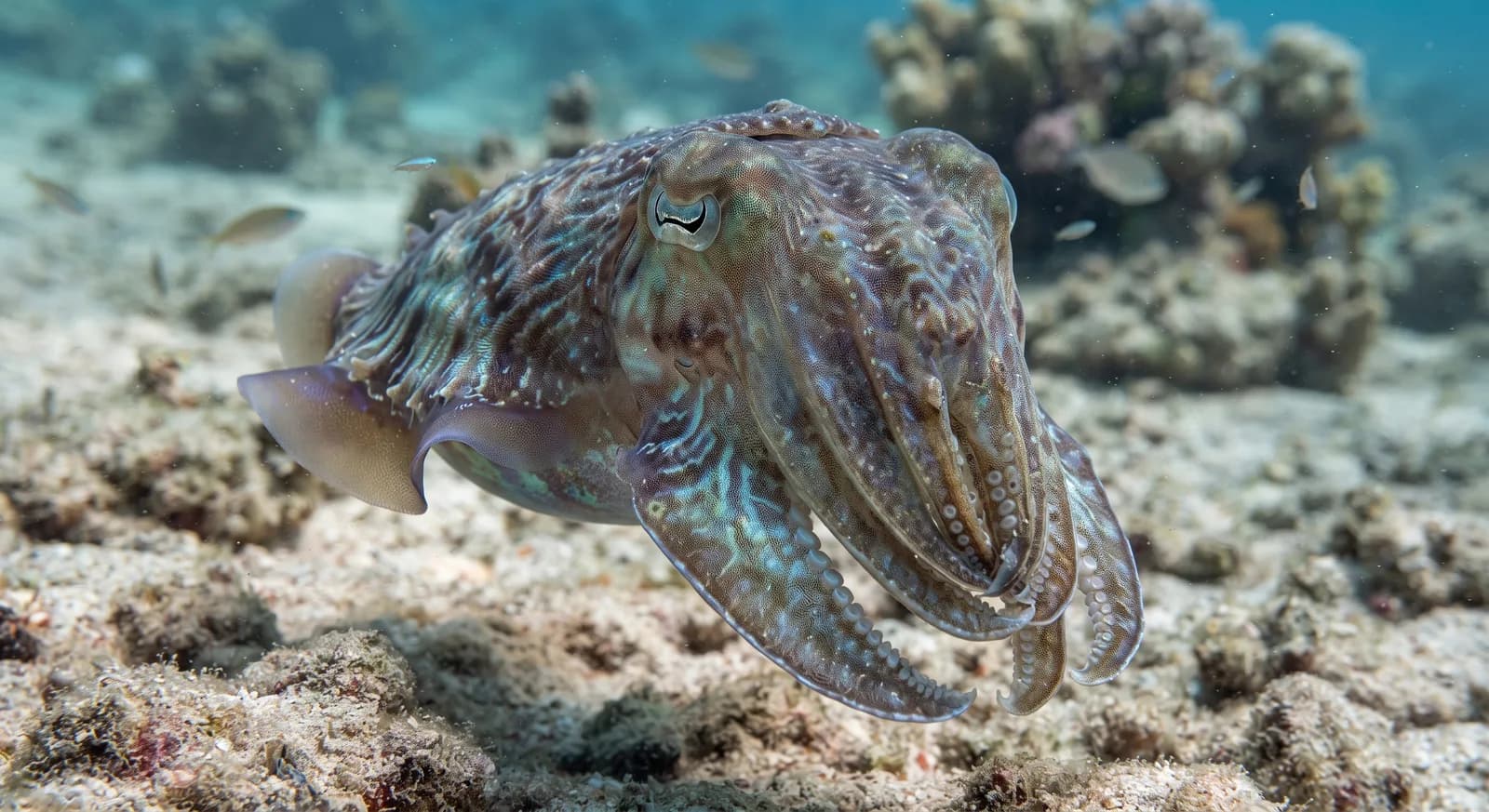
Cuttlefishes
WAnimals has 2 species of cuttlefish, in the family Sepiidae.
- 2 species
- 1 family
- 50 countries
- 38 parks
- Weight
- 4 kg
- Length
- 0.8 cm – 49 cm
- Lifespan
- 2 years
Ranges calculated from the profiles that record the figure, not from all 2.
All 2 species of cuttlefishes on WAnimals
Each one has its own full profile. This group does not replace them: it brings them together.
Conservation status
1 Not Evaluated1 Data Deficient
No species documented in this group is genuinely at risk according to the IUCN, with the data available today.
Where they live
Recorded in 50 countries. The ones with the most species in the group:
Where to see them
- Al Hoceima1 species
- Albufera de Valencia1 species
- Arcipelago Toscano1 species
- Arrábida1 species
- Asinara1 species
- Bali Barat1 species
- Banc d'Arguin1 species
- Brijuni1 species
- Bunaken1 species
- Cabo de Gata-Níjar1 species
- Cabrera Archipelago1 species
- Calanques1 species
- Aegadian Islands (Favignana)diving
- Aeolian Islands (Panarea/Stromboli)diving
- Aeolian Islands (Vulcano)diving
- Alboran Islanddiving
- Alor Archipelagodiving
- Amalfi Coastdiving
Did you know…?
It can learn to recognise particular prey even before it hatches from the egg.
From Common Cuttlefish
It is semelparous: it dies after its one breeding season.
From Common Cuttlefish
It is one of the most commercially important cephalopods in European fisheries.
From Common Cuttlefish
It can walk across the sea floor using two of its arms as legs rather than swimming, all the while flashing bright warning colours that signal how toxic it is.
It walks the bottom on its arms and flashes colour as a warning that it is toxic.
It walks rather than swims. Its cuttlebone is too small to give it lasting buoyancy, so it moves across the bottom on two arms and two lobes of its mantle.