 Least Concern
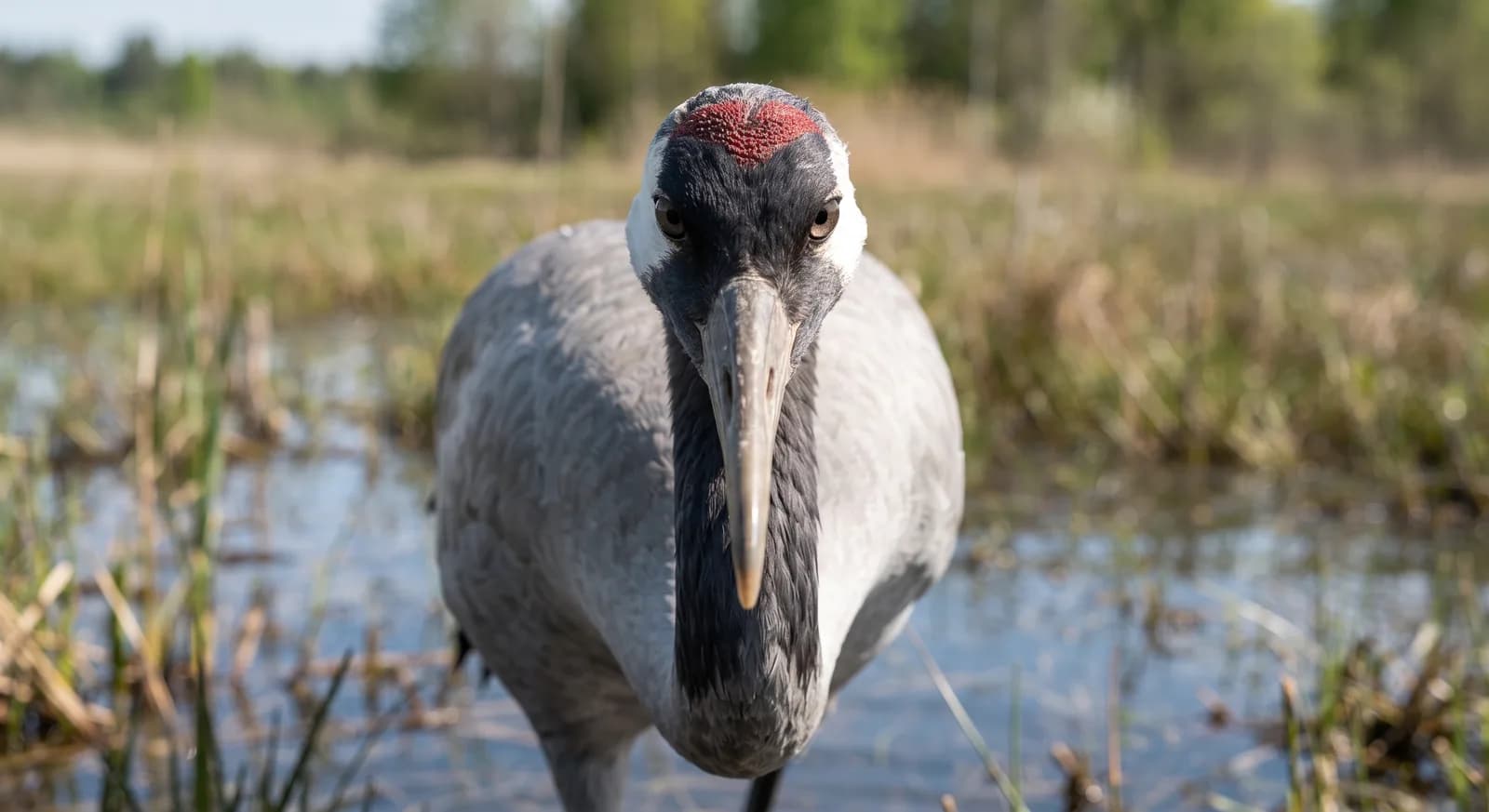
Common Crane
Grus grus
The most arid landscape in Europe, a volcanic coastline of coves and cliffs that was Andalusia's first combined land and sea park.
Area
378 km²
Designated in
1987
Region
Southern Europe
Arid volcanic coast and salt pans
The Cabo de Gata-Níjar Maritime-Terrestrial Natural Park, in the province of Almería, protects 37,480 hectares on land and 12,029 at sea and was created on 23 December 1987 by Decree 314/1987, becoming the first protected maritime-terrestrial area in Andalusia. It is the most arid landscape in Europe and one of the few of volcanic origin to enjoy protection on the continent. The Sierra de Cabo de Gata is the emergent part of an enormous volcanic complex that continues beneath the waters of the Alboran Sea to the African continent, and its relief is defined by domes, dykes, calderas and vents that show through in formations such as those of Mónsul, Los Frailes and Playa de los Muertos. Its 63 kilometres of coast combine cliffs, coves and seabeds ranked among the finest on the Spanish Mediterranean shore.
The vegetation is that of a sub-desert: shrub communities of jujube, dwarf fan palm and cornical, and grassland with scrub dominated by esparto grass and winter thyme. Among them shelter reptiles such as the ocellated lizard and the spur-thighed tortoise. At the southern end, the Cabo de Gata salt pans are a decisive site for migratory birds: flamingos, waders and gulls gather there on their seasonal passage, and the wetland has been listed as a Ramsar site since 5 December 1989.
Few Spanish areas accumulate so many protective designations. Besides being a natural park and a Ramsar site, it has been a Special Protection Area for Birds since 1989, a UNESCO Biosphere Reserve since 5 November 1997 — with some 49,600 hectares recognised — a Specially Protected Area of Mediterranean Importance since 2001 under the Barcelona Convention, and a Site of Community Importance and Special Area of Conservation under Natura 2000. It also has a Marine Reserve of Fishing Interest created in 1995 and managed jointly by the national and Andalusian administrations, with six strict reserves inside it. Since 2001 it has formed part of the European and Global Geoparks Network, and since 2015 it has held UNESCO Global Geopark status.
3 dive sites within 300 km are also shown.
Ecosystems found in Spain, where Cabo de Gata-Níjar lies.
Where can I dive near here?
128 km away
156 km away
182 km away
What is worth looking out for this month in Spain?
Now is a good time: Common crane wintering at Gallocanta Lagoon (October to March (passage peaks in November and February))
Now is a good time: Soaring bird migration across the Strait of Gibraltar (Spring passage February to May and autumn passage July to November)
Now is a good time: Soaring bird migration across the Strait of Gibraltar (Spring passage February to May and autumn passage July to November)
Which other parks are like this one?
Same country: Spain
Same country: Spain
Same country: Spain
Same country: Spain
Based on what we already know about this park.
Share your experience visiting Cabo de Gata-Níjar, or a tip for other travellers.
Be the first to comment.
Climate
Arid / desert, Temperate, Mediterranean, Mountain
Best season
All year round
Threatened:,,,,,,,,,,,
Now is a good time: Soaring bird migration across the Strait of Gibraltar (Spring passage February to May and autumn passage July to November)
 Spain