 Least Concern
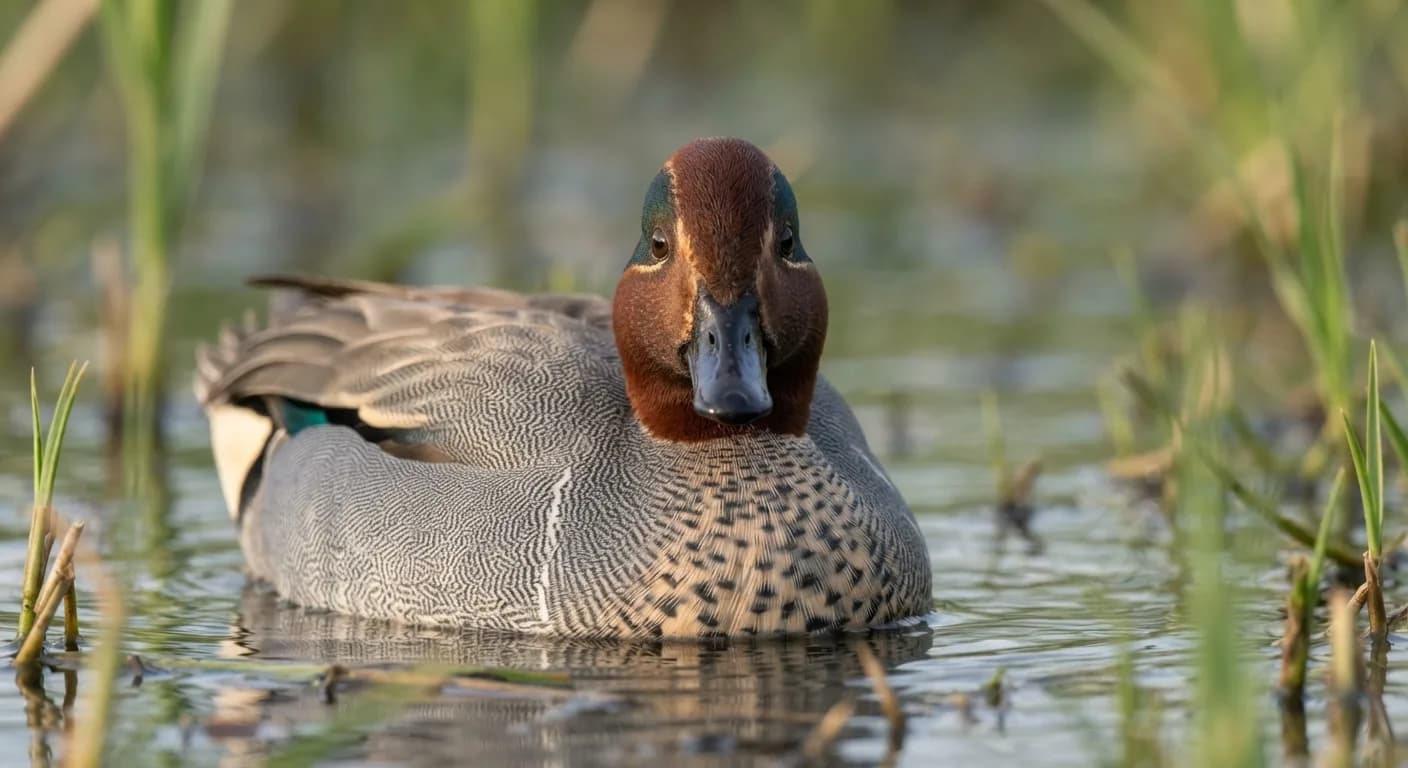
Eurasian Teal
Anas crecca
One of the 2 stiff-tailed ducks on WAnimals
Birds · Anseriformes · Anatidae
Oxyura jamaicensis
The species is abundant and widely distributed; it faces no significant short-term risk.
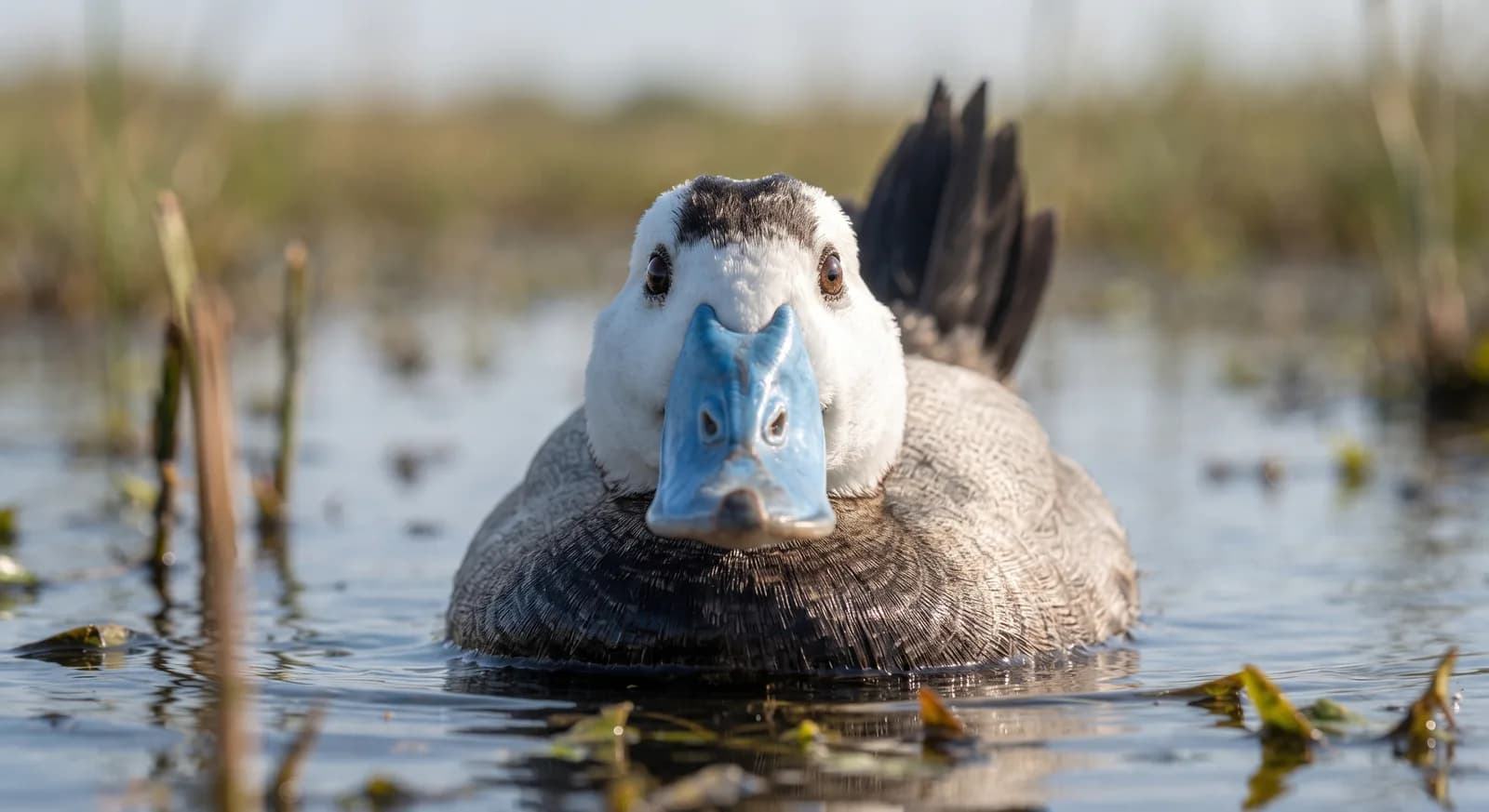
A diving duck very like the white-headed duck but somewhat smaller. Its bill has a concave profile, without the characteristic swelling of the white-headed duck, and its undertail coverts are white. The male wears reddish-chestnut plumage and an intense blue bill in the breeding season, with a black cap coming down to eye level.
Weight
300 g – 800 g
Size
35 cm – 43 cm
Diet
Omnivore
Combines animal and plant food depending on availability.
Activity
Nocturnal
Active mainly at night.
Social structure
Solitary
Lives and hunts alone, joining others only to breed.
Sighting difficulty
Easy
Estimated population
More than 5,000 individuals in the British Isles in 2000, the source of the European invasion
Sources consulted: IUCN Red List; SEO/BirdLife (ficha y III Atlas: Onrubia y Gutiérrez-Expósito 2022); Catálogo Español de Especies Exóticas Invasoras (RD 630/2013); MITECO (ficha de especie invasora, 2013); Hughes 1996; Kershaw y Hughes 2002; Cranswick y Hall 2020 (WWT, Convenio de Berna); GEIB 2006, TOP 20 especies invasoras más dañinas de España; Urdiales y Pereira 1993
Best time: All year round; it is a partial migrant and travels by night
Parks and dive sites where this species has been documented — showing 10 of 21.
Other species in the catalogue with the most in common with Ruddy Duck — same habitat, park, country, tags or family.
Based on what we already know about ruddy duck.
Share an experience, a fun fact or a tip for seeing the ruddy duck.
Be the first to comment.
The pins mark the parks where its presence is documented.