 Least Concern
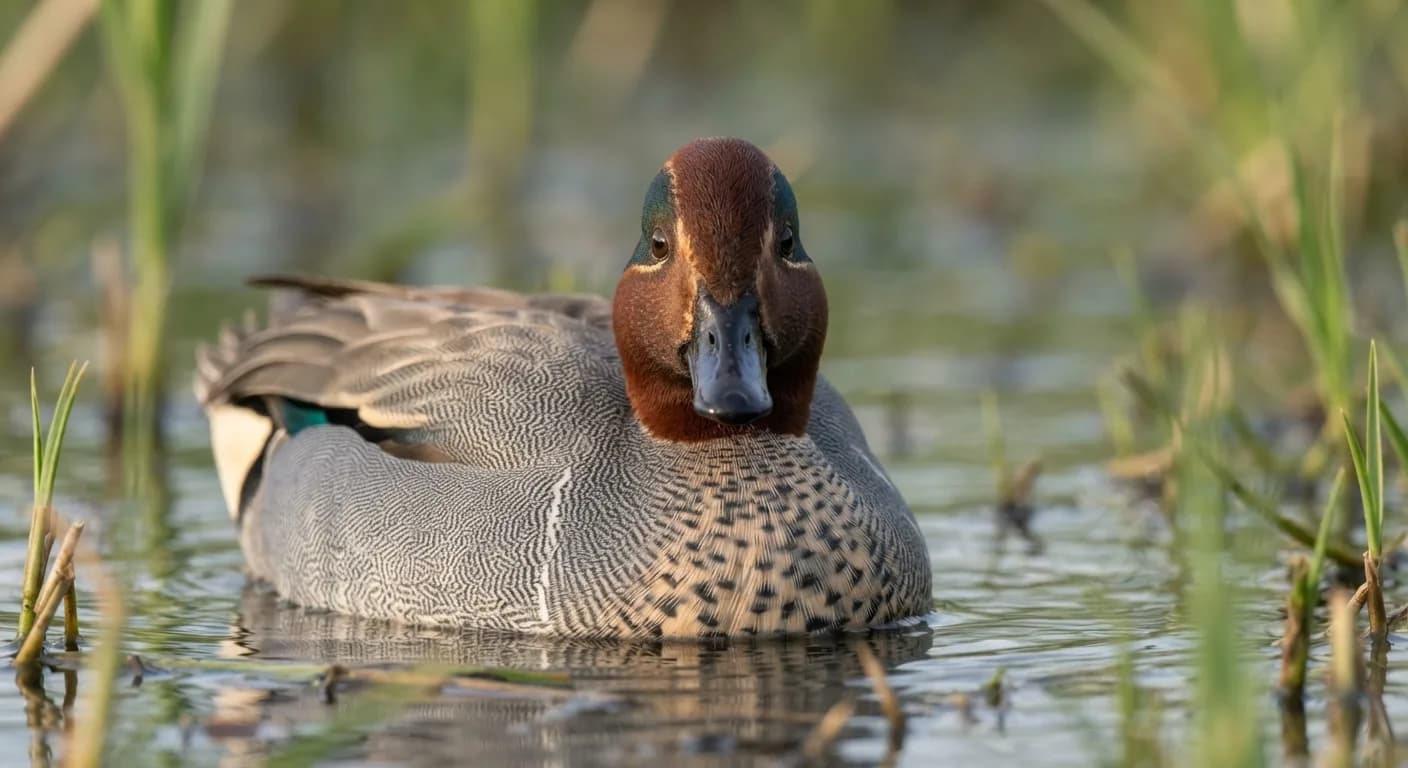
Eurasian Teal
Anas crecca
One of the 3 dabbling ducks on WAnimals
Birds · Anseriformes · Anatidae
Anas acuta
The species is abundant and widely distributed; it faces no significant short-term risk.
A slender, long-necked dabbling duck, recognisable by the two greatly elongated, pointed central tail feathers that give the species its name. The male in breeding plumage has a dark brown head with a white stripe running up from the breast along the side of the neck.
Weight
866 g – 1 kg
Size
51 cm – 76 cm
Life expectancy
27 years
Diet
Omnivore
Combines animal and plant food depending on availability.
Activity
Diurnal
Active mainly during the day.
Estimated population
8,600-17,400 breeding pairs in the EU-27 over 370,000 km², and 94,900-167,000 wintering individuals
Sources consulted: IUCN Red List · Informe Art. 12 de la Directiva Aves (Agencia Europea de Medio Ambiente) · European Red List of Birds 2015 · Frontiers in Ecology and Evolution (morfometría de anátidas europeas) · Mateo et al. 2000 · Quijano Hernández et al. 2022, Huitzil 22(2) · Linnaeus 1758
Best time: Winter in marshes, lagoons and estuaries; in Spain it is essentially a winter visitor
Parks and dive sites where this species has been documented — showing 10 of 102.
Other species in the catalogue with the most in common with Northern Pintail — same habitat, park, country, tags or family.
Based on what we already know about northern pintail.
The pins mark the parks where its presence is documented.