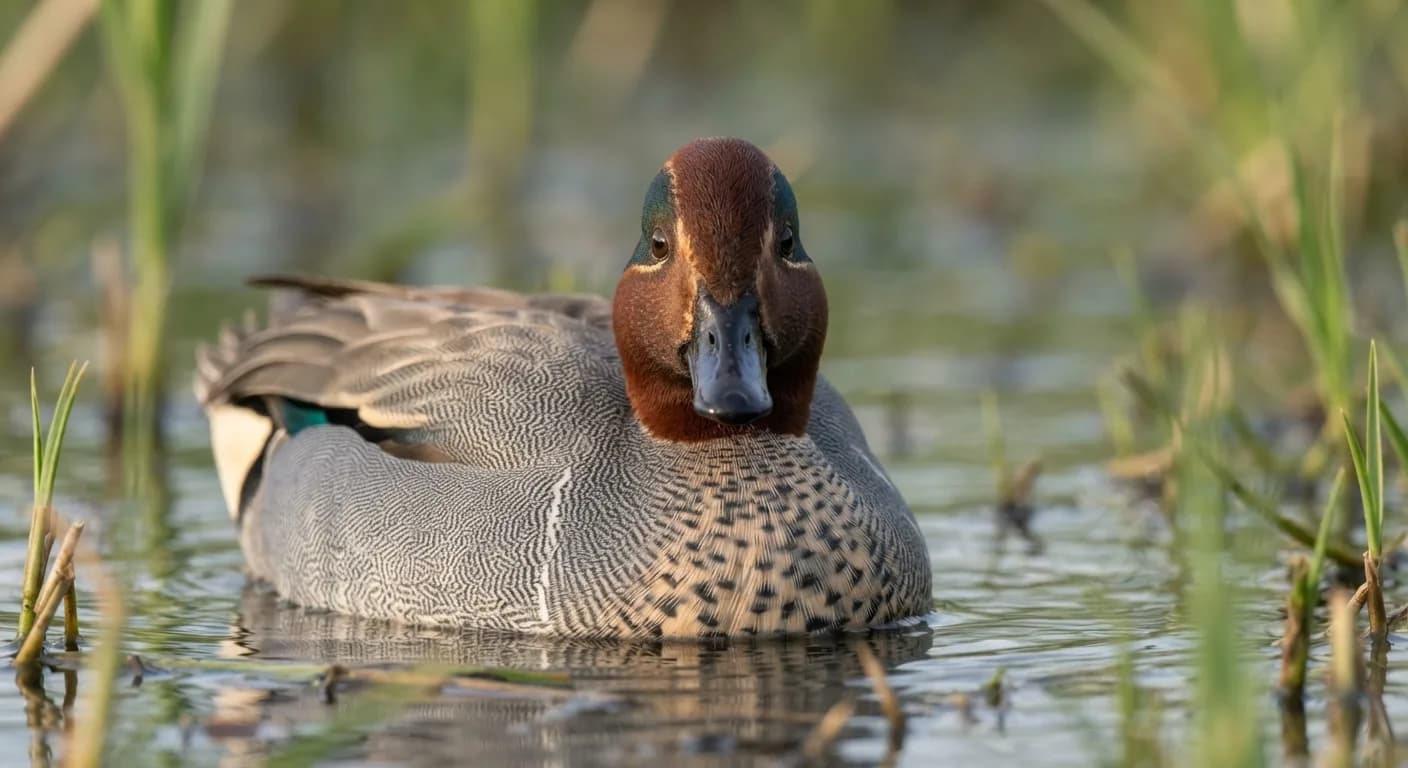
One of the 2 shelducks on WAnimals
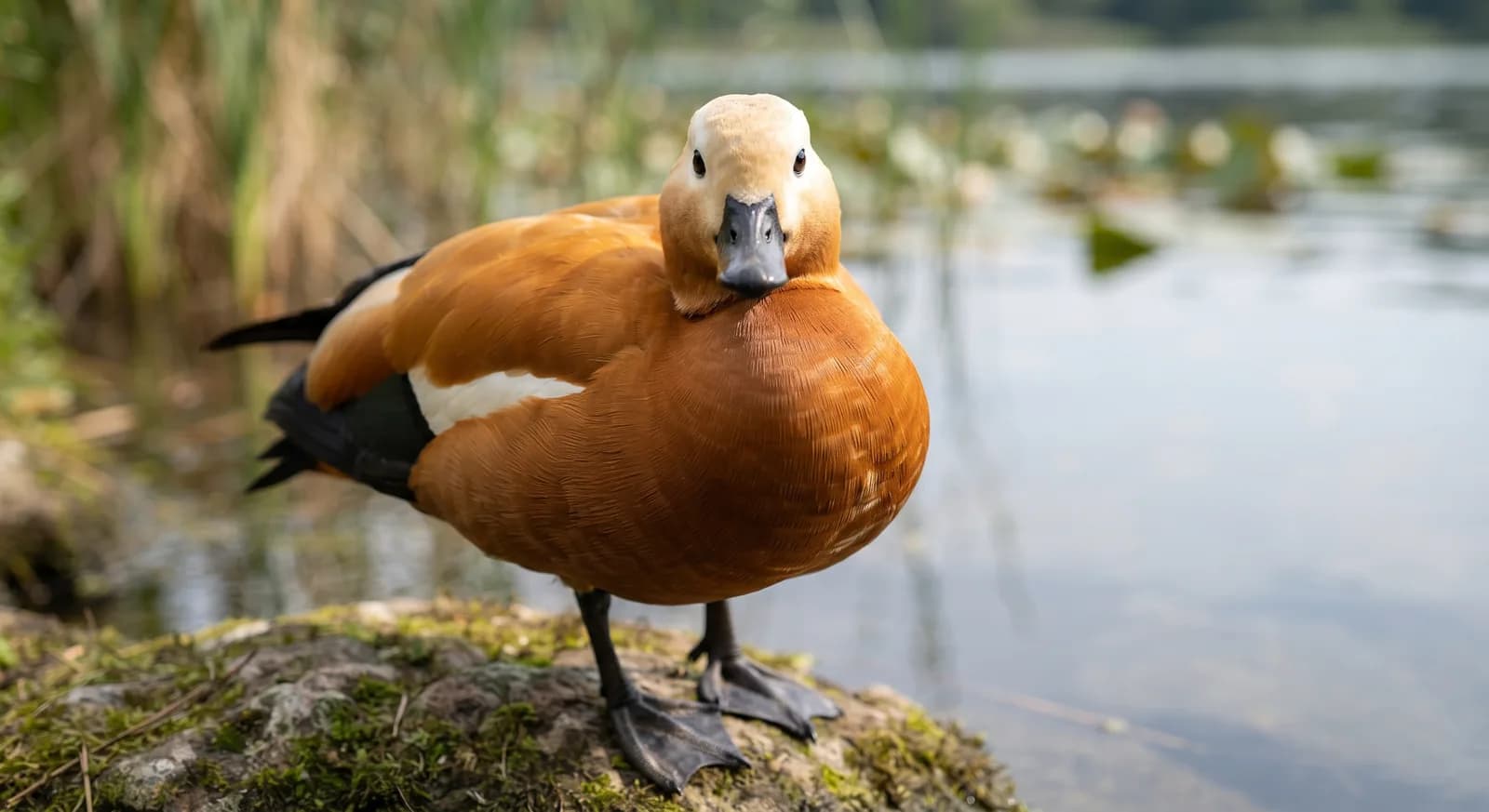
Birds · Anseriformes · Anatidae
Tadorna ferruginea
The species is abundant and widely distributed; it faces no significant short-term risk.
A member of the duck family intermediate in build between a duck and a goose, with uniform orange-chestnut plumage and a paler, almost cream head and neck. The wing coverts are white and contrast strongly in flight with the black flight feathers and tail. The bill and legs are blackish. The male wears a fine black collar, more marked in summer; the female usually has a white patch on the face.
Weight
1.1 kg – 1.6 kg
Size
58 cm – 70 cm
Diet
Omnivore
Combines animal and plant food depending on availability.
Activity
Diurnal
Active mainly during the day.
Social structure
In pairs
Usually lives in pairs, sometimes for life.
Sighting difficulty
Easy
AI-generated images: illustrations, not photographs.
Sources consulted: IUCN Red List; Catálogo Nacional de Especies Amenazadas; macaronesian.org; ACBC Canaria; Zoobotánico de Jerez; eBird; Pallas 1764
Best time: From January to May, mainly in spring; on Fuerteventura it disappears in July and August and returns in September
Parks and dive sites where this species has been documented — showing 10 of 21.
Other species in the catalogue with the most in common with Ruddy Shelduck — same habitat, park, country, tags or family.
Based on what we already know about ruddy shelduck.
Share an experience, a fun fact or a tip for seeing the ruddy shelduck.
Be the first to comment.
The pins mark the parks where its presence is documented.