Brittle stars · Euryalida · Gorgonocephalidae
Common Basket Star
Gorgonocephalus eucnemis
It has not yet been assessed against the IUCN criteria. See full glossary
The Arctic basket star, a brittle star whose five arms branch over and over until they form a tangle of thousands of twigs. By day it stays coiled on itself and by night it climbs onto a sea fan or a rock and spreads its arms into a net to capture plankton.
Size
20 cm – 70 cm
Diet
Carnivore
Feeds mainly on other animals.
Activity
Nocturnal
Active mainly at night.
Social structure
Solitary
Lives and hunts alone, joining others only to breed.
Sighting difficulty
Unknown
Fun facts
- Its arms divide dichotomously dozens of times, adding up to several thousand tips, and form the most elaborate capture net of any echinoderm.
- It climbs to the high points of the seabed, such as sea fans, to expose its net to the strongest current.
- At dawn it draws in the net and coils into a compact ball, barely recognisable as the same animal.
- Its five arms branch again and again until they form a tangle of thousands of branchlets, which is where its name of Gorgon's head comes from, after the snakes in Medusa's hair.
- With that net spread against the current it filters plankton: it is not a hunting starfish but a living trap.
- Each branchlet can coil on its own around a captured prey item and carry it towards the mouth, at the centre of the disc.
- It positions itself on top of gorgonians and sponges to make better use of the current, which is why it is often photographed perched on a coral.
- By day, in shallow water, it draws its arms in to form a compact ball and unfurls them at dusk.
- It is slow-growing and probably long-lived, although its age is difficult to determine.
Life cycle & biology
- Skeleton type
- Invertebrate - endoskeleton of calcareous plates (echinoderm)
- Habitat & environment
- Rocky bottoms and cold corals of the Arctic and the North Atlantic and Pacific, from 15 to 1,500 m
Sources consulted: Emson y Woodley, trabajos sobre alimentación en Gorgonocephalus; Marine Life Information Network; Instituto de Investigación Marina de Noruega
Where to find it
See its range on the interactive mapWhere to watch it
Parques y spots de buceo donde se ha documentado esta especie — se muestran 19 de 35 documentados.
Related species
Other species in the catalogue with the most in common with Common Basket Star — same habitat, park, country, tags or family.
Thornback Ray
Raja clavata
Rabbitfish
Chimaera monstrosa
 Least Concern
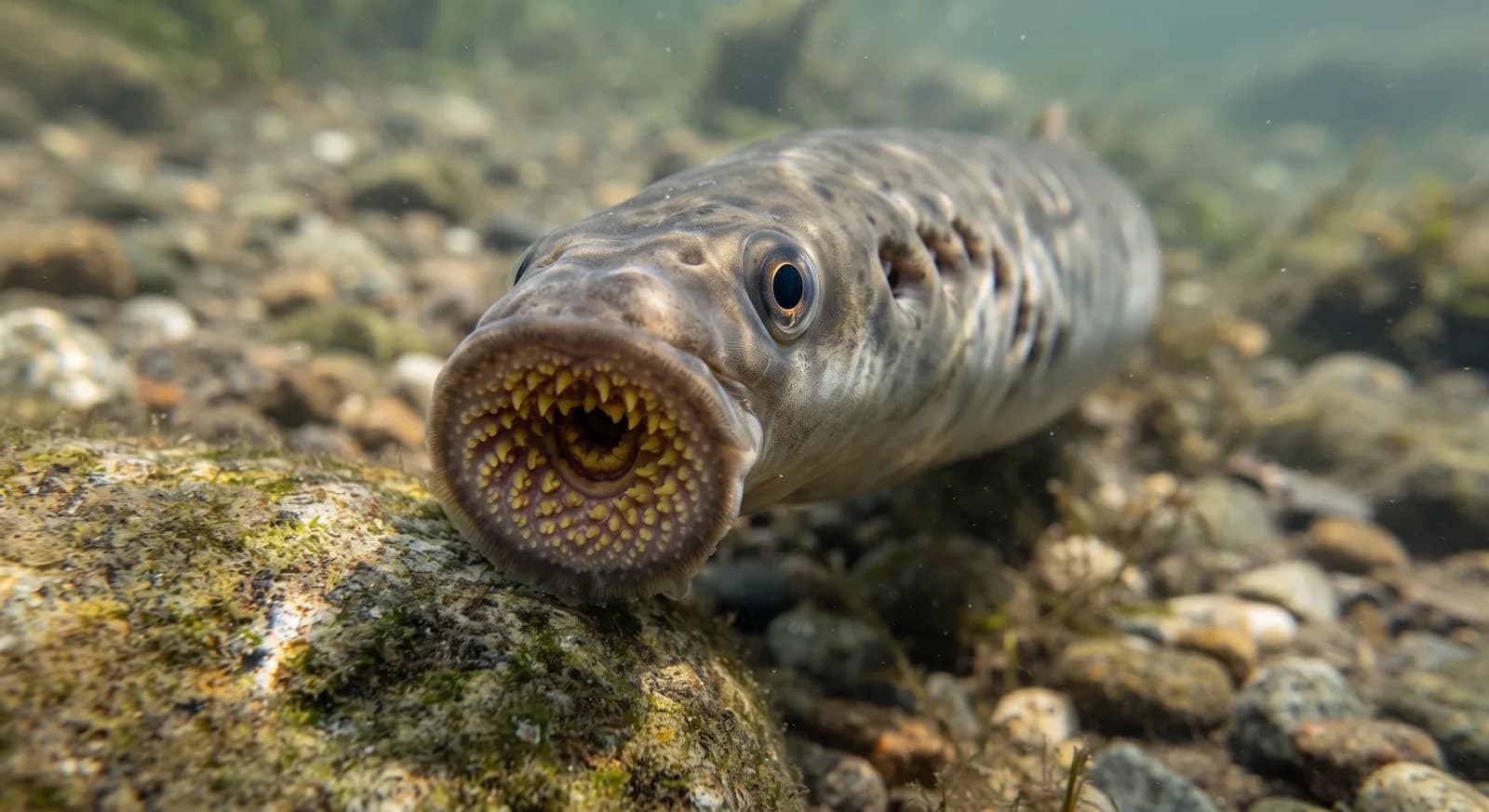
Sea Lamprey
Petromyzon marinus
European Hake
Merluccius merluccius
Plaice
Pleuronectes platessa
Dover Sole
Solea solea
Keep exploring
Based on what we already know about common basket star.
Comments
Share an experience, a fun fact or a tip for seeing the common basket star.
Be the first to comment.