Species group · Bony fish
Morays
WAnimals has 2 species of moray, all in the family Muraenidae.
- 2 species
- 1 family
- 80 countries
- 48 parks
- Weight
- 6.5 kg – 29 kg
- Length
- 1.5 m – 2.5 m
- Lifespan
- 38 years
Ranges calculated from the entries that record the figure, not from all 2.
All 2 species of morays on WAnimals
Each one has its own full entry. This group does not replace them: it brings them together.
Conservation status
No species documented in this group is genuinely at risk according to the IUCN, with the data available today.
See the global conservation statusWhere they live
Recorded in 80 countries. The ones with the most species in the group:
Where to see them
- Agujero Azul de Belice (Parque Nacional del Agujero Azul)1 species
- Al Hoceima1 species
- Alonissos y Esporadas del Norte1 species
- Archipielago de Cabrera1 species
- Arcipelago Toscano1 species
- Arrecifes de Cozumel1 species
- Asinara1 species
- Beydağları1 species
- Biscayne1 species
- Bonaire1 species
- Brijuni1 species
- Cabo de Gata-Níjar1 species
- 1000 Steps (Bonaire)diving
- Alligator Head (Ocean Ridge)diving
- Ambergris Cayediving
- Amorgos (pecio Le Grand Bleu)diving
- Andros Barrier Reefdiving
- Anegada Horseshoe Reefdiving
Did you know…
It is the largest moray in the tropical Atlantic, with records of 2.5 m and 29 kg.
From Green Moray
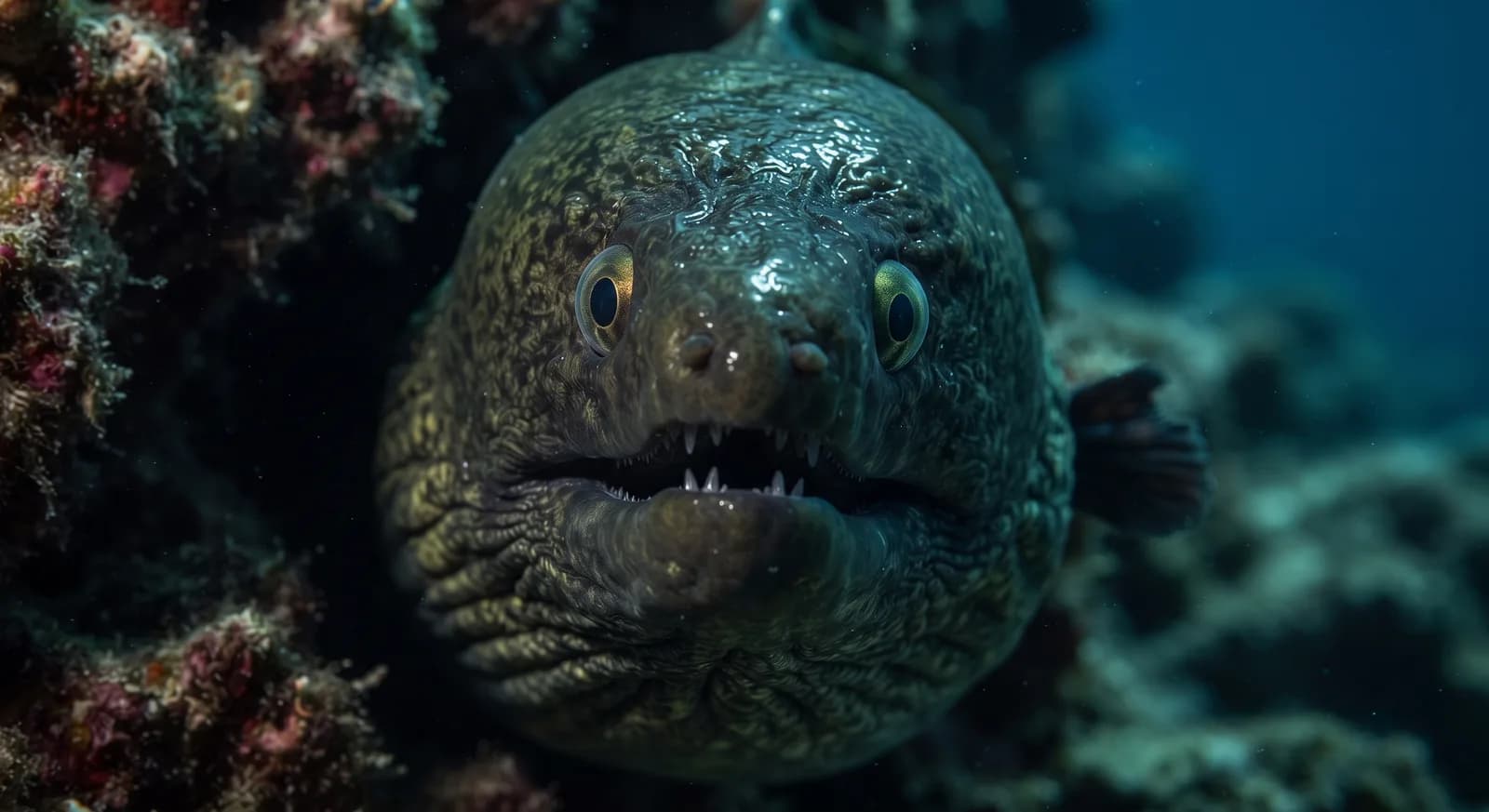
It is not green: the skin is greyish brown and the colour comes from a yellowish mucus that coats it and protects it from parasites and bacteria.
From Green Moray
Acoustic tracking off Santa Cruz showed that most are nocturnal, with a mean home range of about 5.8 hectares.
From Green Moray
It is nocturnal and territorial: it spends the day in a crevice with its head protruding and comes out to hunt at dusk.
From Moray Eel
It rarely attacks unless provoked, despite its appearance and its teeth.
From Moray Eel