One of the 2 lampreys on WAnimals
Lampreys · Petromyzontiformes · Petromyzontidae
River Lamprey
Lampetra fluviatilis
The species is abundant and widely distributed; it faces no significant short-term risk. See full glossary
It is one of the most primitive living vertebrates, entirely without true jaws and with a wholly cartilaginous skeleton. At spawning, both parents die shortly after the eggs are laid.
Weight
50 g – 150 g
Size
32 cm – 50 cm
Lifespan
6 years
Diet
Carnivore
Feeds mainly on other animals.
Activity
Nocturnal
Active mainly at night.
Social structure
Solitary
Lives and hunts alone, joining others only to breed.
Sighting difficulty
Easy
Fun facts
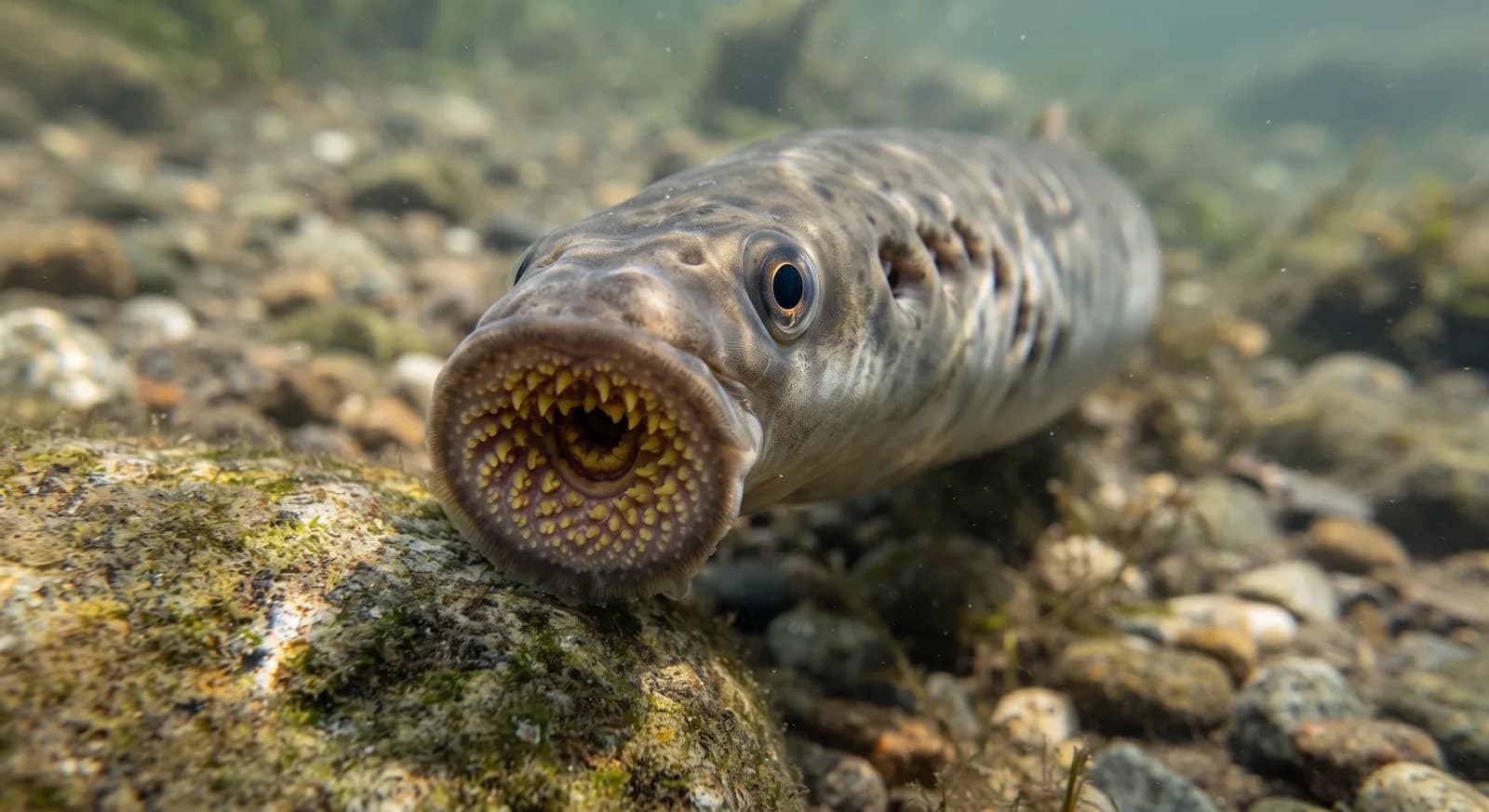
- It has no true jaws at all, making it one of the most primitive living vertebrates.
- The male coils around the female with his sucker mouth during spawning.
- Its blind larvae (ammocoetes) live buried in the sediment for years.
Life cycle & biology
- Skeleton type
- Vertebrate - jawless cartilaginous skeleton (agnathan)
- Habitat & environment
- Fresh-water rivers, streams and lakes of Europe, with a coastal marine phase in its migratory (anadromous) form
- Birth weight
- A tiny egg; a blind ammocoete larva on hatching
- Size at birth
- A tiny blind ammocoete larva that lives buried in the sediment for several years
- Sexual maturity
- Reached after metamorphosis at 13 cm long, generally between 3 and 5 years old
- Gestation / incubation
- The egg develops over a few weeks (no precise figure found)
- Litter / clutch size
- Up to 25,000 eggs per female
Sources consulted: FishBase; The Wildlife Trusts; Leicestershire and Rutland Wildlife Trust; Forth Rivers Trust; AnAge (genomics.senescence.info); Devon Wildlife Trust
Where to find it
See its range on the interactive mapBest time: From April to June, during spawning, when the adults run up the rivers and shift the gravel with their sucker to build the nest.
Where to watch it
Parques y spots de buceo donde se ha documentado esta especie — se muestran 20 de 44 documentados.
Related species
Other species in the catalogue with the most in common with River Lamprey — same habitat, park, country, tags or family.
 Least Concern
Sea Lamprey
Petromyzon marinus
Zander
Sander lucioperca
 Near Threatened
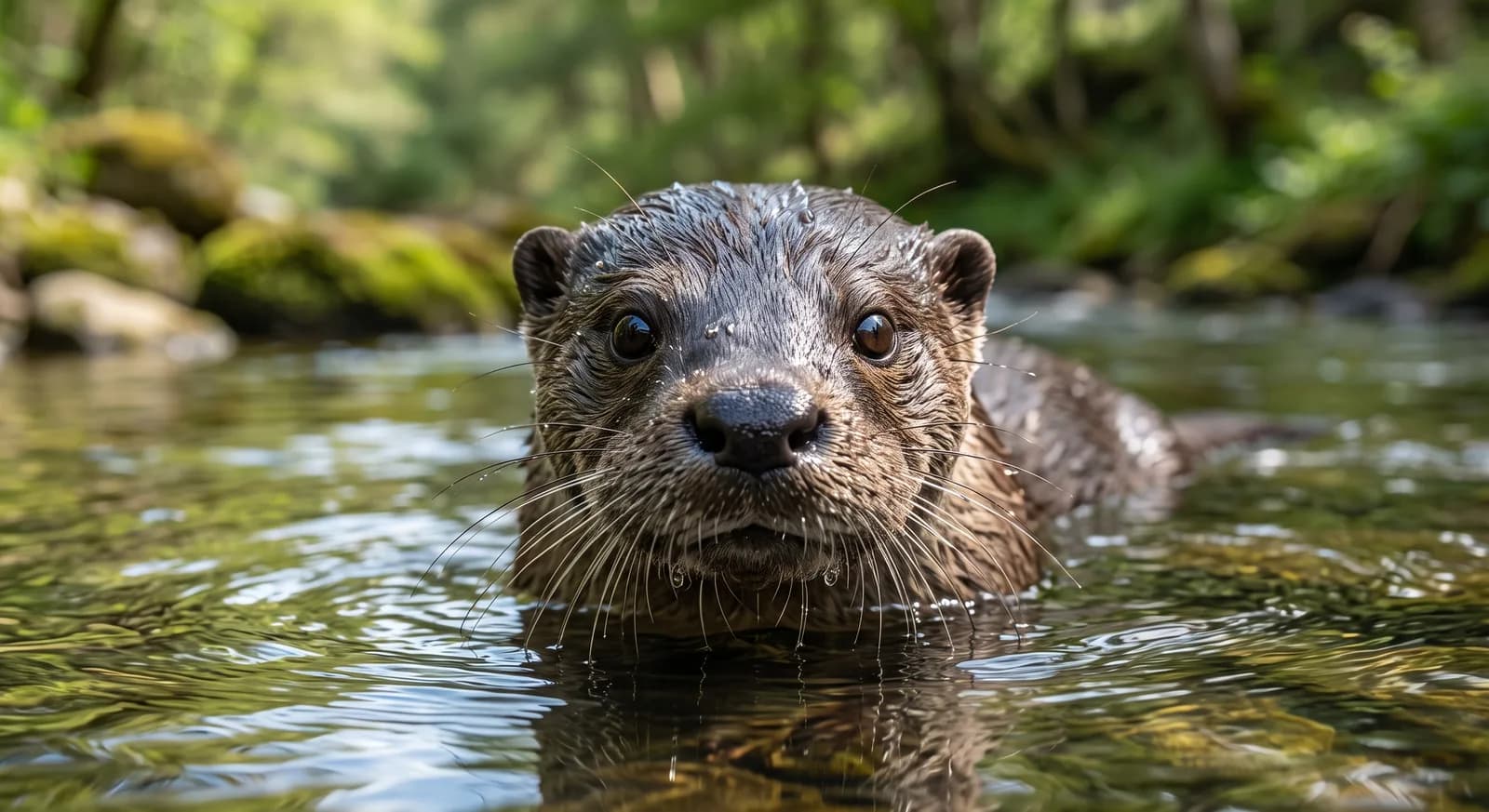
European Otter
Lutra lutra
Pike
Esox lucius
 Least Concern
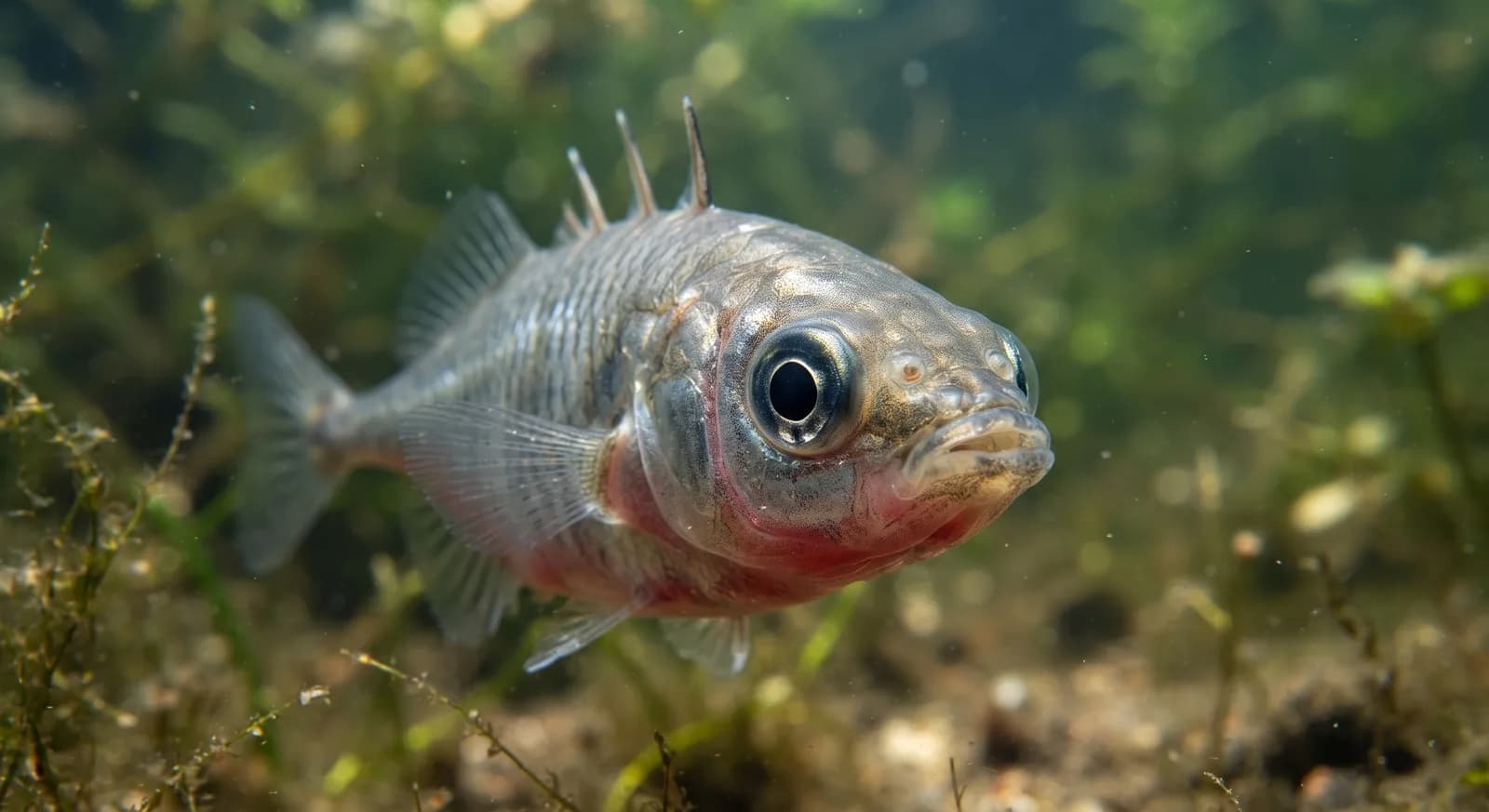
Three-spined Stickleback
Gasterosteus aculeatus
 Least Concern
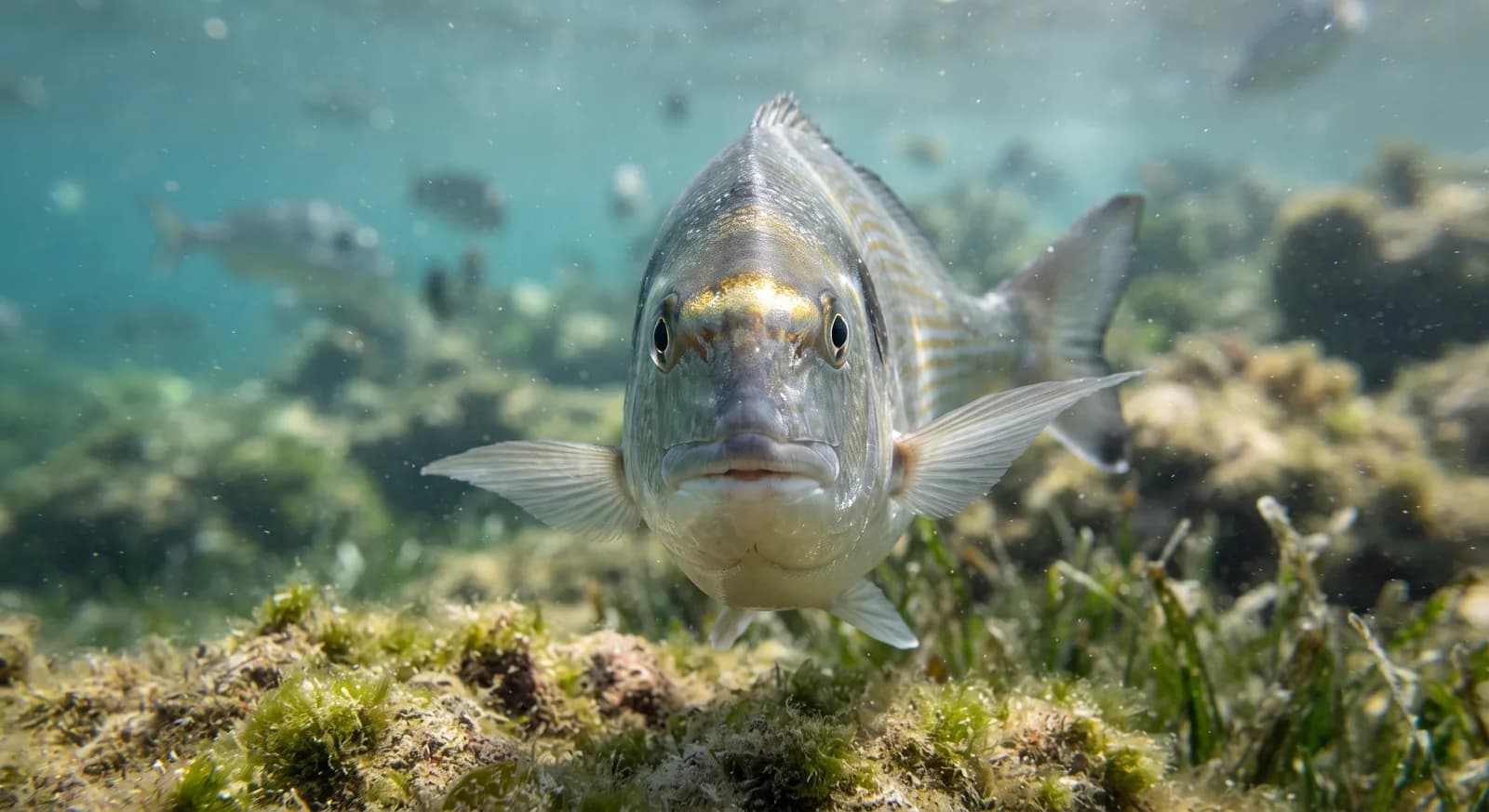
Gilthead
Sparus aurata
Keep exploring
Based on what we already know about river lamprey.
Comments
Share an experience, a fun fact or a tip for seeing the river lamprey.
Be the first to comment.