One of the 4 nudibranchs on WAnimals
Gastropods · Nudibranchia · Tritoniidae
Homberg's Plumed Nudibranch
Tritonia hombergii
It has not yet been assessed against the IUCN criteria. See full glossary
The largest nudibranch of the north-eastern Atlantic, pink to brown and with rows of branched appendages along its sides. It feeds almost exclusively on the octocoral Alcyonium digitatum, known as dead man's fingers, on which it spends much of its life.
Size
5 cm – 20 cm
Lifespan
1 years
Diet
Carnivore
Feeds mainly on other animals.
Social structure
Solitary
Lives and hunts alone, joining others only to breed.
Sighting difficulty
Unknown
Fun facts
- The adults camouflage themselves by taking on the shade of the soft coral colony they live on and feed from.
- The largest individuals exceed 20 cm, an extraordinary size for a cold-water nudibranch.
- It is the largest nudibranch in the British Isles: it reaches 20 cm.
- It eats almost nothing but the polyps of the soft coral known as dead man's fingers. When it arrives, the coral retracts all its polyps in an attempt to protect itself.
- As a juvenile it is white and blends perfectly into the coral; as it grows it darkens and hides in crevices and beneath overhangs.
- Its juveniles were long considered a separate species, Tritonia alba, partly because the radula changes shape as the animal grows.
- The tubercles on its back secrete an irritant compound: handling it can raise blisters on the skin, which is exceptional among nudibranchs.
- Despite its size, its life cycle is annual.
Life cycle & biology
- Habitat & environment
- Rocky bottoms of the north-eastern Atlantic with octocoral colonies
- Litter / clutch size
- Thousands of eggs in a coiled ribbon
Sources consulted: Cuvier (1803); Thompson y Brown (1984), Biology of Opisthobranch Molluscs; Marine Life Information Network
Where to find it
See its range on the interactive mapWhere to watch it
Parques y spots de buceo donde se ha documentado esta especie — se muestran 10 de 22 documentados.
Related species
Other species in the catalogue with the most in common with Homberg's Plumed Nudibranch — same habitat, park, country, tags or family.
Murex
Bolinus brandaris
Blue Glaucus
Glaucus atlanticus
 Not Evaluated
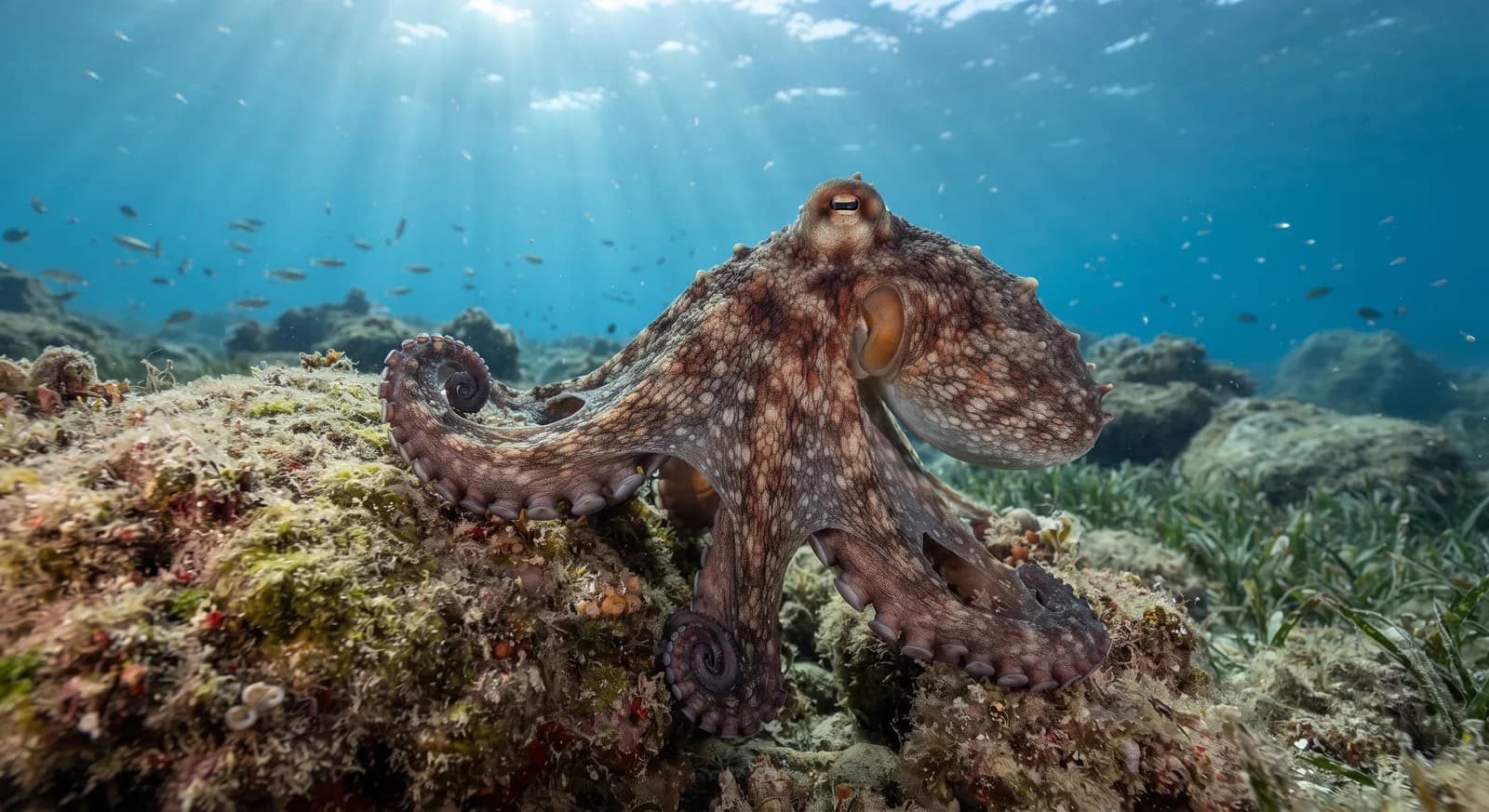
Common Octopus
Octopus vulgaris
 Not Evaluated
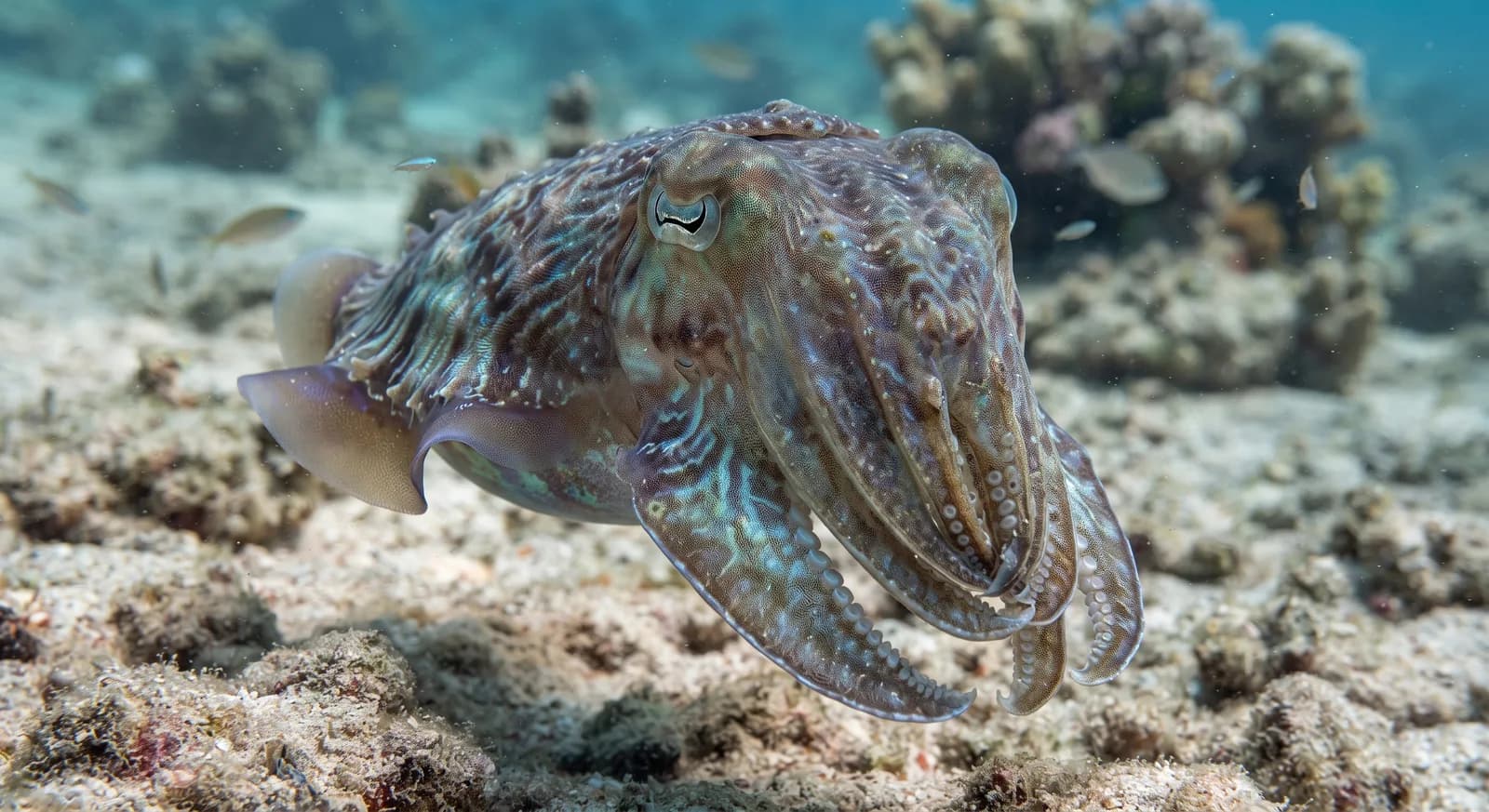
Common Cuttlefish
Sepia officinalis
Greater Argonaut
Argonauta argo
Slender Facelina
Facelina auriculata
Keep exploring
Based on what we already know about homberg's plumed nudibranch.
Comments
Share an experience, a fun fact or a tip for seeing the homberg's plumed nudibranch.
Be the first to comment.