One of the 4 nudibranchs on WAnimals
Gastropods · Nudibranchia · Facelinidae
Slender Facelina
Facelina auriculata
It has not yet been assessed against the IUCN criteria. See full glossary
Facelina auriculata is a species similar to Cratena peregrina in general body shape and size. It is told apart from it because the rhinophores are lamellate, with the lamellae arranged in rings. The upper part of the antenna is white and the numerous dorsal projections are dark brown, with a longitudinal white stripe. The body is almost colourless, with blue reflections and a fine white line down the middle of the back.
Size
up to 3.8 cm
Diet
Carnivore
Feeds mainly on other animals.
Social structure
Solitary
Lives and hunts alone, joining others only to breed.
Sighting difficulty
Unknown
Fun facts
- It digests hydroids without setting off their stinging cells and moves them intact to the tips of its cerata, where it uses them for its own defence.
- The ringed rhinophores on its head serve to track its prey by chemical scent.
- It steals its prey's weapons. It eats hydrozoans and, instead of digesting their stinging cells, keeps them intact and moves them into sacs called cnidosacs, at the tips of the cerata on its back.
- From there it can fire them again at an attacker as though they were its own. The phenomenon is known as kleptocnidae.
- To collect them without poisoning itself, the front part of its gut is lined with chitin, which deflects the stings.
- The cerata are not just an armoury: they also serve for breathing, taking up oxygen across their surface.
- It has been suggested that some nudibranchs eat hydrozoans precisely to keep their cnidosacs loaded, rather than for food.
Life cycle & biology
- Habitat & environment
- Rocky bottoms with hydroids of the north-eastern Atlantic and the Mediterranean
Sources consulted: https://es.wikipedia.org/wiki/Facelina_auriculata
Where to find it
See its range on the interactive mapWhere to watch it
Parques y spots de buceo donde se ha documentado esta especie — se muestran 10 de 35 documentados.
Related species
Other species in the catalogue with the most in common with Slender Facelina — same habitat, park, country, tags or family.
Murex
Bolinus brandaris
Blue Glaucus
Glaucus atlanticus
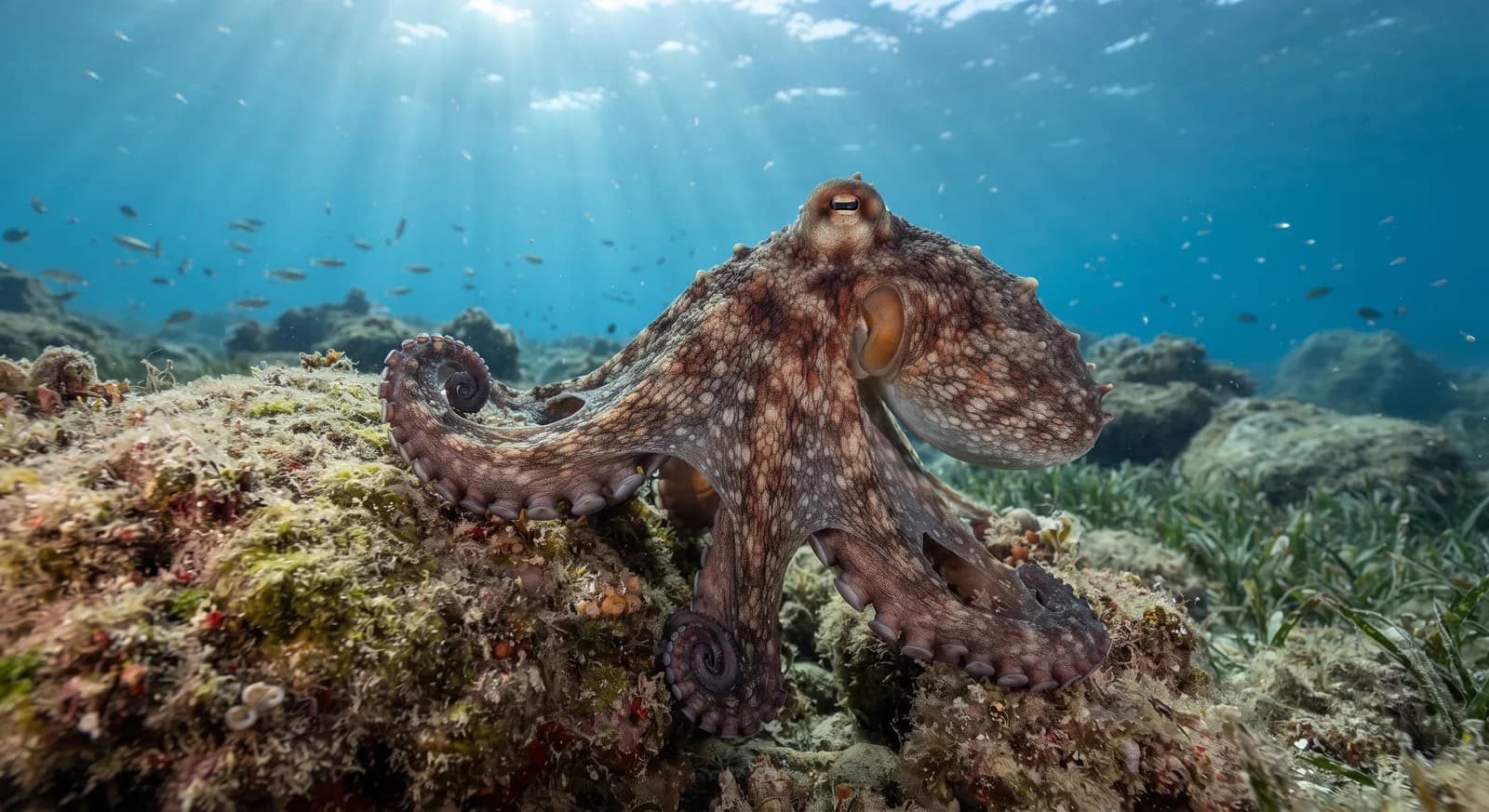 Not Evaluated
Common Octopus
Octopus vulgaris
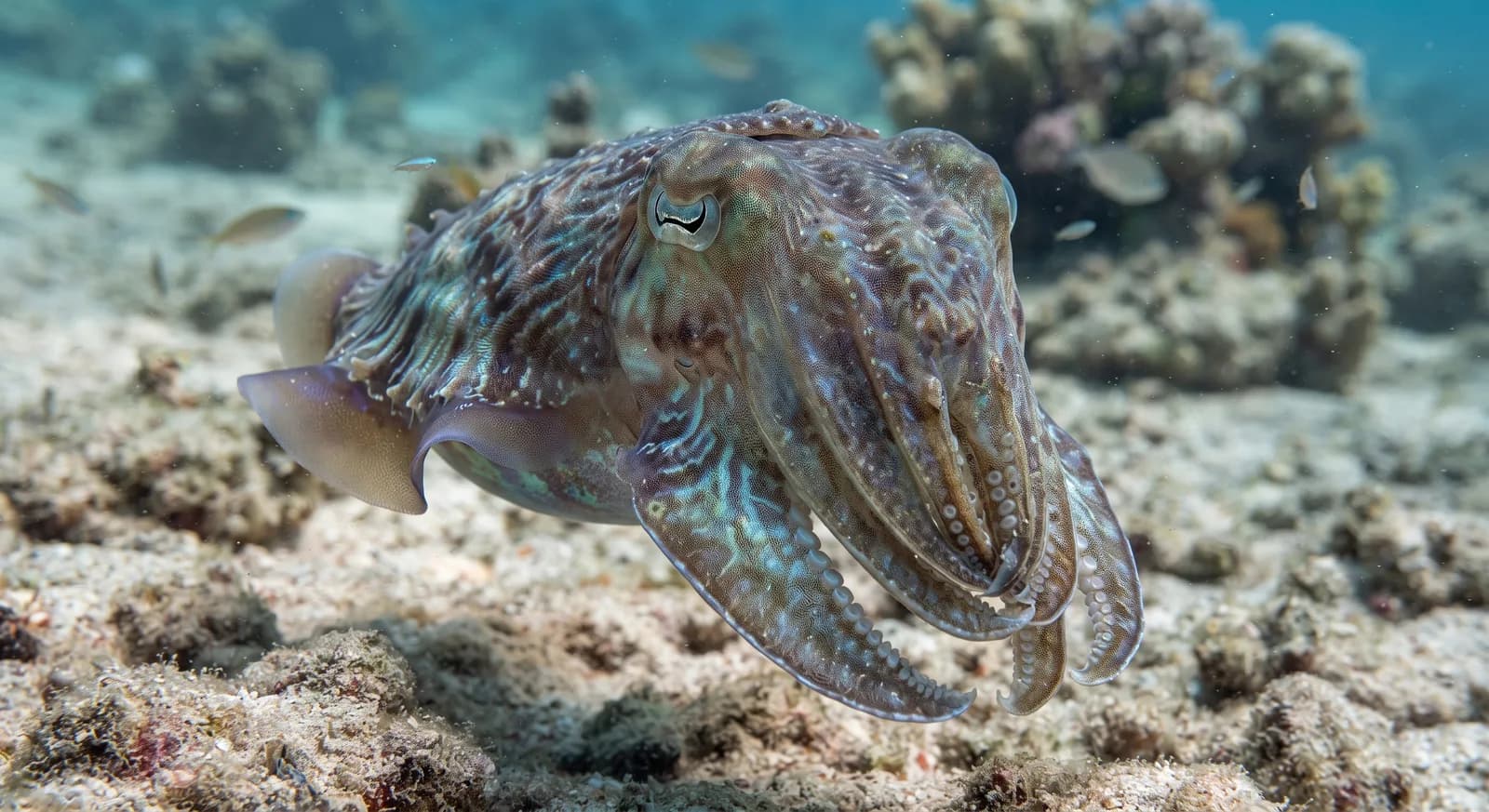 Not Evaluated
Common Cuttlefish
Sepia officinalis
Greater Argonaut
Argonauta argo
Homberg's Plumed Nudibranch
Tritonia hombergii
Keep exploring
Based on what we already know about slender facelina.
Comments
Share an experience, a fun fact or a tip for seeing the slender facelina.
Be the first to comment.