Skip to content
WAnimals
  • Map
  • Species
  • Parks
  • Diving
Log inCreate account
WAnimals

The guide for travellers and animal lovers: discover, plan and share your wild adventures around the world.

Discover wildlife

  • Species
  • Ecosystems
  • Glossary
  • Tags

Explore places

  • Map
  • Countries
  • Parks
  • Diving

Plan experiences

  • Guides

Learn

  • Blog

Resources

  • Help centre
  • Contact
  • Install the app

Follow us

Account

  • Log in
  • Create account

© 2026 WAnimals. All rights reserved.

About usHow we build our profilesTerms of servicePrivacyLegal notice
MapSpeciesParksDiving
  1. Home
  2. Species
  3. Common Coqui
Common Coqui (Eleutherodactylus coqui)

Amphibians · Anura · Eleutherodactylidae

Common Coqui

Eleutherodactylus coqui

Least Concern

The species is abundant and widely distributed; it faces no significant short-term risk.

Spotted something wrong?

The common coquí is an anuran amphibian native to Puerto Rico belonging to the family Eleutherodactylidae. The species takes its common name from the call the males produce. That sound serves two purposes: the "CO" repels other males and establishes a territory, while the "QUI" attracts females. The common coquí is an emblematic element of Puerto Rican culture and is regarded as the island's national symbol. Its characteristic night-time call is one of the loudest biological sounds recorded in the Caribbean, reaching levels of between 90 and 100 decibels. It is one of the 81 species that make up the herpetofauna of Puerto Rico.

Size

3 cm – 5 cm

Life expectancy

6 years

Diet

Insectivore
Feeds mainly on insects and other invertebrates.

Activity

Nocturnal

Active mainly at night.

Social structure

Solitary

Lives and hunts alone, joining others only to breed.

Sighting difficulty

Easy

RainforestMountainIslands
31countries3parks

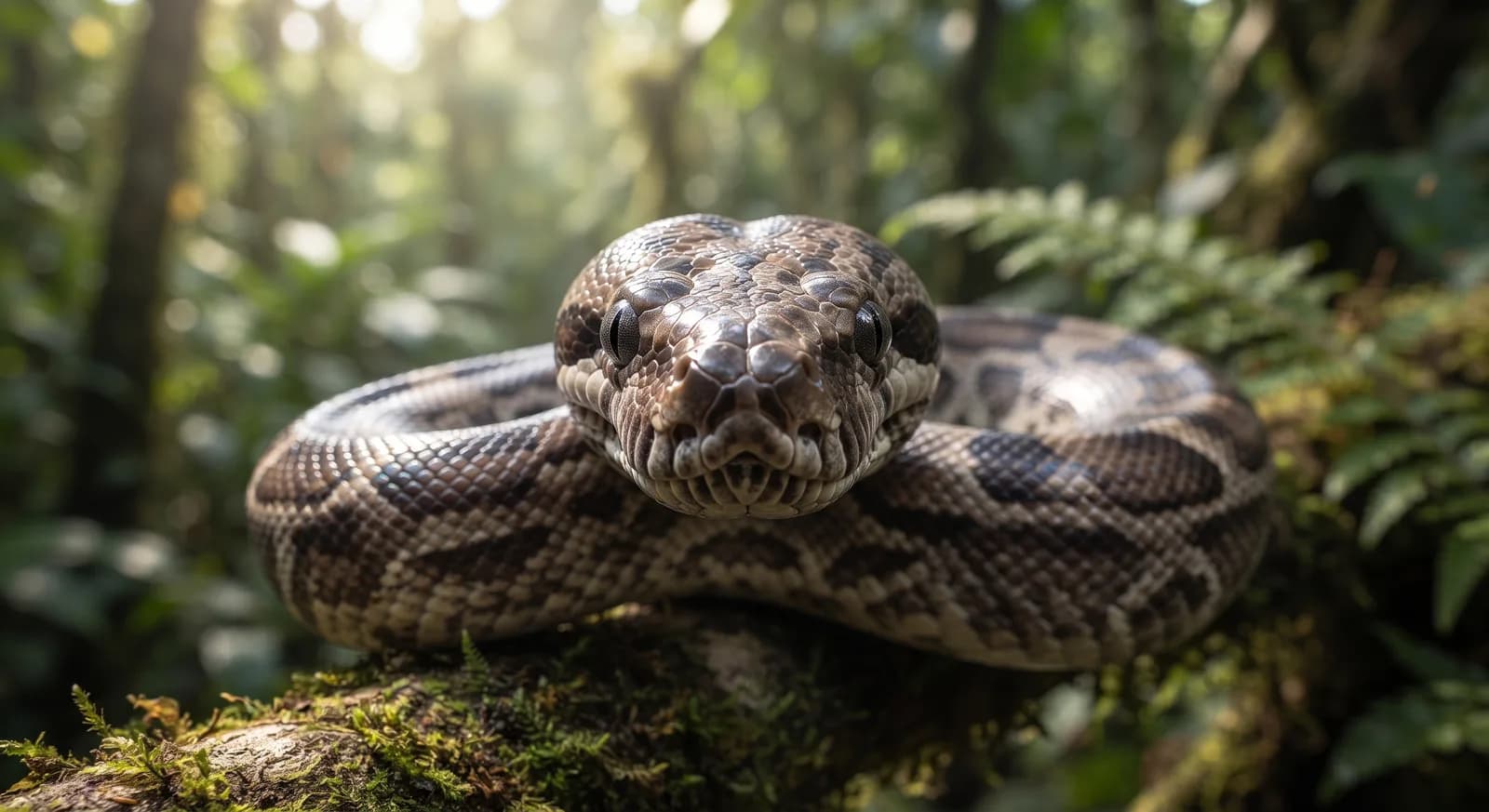
AI-generated images: illustrations, not photographs.

Fun facts

  • It is the national symbol of Puerto Rico and its call, a two-syllable co-quí repeated all night long, is probably the sound most associated with the island's identity. The male gives the co to warn off other males and the quí to attract females.
  • It has no tadpole stage: the eggs, laid on damp ground or among leaves, hatch directly into fully formed froglets, and the male guards the clutch until they emerge.
  • Introduced accidentally to Hawaii with ornamental plants, it has become a pest there: it reaches densities of tens of thousands per hectare and its night chorus hits noise levels that have led to property lawsuits.

Life cycle and biology

Skeleton type
Vertebrate - internal bony skeleton (amphibian)
Habitat and environment
Moist forest, coffee plantations, gardens and urban areas of Puerto Rico
Birth weight
Hatches as a fully formed frog, with no free-living tadpole stage
Size at birth
About 5 mm on hatching, already shaped like a miniature adult frog
Sexual maturity
8 months
Gestation / incubation
Direct development in the egg, with no tadpole stage
Litter / clutch size
28 eggs

Sources consulted: https://es.wikipedia.org/wiki/Eleutherodactylus_coqui

Where to find it

Best time: All year round in Puerto Rico, at night and above all after rain, when the males call their 'ko-kee' from the vegetation.

Loading map…

The pins mark the parks where its presence is documented.

Where to see it

Parks and dive sites where this species has been documented.

Related species

Other species in the catalogue with the most in common with Common Coqui — same habitat, park, country, tags or family.

Shares a park
Shares a park
Shares a park
Shares a park
Shares a park
Shares a park

Keep exploring

Based on what we already know about common coqui.

Comments

Share an experience, a fun fact or a tip for seeing the common coqui.

Be the first to comment.

See full glossary
This page in other languages: Español · Deutsch · Français · Português · Italiano
See its range on the interactive map→
El YunquePuerto Rico
GuanicaPuerto Rico
Virgin Islands (St John)U.S. Virgin Islands
Least Concern

Cuban Brown Anole

Anolis sagrei

Least Concern

Cuban Treefrog

Osteopilus septentrionalis

Puerto Rican BoaLeast Concern

Puerto Rican Boa

Chilabothrus inornatus

Least Concern

Puerto Rican Emerald

Riccordia maugaeus

Least Concern

Jamaican Fruit-eating Bat

Artibeus jamaicensis

Endangered

Puerto Rican Nightjar

Antrostomus noctitherus

CountriesPuerto Rico
ParksEl YunquePuerto Rico
TagsInsectivore
Insectivore
Nocturnal
Solitary
Amphibian
Rainforest
Mountain
Islands
Puerto Rico
U.S. Virgin Islands
Anguilla
Antigua and Barbuda
Aruba
Bahamas
Anguilla
Antigua and Barbuda
Aruba
Bahamas
Barbados
Belize
Bermuda
British Virgin Islands
Cayman Islands
Costa Rica
Cuba
Curaçao
Dominica
Dominican Republic
Grenada
Guatemala
Haiti
Honduras
Jamaica
Martinique
Mexico
Nicaragua
Panama
Puerto Rico
Saint Kitts and Nevis
Saint Lucia
Saint Vincent and Grenadines
Trinidad and Tobago
Turks and Caicos Islands
U.S. Virgin Islands
United States