Skip to content
WAnimals
  • Map
  • Species
  • Parks
  • Diving
Log inCreate account
WAnimals

The guide for travellers and animal lovers: discover, plan and share your wild adventures around the world.

Discover wildlife

  • Species
  • Ecosystems
  • Glossary
  • Tags

Explore places

  • Map
  • Countries
  • Parks
  • Diving

Plan experiences

  • Guides

Learn

  • Blog

Resources

  • Help centre
  • Contact
  • Install the app

Follow us

Account

  • Log in
  • Create account

© 2026 WAnimals. All rights reserved.

About usHow we build our profilesTerms of servicePrivacyLegal notice
MapSpeciesParksDiving
  1. Home
  2. Species
  3. Cuban Brown Anole

One of the 2 anoles on WAnimals

Reptiles · Squamata · Dactyloidae

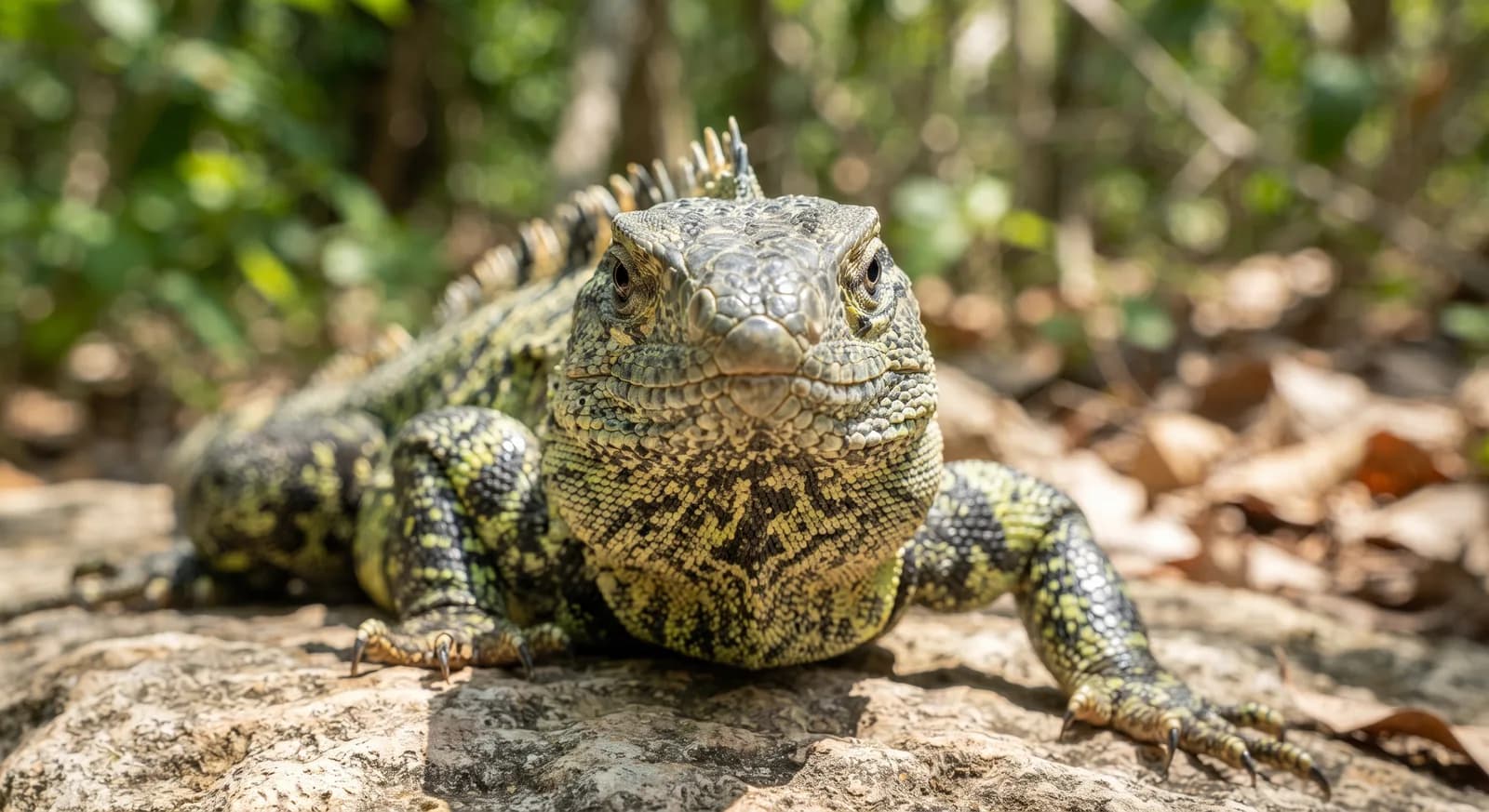
Cuban Brown Anole

Anolis sagrei

Least Concern

The species is abundant and widely distributed; it faces no significant short-term risk.

Spotted something wrong?

The Cuban brown anole (Anolis sagrei) is a species of lizard endemic to the islands of Cuba and the Bahamas in the Caribbean Sea, although it has also been introduced in some other places and can also be found in Mexico, Panama and Florida in the United States.

Size

12 cm – 21 cm

Life expectancy

5 years

Diet

Insectivore

Feeds mainly on insects and other invertebrates.

Activity

Diurnal

Active mainly during the day.

Social structure

Solitary

Lives and hunts alone, joining others only to breed.

Sighting difficulty

Easy

RainforestTemperate forestIslands
36countries23parks1ecological relationships1same family

Fun facts

  • Its arrival on some Florida islets forced the native green anole up into the high branches, and in only fifteen years and twenty generations the pads on its toes grew larger to grip thin branches better: one of the fastest cases of observed evolution documented in a vertebrate.
  • The Caribbean anoles are the textbook example of adaptive radiation: on each large island the same ecological types evolved independently, with trunk, twig and ground forms almost identical from island to island.
  • It lays a single egg at a time, but does so every few days throughout the season, a strategy that lets it colonise any new place quickly.

Life cycle and biology

Skeleton type
Vertebrate - internal bony skeleton (reptile)
Habitat and environment
Low trunks, scrub, gardens and urban areas of Cuba, the Bahamas and regions where it has been introduced
Sexual maturity
9 months
Gestation / incubation
35 days of incubation
Litter / clutch size
1 egg

Sources consulted: https://es.wikipedia.org/wiki/Anolis_sagrei

Where to find it

Loading map…

Where to see it

Parks and dive sites where this species has been documented — showing 10 of 23.

Related species

Other species in the catalogue with the most in common with Cuban Brown Anole — same habitat, park, country, tags or family.

Same taxonomic family
Shares a park
Shares a park
Shares a park
Shares a park
Shares a park

Ecological relationships

How Cuban Brown Anole relates to other species in the catalogue.

Competes with

Keep exploring

Based on what we already know about cuban brown anole.

Comments

Share an experience, a fun fact or a tip for seeing the cuban brown anole.

Be the first to comment.

See full glossary
This page in other languages: Español · Deutsch · Français · Português · Italiano

The pins mark the parks where its presence is documented.

See its range on the interactive map→
EvergladesUnited States
Sian Ka'anMexico
El YunquePuerto Rico
GuanicaPuerto Rico
Blue and John Crow MountainsJamaica
ViñalesCuba
Desembarco del GranmaCuba
Alejandro de HumboldtCuba
Ciénaga de ZapataCuba
Sierra del RosarioCuba
See all 23 parks
Not Evaluated

Green Anole

Anolis carolinensis

Least Concern

Eastern Coral Snake

Micrurus fulvius

Least Concern

Common Kingsnake

Lampropeltis getula

Least Concern

Common Garter Snake

Thamnophis sirtalis

Common Spiny-tailed IguanaLeast Concern

Common Spiny-tailed Iguana

Ctenosaura similis

Least Concern

Common House Gecko

Hemidactylus frenatus

Not Evaluated

Green Anole

Anolis carolinensis

CountriesCuba
ParksEvergladesUnited States
TagsInsectivore
Insectivore
Diurnal
Solitary
Reptile
Rainforest
Temperate forest
Islands

North America32

Asia2

South America2

Cuba
Dominican Republic
Dominica
Puerto Rico
United States
Haiti
Anguilla
Antigua and Barbuda
Aruba
Bahamas
Barbados
Belize
Bermuda
British Virgin Islands
Cayman Islands
Costa Rica
Cuba
Curaçao
Dominica
Dominican Republic
Grenada
Guadeloupe
Guatemala
Haiti
Honduras
Jamaica
Martinique
Mexico
Nicaragua
Panama
Puerto Rico
Saint Kitts and Nevis
Saint Lucia
Saint Vincent and Grenadines
Trinidad and Tobago
Turks and Caicos Islands
U.S. Virgin Islands
United States
Singapore
Taiwan
Colombia
Venezuela