 Least Concern
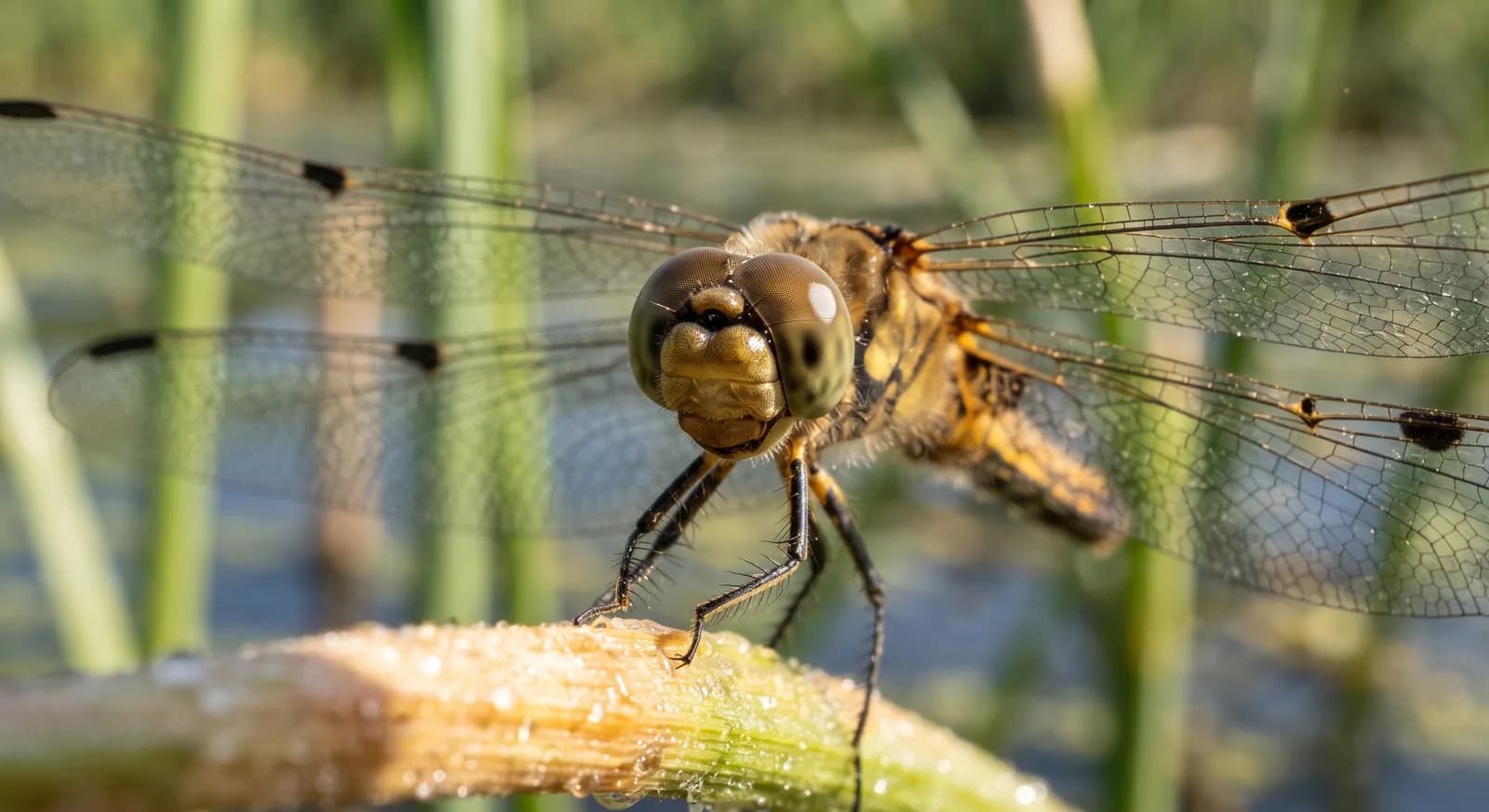
Four-Spotted Chaser
Libellula quadrimaculata
46 countries155 parks
Species group · Insects
WAnimals has 4 species of dragonfly, spread across 3 families (Cordulegastridae, Gomphidae, Libellulidae).
Ranges calculated from the profiles that record the figure, not from all 4.
Each one has its own full profile. This group does not replace them: it brings them together.
No species documented in this group is genuinely at risk according to the IUCN, with the data available today.
Recorded in 118 countries. The ones with the most species in the group:
There is a form called praenubila with greatly exaggerated wing spots, which appears to depend on water temperature during the larval stage and is commoner in Europe than in America.
From
It is the official state insect of Alaska.
From
The males are markedly territorial: they post themselves on tall plants to watch the whole sheet of water and return to the same perch after every patrol.
From
The female lays her eggs hanging vertically over the water and jabbing her abdomen repeatedly into the sand of the bottom, like a sewing machine.
From
Its larva lives buried in the sediment of the stream for three to five years, and in cold mountain water it can take longer still.
From
It needs clean, cool streams with bankside vegetation, and is an excellent indicator of headwaters in good condition.
From
The clubtails are the only group of large European dragonflies whose eyes do not meet on top of the head, a feature that identifies them at a glance.
From
·
Its larva lives buried in the sand of the riverbed for three or four years, with only its eyes and antennae clear of the sediment.
From