 Not Evaluated
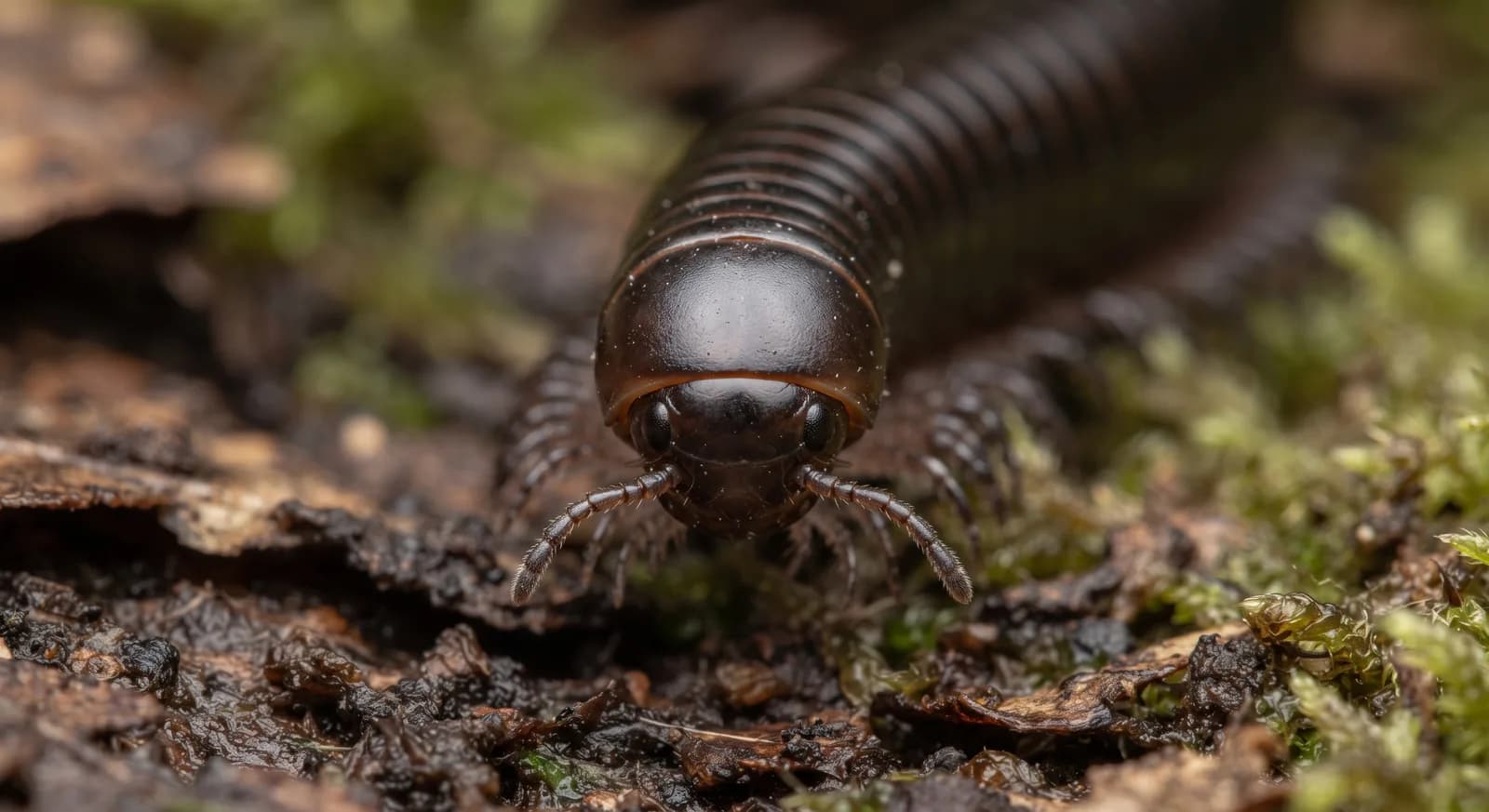
Common Millipede
Julus terrestris
45 countries152 parks
Species group · Millipedes
WAnimals has 4 species of millipede, spread across 4 families (Glomeridae, Julidae, Spirostreptidae, Xystodesmidae).
Ranges calculated from the profiles that record the figure, not from all 4.
Each one has its own full profile. This group does not replace them: it brings them together.
No species documented in this group is genuinely at risk according to the IUCN, with the data available today.
Recorded in 91 countries. The ones with the most species in the group:
Despite the name, it never reaches a thousand legs: an individual with 52 segments has 194.
From
With so many legs it needs fine coordination not to trip itself up: it moves them in a wave, so that only one foot in eight is touching the ground at any moment.
From
Unlike centipedes, it is entirely harmless: a herbivore and decomposer, it works organic matter into the soil and is worth encouraging rather than killing.
From
It neither bites nor stings: its only defence is to coil into a spiral and secrete an irritant fluid that can stain the skin and sting the eyes.
From
It carries commensal mites on its body that feed on debris and secretions and travel with it without doing it any harm.
From
It is an important decomposer in African soils: by shredding the leaf litter it greatly speeds up the recycling of nutrients.
From
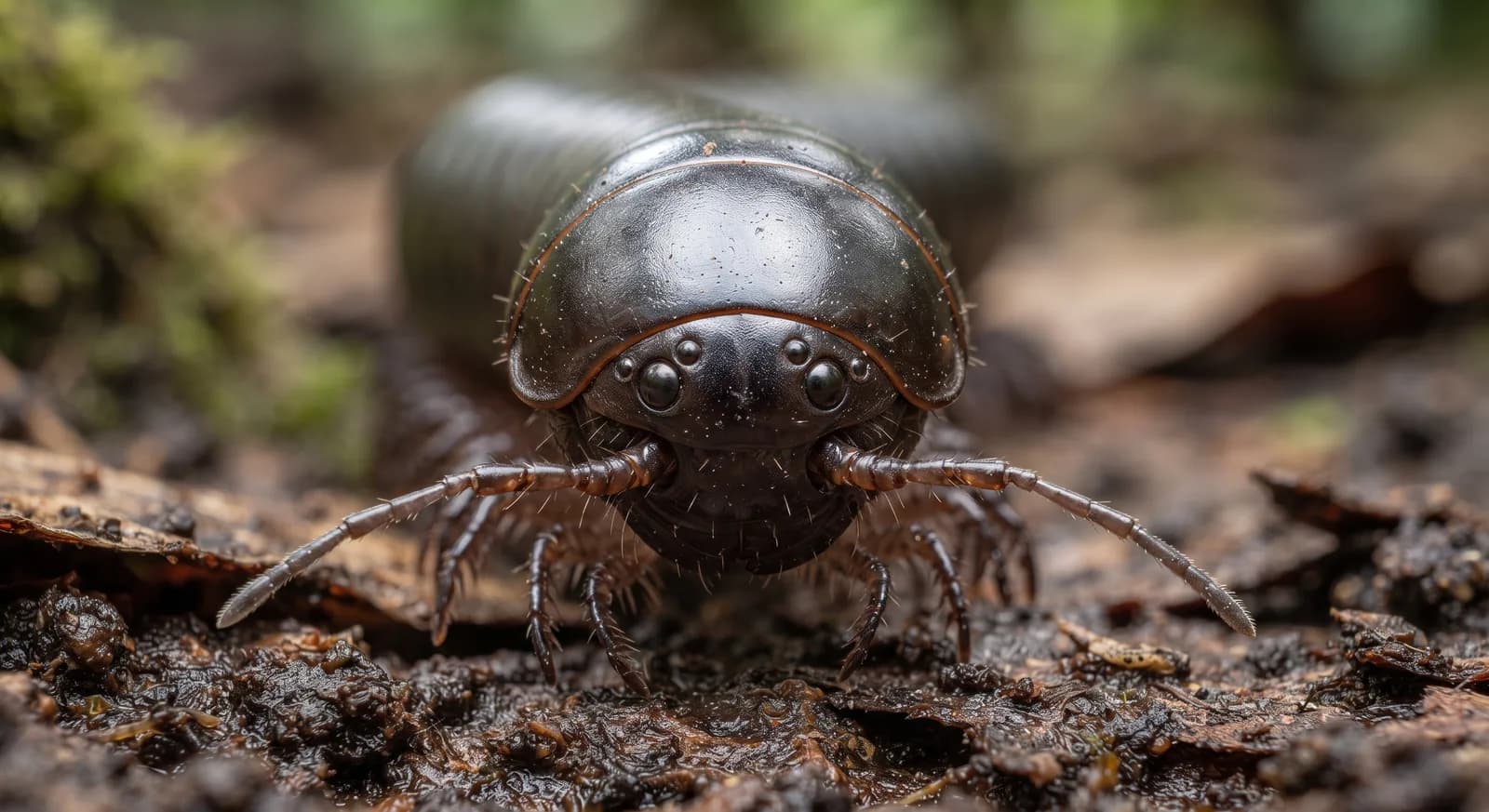
It is constantly mistaken for the common pill woodlouse, which is a crustacean: the pill millipede has two pairs of legs per segment and fewer dorsal plates, and its ball is smoother and glossier.
·
From
It secretes from pores along its back a sticky, toxic fluid that can immobilise a spider attempting to attack it.
From