Least Concern
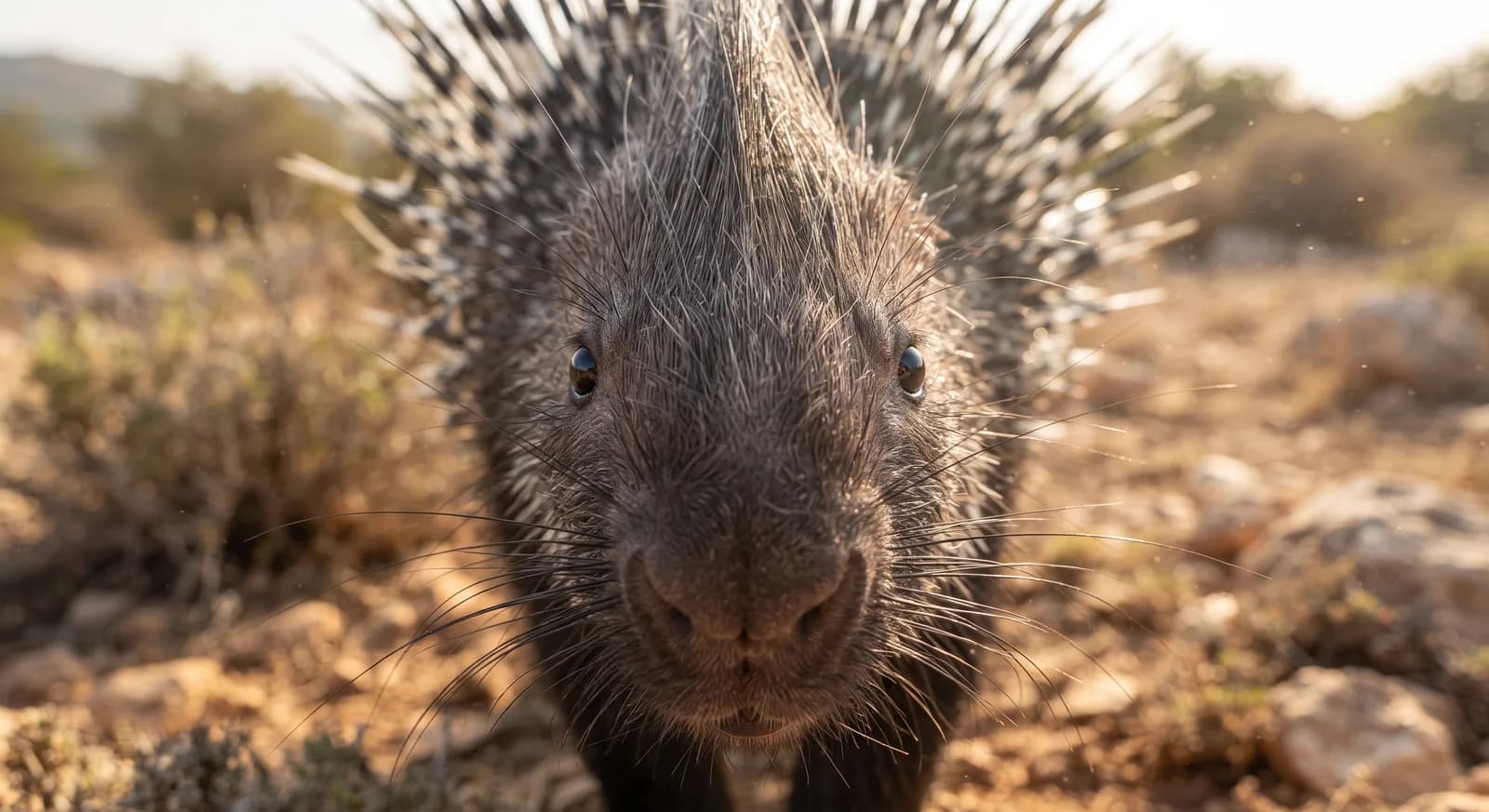
Indian Crested Porcupine
Hystrix indica
15 countries29 parks
Species group · Mammals
WAnimals has 5 species of porcupine, spread across 2 families (Erethizontidae, Hystricidae).
Each one has its own full profile. This group does not replace them: it brings them together.
No species documented in this group is genuinely at risk according to the IUCN, with the data available today.
Recorded in 80 countries. The ones with the most species in the group:
When it feels threatened it raises its quills, rattles the hollow ones on its tail, stamps and reverses at speed into the attacker: the quills detach as they lodge, and the infection that follows can kill a leopard.
From
It collects and gnaws bones it finds in the field to obtain calcium, and its burrows accumulate so many bone remains that palaeontologists study them as natural assemblages of the local fauna.
From
It eats bark, leaves, shoots and herbaceous plants.
From
It lives in forest, open tundra and desert scrub across much of North America.
From
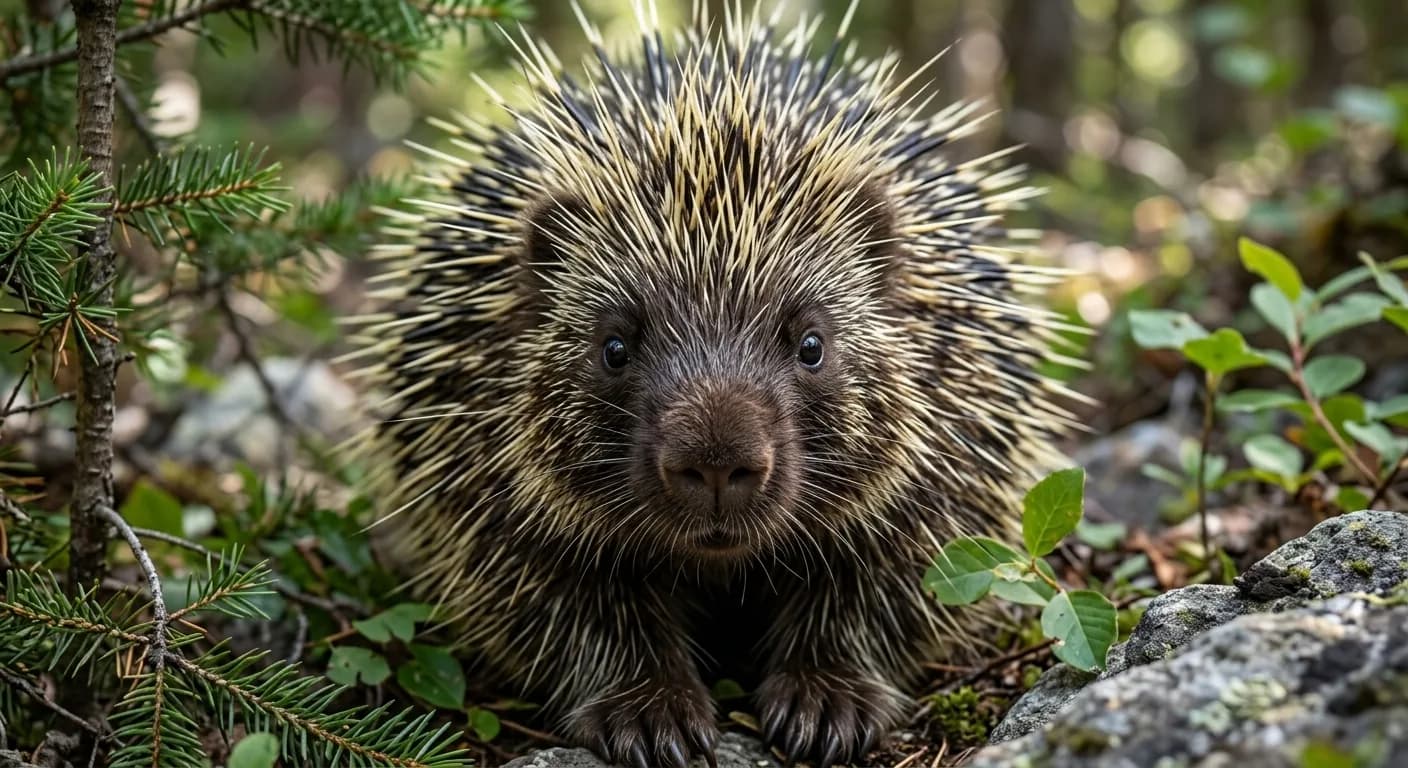
Its quills are in fact modified hairs with microscopic barbed tips.
From
Its quills are not fired at a distance, as popularly believed: they come away easily on contact and lodge in any attacker that gets too close.
From
Its prehensile tail curls upwards, not downwards as in the American monkeys: the anatomical difference is that the gripping pad is on the upper surface of the tail, not the lower.
From
·
Ranges calculated from the profiles that record the figure, not from all 5.
Like all porcupines, it does not shoot its quills: they come loose at the slightest contact and have microscopic scales at the tip that make them hard to pull out, a detail that has inspired the design of surgical needles and medical adhesives.
From