 Not Evaluated
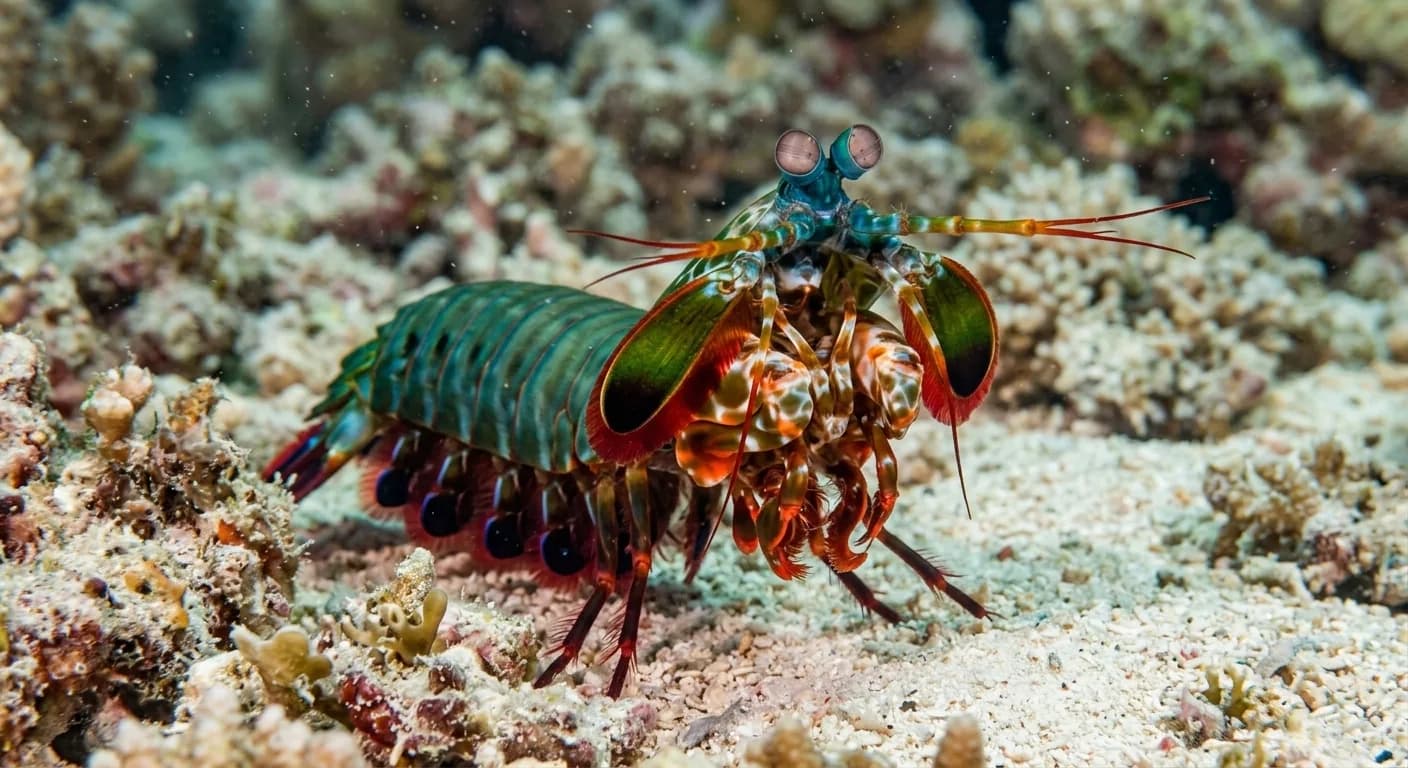
Peacock Mantis Shrimp
Odontodactylus scyllarus
59 countries35 parks235 dive sites
Species group · Malacostracans
WAnimals has 8 species of shrimp, spread across 8 families (Alpheidae, Atyidae, Caprellidae, Hippolytidae, Mysidae, Odontodactylidae, Pandalidae, Sicyoniidae).
Each one has its own full profile. This group does not replace them: it brings them together.
No species documented in this group is genuinely at risk according to the IUCN, with the data available today.
Recorded in 100 countries. The ones with the most species in the group:
It strikes with its front limbs so fast that it creates cavitation bubbles, whose collapse gives off a momentary flash of light and heat.
From
Its eyes, mounted on independently mobile stalks, have between twelve and sixteen types of photoreceptor, against three in the human eye, and detect polarised and ultraviolet light.
From
The collapse of the bubble delivers a second impact that reaches the prey even if the first blow misses.
From
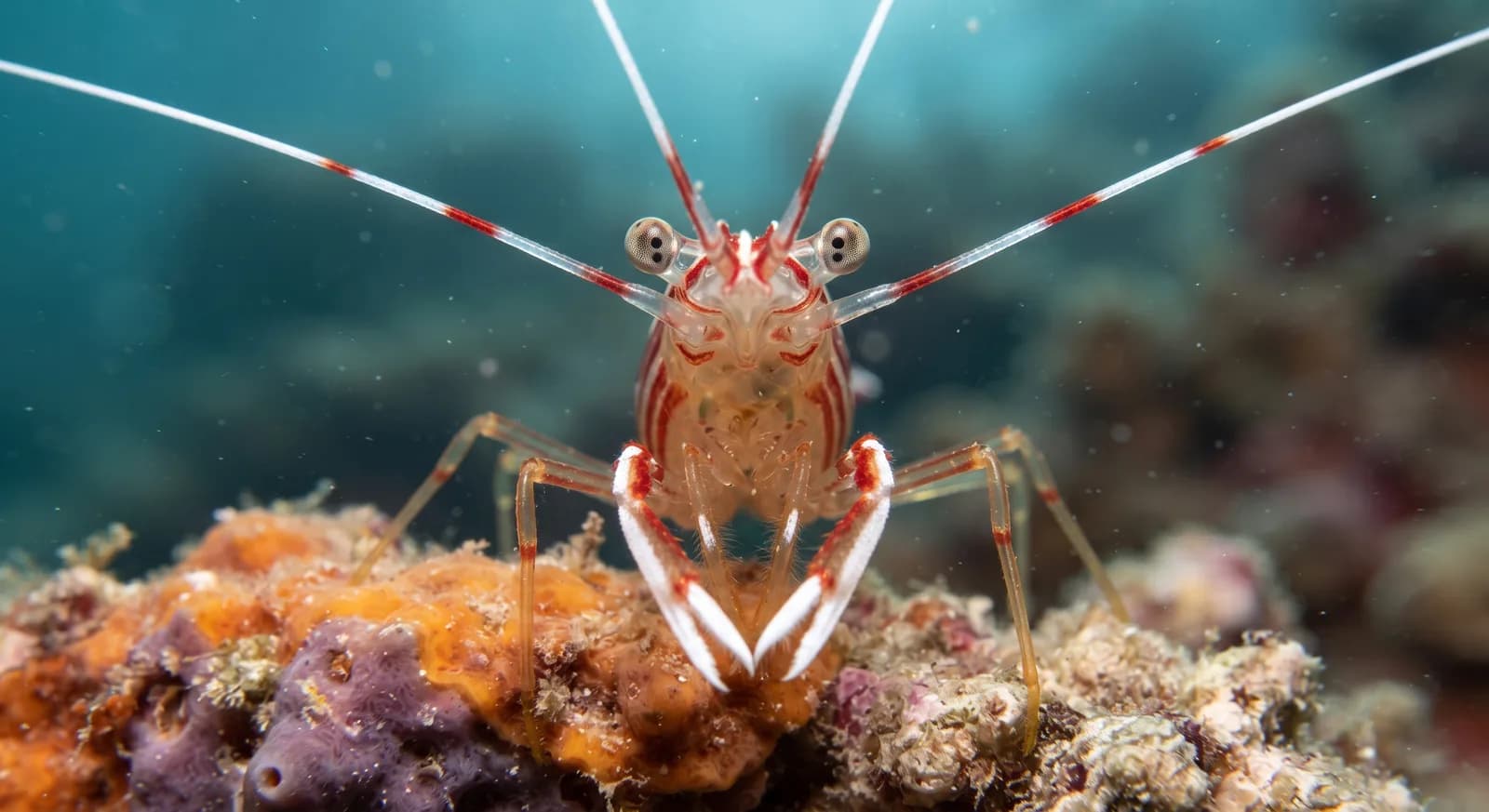
It sets up cleaning stations on the reef where larger fish come of their own accord to have parasites and dead skin picked off.
From
It sets up cleaning stations where it picks parasites out of fishes' mouths.
From
It advertises its service by waving its white antennae, and the fish — including moray eels and groupers that could eat it — stay still and open their mouths and gills so that it can go in and clean them.
From
Its twig-like outline and its habit of swaying with the current camouflage it completely among the hydroids where it lives.
From
·
Ranges calculated from the profiles that record the figure, not from all 8.
The females carry their eggs in a ventral pouch and look after the young for the first few days.
From Ghost Shrimp