Skip to content
WAnimals
  • Map
  • Species
  • Parks
  • Diving
Log inCreate account
WAnimals

The guide for travellers and animal lovers: discover, plan and share your wild adventures around the world.

Discover wildlife

  • Species
  • Ecosystems
  • Glossary
  • Tags

Explore places

  • Map
  • Countries
  • Parks
  • Diving

Plan experiences

  • Guides

Learn

  • Blog

Resources

  • Help centre
  • Contact
  • Install the app

Follow us

Account

  • Log in
  • Create account

© 2026 WAnimals. All rights reserved.

About usHow we build our profilesTerms of servicePrivacyLegal notice
MapSpeciesParksDiving
  1. Home
  2. Species
  3. Scarlet Cleaner Shrimp

One of the 8 shrimps on WAnimals
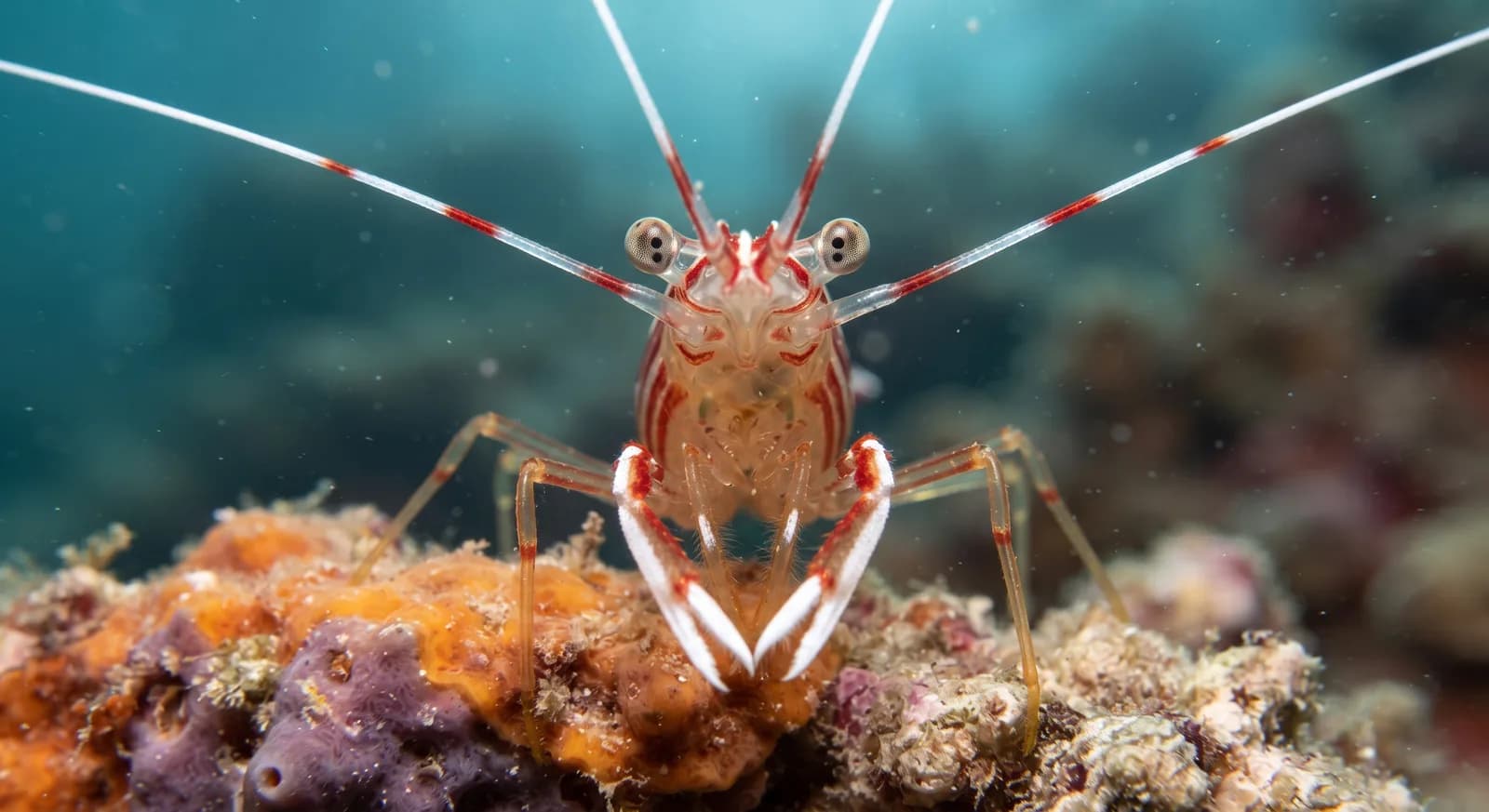
Scarlet Cleaner Shrimp (Lysmata amboinensis)

Malacostracans · Decapoda · Hippolytidae

Scarlet Cleaner Shrimp

Lysmata amboinensis

Not Evaluated

It has not yet been assessed against the IUCN criteria.

Spotted something wrong?

An Indo-Pacific cleaner shrimp with a yellow body, a red and white band along the back and extremely long white antennae. It settles on ledges and in reef caves, where it sets up cleaning stations that fish visit to have parasites, mucus and dead tissue removed.

Size

4 cm – 6 cm

Diet

Carnivore

Feeds mainly on other animals.

Social structure

Solitary

Lives and hunts alone, joining others only to breed.
Sighting difficulty

Unknown

Ocean
63countries35parks238dive sites

AI-generated images: illustrations, not photographs.

Fun facts

  • GeneralIt sets up cleaning stations where it picks parasites out of fishes' mouths.
  • comportamientoIt sets up cleaning stations on the reef where larger fish come of their own accord to have parasites and dead skin picked off.
  • It advertises its service by waving its white antennae, and the fish — including moray eels and groupers that could eat it — stay still and open their mouths and gills so that it can go in and clean them.
  • Every individual first matures as a male and then becomes a hermaphrodite able to act as either male or female, so that any two individuals can breed with each other.
  • Fish that visit cleaning stations show lower stress levels, and removing the shrimps experimentally disturbs the whole reef community.
  • It sets up cleaning stations: fish stop beside its crevice and wait their turn for it to remove parasites, mucus and dead tissue. It enters the mouths of morays and groupers without fear.
  • That service is how it feeds, so the relationship benefits both parties.
  • It tells dangerous clients from harmless ones: it cleans predators in a much smaller proportion of encounters, and in front of them it performs a rocking of the legs, almost exclusive to those interactions, that appears to signal its identity or its intention to clean.
  • Its reproduction is unique among decapods: it is a protandric simultaneous hermaphrodite. It starts as a male and after a few moults functions as both male and female at once; there is no pure female form.
  • A pair staggers its moults in synchrony, because mating happens immediately after one of the two moults.

Life cycle and biology

Habitat and environment
Coral reefs; caves and ledges
Sexual maturity
Matures as a male at around 3.4 cm in total length
Litter / clutch size
Between 200 and 500 eggs per clutch, every two or three weeks

Sources consulted: Dixson et al. (2019), Biology Letters; Fiedler; Wong y Michiels (2011), Frontiers in Zoology

Where to find it

Loading map…

Where to see it

Parks and dive sites where this species has been documented — showing 20 of 273.

Related species

Other species in the catalogue with the most in common with Scarlet Cleaner Shrimp — same habitat, park, country, tags or family.

Shares a park
Shares a park
Shares a park
Shares a park
Shares a park
Shares a park

Keep exploring

Based on what we already know about scarlet cleaner shrimp.

Comments

Share an experience, a fun fact or a tip for seeing the scarlet cleaner shrimp.

Be the first to comment.

See full glossary
This page in other languages: Español · Deutsch · Français · Português · Italiano

The pins mark the parks and dive sites where its presence is documented.

See its range on the interactive map→
KomodoIndonesia
AldabraSeychelles
YakushimaJapan
Ras MohammedEgypt
Great Barrier ReefAustralia
NingalooAustralia
Rock Islands of PalauPalau
East RennellSolomon Islands
FakaravaFrench Polynesia
Mohéli Marine National ParkComoros
Blue Hole DahabEgypt
Ras Mohammed National ParkEgypt
Thistlegorm wreckEgypt
Elphinstone ReefEgypt
Brothers Islands (El Akhawein)Egypt
Sha'ab Rumi (Cousteau)Sudan
Eilat Coral ReserveIsrael
Aqaba Marine ParkJordan
Musandam PeninsulaOman
Daymaniyat IslandsOman
See all 35 parks
See all 238 dive sites
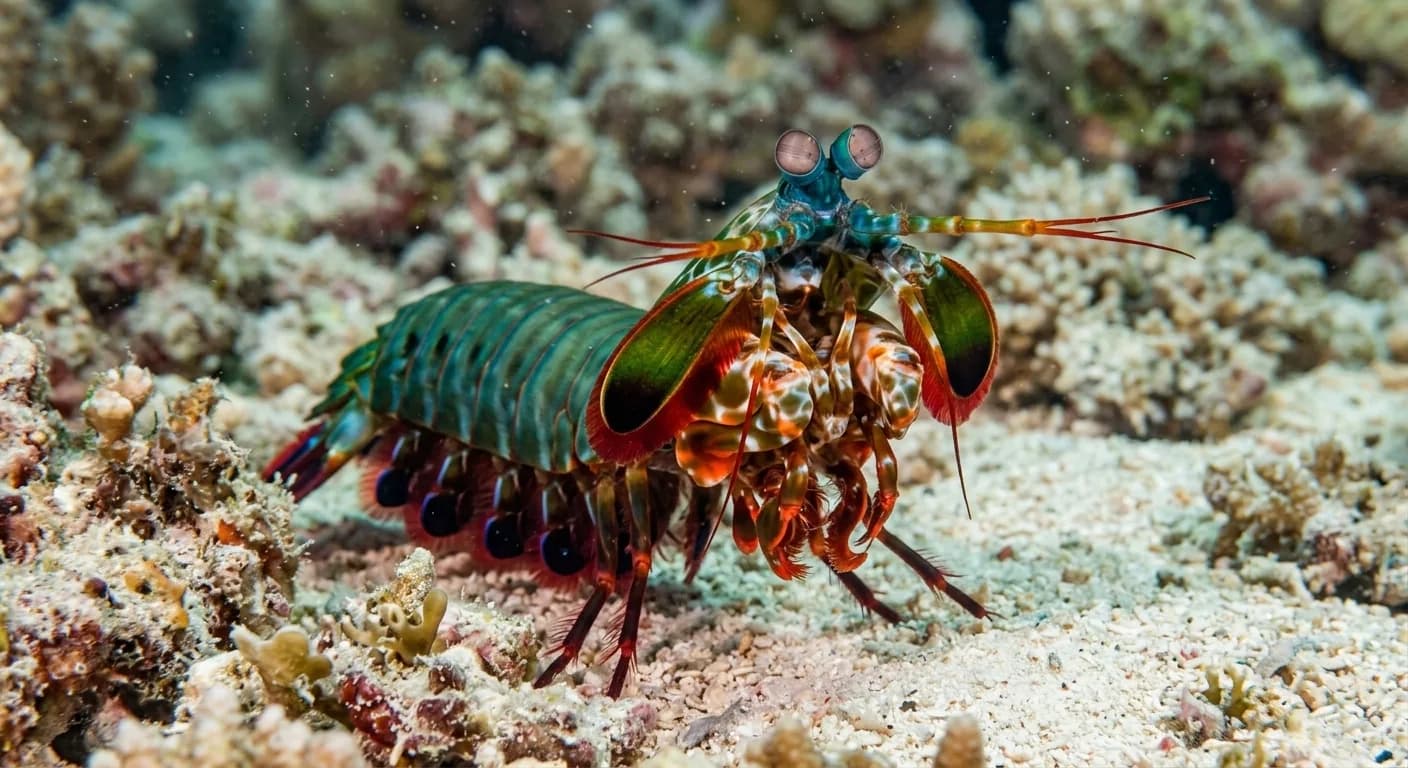
Peacock Mantis ShrimpNot Evaluated

Peacock Mantis Shrimp

Odontodactylus scyllarus

Spanner CrabNot Evaluated

Spanner Crab

Ranina ranina

Data Deficient

Flatback

Natator depressus

Leatherback Sea TurtleVulnerable

Leatherback Sea Turtle

Dermochelys coriacea

Saltwater CrocodileLeast Concern

Saltwater Crocodile

Crocodylus porosus

Least Concern

Yellow-bellied Sea Snake

Hydrophis platurus

CountriesIndonesia
ParksKomodoIndonesia
TagsCarnivore
Carnivore
Solitary
Ocean
Crustacean

Asia29

Oceania20

Africa14

Indonesia
Egypt
Philippines
Australia
Thailand
Fiji
Bahrain
Bangladesh
Brunei
Cambodia
China
India
Indonesia
Iran
Iraq
Israel
Japan
Jordan
Kuwait
Malaysia
Maldives
Myanmar
Oman
Pakistan
Philippines
Qatar
Saudi Arabia
Singapore
Sri Lanka
Taiwan
Thailand
Timor-Leste
United Arab Emirates
Vietnam
Yemen
American Samoa
Australia
Cook Islands
Fiji
French Polynesia
Guam
Kiribati
Marshall Islands
Micronesia
Nauru
New Caledonia
Niue
Northern Mariana Islands
Palau
Papua New Guinea
Samoa
Solomon Islands
Tonga
Tuvalu
Vanuatu
Comoros
Djibouti
Egypt
Eritrea
Kenya
Mauritius
Mayotte
Mozambique
Réunion
Seychelles
Somalia
South Africa
Sudan
Tanzania